


In just a few years, AI assistants have become part of the everyday rhythm of office work, used to gather information, sharpen a pitch, or draft slides. There’s no denying that the productivity gains for individuals are real, but the high-value, scalable use cases that matter to enterprises remain to be proven.
Companies are grappling with unclear pricing of new, highly adopted AI platforms and facing surprising bills from token cost, alongside the growing problem of customer communication becoming AI slop, as generic AI tools dilute company DNA and take content away from core knowledge and company expertise.
For enterprises, AI value is not about individual productivity, but about producing content that creates better business outcomes; work that is accurate, consistent, compliant, and ready to use.
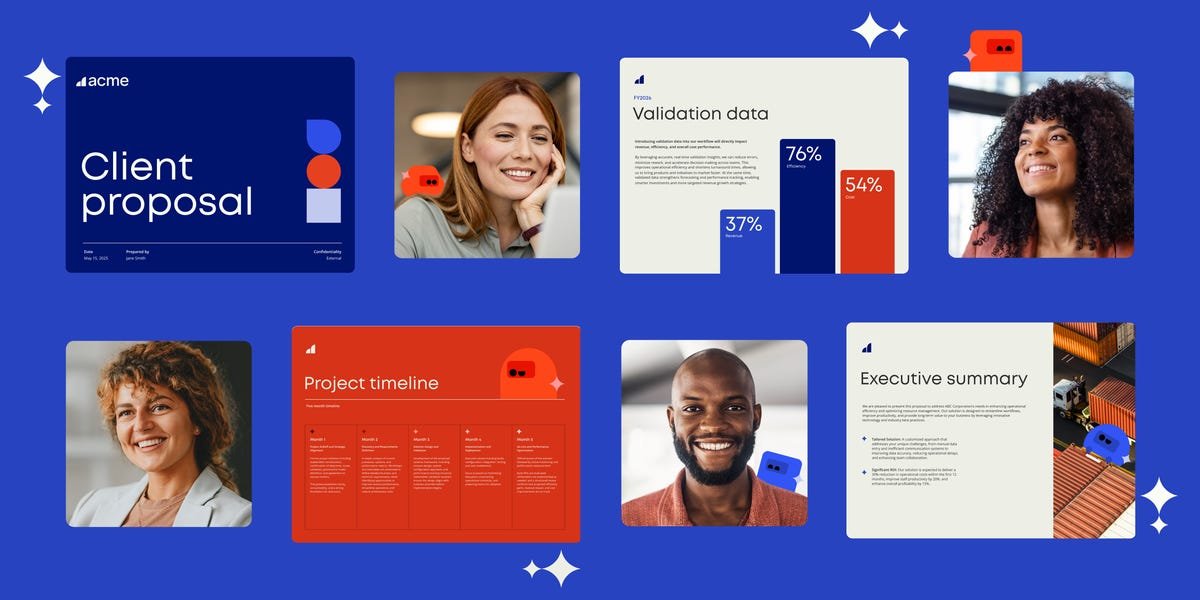
We’re seeing generic tools increasingly exploring document use cases for a reason. Templafy data shows that professionals are creating an average of three presentations a month, including pitch decks, company materials, sales enablement content, and product roadmaps. They are business-critical documents that influence decisions, customer relationships, and company performance.
AI slop is becoming an enterprise problem
The challenge remains, though, that the tools making employees faster are also making companies less consistent and causing AI slop.
One team may use Copilot, and another may use Claude. People may be working faster with generic AI assistants, but the company has little visibility into how the content is being created, from the sources being used to the claims introduced, and what is being copied from old documents.
AI-generated content is being created from scratch, bypassing the company’s best expertise. Most large organizations already have proven proposals, trusted methodologies, approved messaging, compliant language, and high-performing customer materials. If AI workflows are disconnected from those assets, employees end up reinventing work the business has already created.
Each new version drifts further from the company’s knowledge, standards, look and feel, creating a broken process that is inefficient, expensive, and difficult to scale.
From individual productivity to enterprise performance
Where the first wave of workplace AI brought the surge in individual productivity, the next is about curbing AI to drive enterprise performance.
This is where agentic software plays a larger role. It does more than respond to a prompt; it helps complete a defined piece of work. The model provides the intelligence; the agent applies that intelligence to a specific task. The surrounding controls or orchestration layer provides the business context: approved content, workflows, integrations, permissions, brand rules, compliance requirements, and quality checks. The result? AI that builds from the company’s best content, proven methodologies, trusted data, and knowledge.
For employees, the experience should feel simple and seamless. For the enterprise, it should bring control and confidence. This is the outcome when AI is curbed.
Templafy platform data shows this shift in document workflows. AI agent activation has reached 53% among enabled enterprise users, up from near-zero at launch eight months earlier. When users had the option to use an AI agent to create a document, nearly two-thirds chose that workflow. That suggests employees want AI that both answers questions and helps them complete work.
Outcomes that matter: consistency, quality, and cost
For enterprises, AI should not be measured by how many drafts employees generate, but by whether AI improves the outcomes businesses care about:
Consistency. Organizations invest heavily in expertise, methodologies, brand standards, and institutional knowledge; often, applying those standards depends on individual behavior. Did the employee find the right slide, use the right skill, or ground the AI output in the correct document? Agentic workflows can change that. Best practices can be built in directly, so employees can continue working uninterrupted, and everyone benefits from the knowledge regardless of experience level.Quality. The most valuable AI systems won’t generate the most content. They’ll generate better work. By combining enterprise knowledge with AI intelligence, organizations can improve the quality of proposals, presentations, reports, and customer-facing communications while ensuring outputs remain aligned with company standards from the start.Cost. Knowledge work remains one of the largest operating expenses for many organizations. The opportunity with enterprise AI is not only speed, but also reducing rework, eliminating duplication, improving first-draft quality, and scaling expertise. The real metric is not lower cost per task, but per outcome. This matters more as consumption costs come under closer scrutiny and executives are being asked to justify AI spend by proving measurable value.
The productivity gains associated with agent-led workflows are compelling. Based on observed Templafy user sessions, creating a document without agents takes a median of about two hours and an average of 5.6 hours. With agents, the median falls to eight minutes and the average to 27 minutes. These figures assume no additional editing is required after agent creation, but while they’re directional, they show the size of the opportunity. This is not incremental productivity improvement. It points to a different cost structure for producing business-critical documents.
Creating enterprise value through curbing AI
Long before generative AI, enterprises were already trying to improve the consistency, quality, and efficiency of business-critical documents. AI has amplified this.
As foundation models improve, the differentiator will be the ability to combine intelligence with enterprise context, governance, workflows, and quality controls.
The companies that get the most value from AI will be those that turn intelligence into trusted outcomes consistently, securely, and at scale.
For professionals, that means moving beyond faster drafts toward better work that reflects the company’s expertise, protects its reputation, and helps the business move faster without losing control of what makes it distinctive.
Get started with Templafy today.
This sponsored post was supplied by Templafy.
