


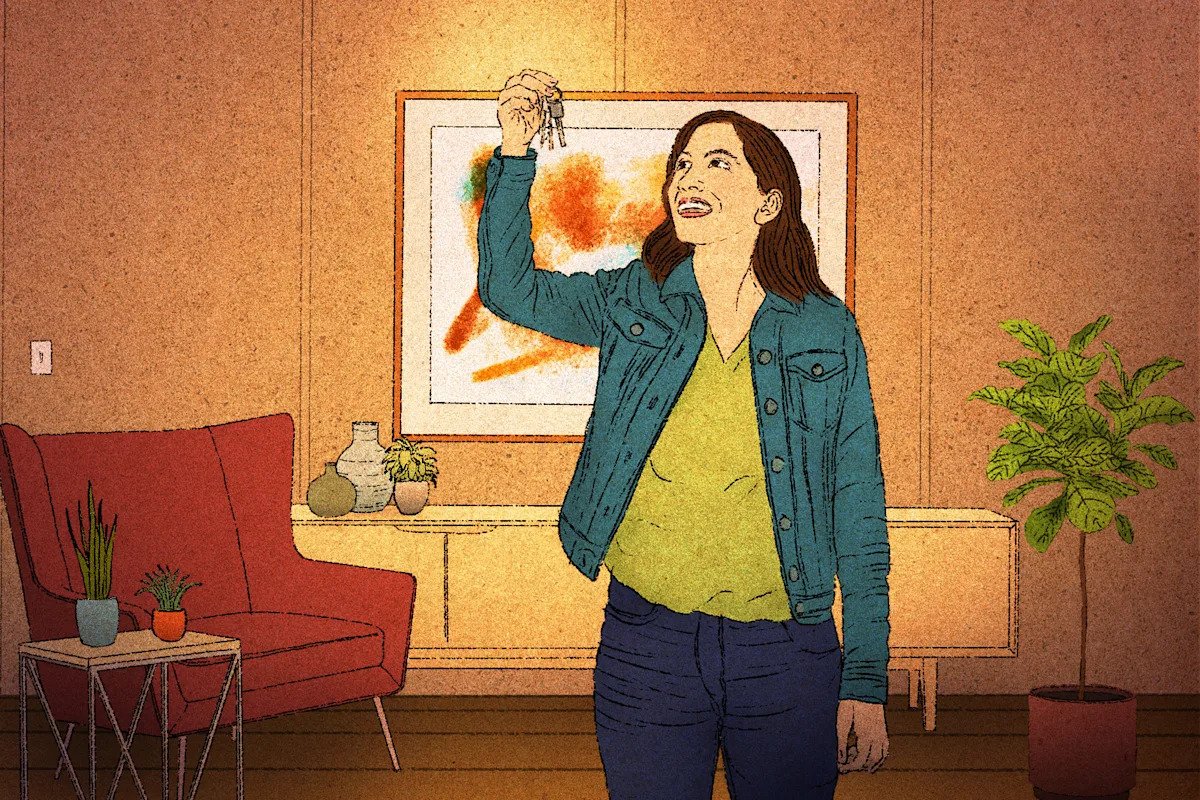
With a scarf dangling from your coat pocket and those gloves left behind at the coffee shop, there are simply more things to lose in winter. That’s not counting your misplaced keys at home or those exasperated moments looking for your phone when you say, “I just had it!”
Try not to beat yourself up. Even Mark McDaniel, who has been studying human memory and learning for almost 50 years, left a hat under his chair recently at a restaurant. He doesn’t usually wear hats, so he forgot it.
“I should know how to remember to remember, but at the moment, you don’t think you’re going to forget,” said McDaniel, professor emeritus of psychological and brain sciences at Washington University in St. Louis.
Luckily, there are strategies. If you can remember to implement them, here’s how to stop losing things.
A breakdown in the brain
Daniel L. Schacter, a Harvard University psychology professor and author of “The Seven Sins of Memory,” said losing things is something everyone is prone to, to varying degrees. It depends on life circumstances that pull the mind away from the present.
Rather than having a bad memory, it might be “a breakdown at the interface of memory and attention,” Schacter said. “That’s what’s responsible, based on research, based on personal experience, for a lot of the memory failures that would result in losing things.”
Memory occurs in three phases in the brain: encoding, storage and retrieval. Schacter likened losing your keys to drivers who arrive at their destination safely without remembering how they got there.
In both cases, the memory of the action is not encoded because people were thinking of something else, which makes it harder to retrieve the memory later.
“You have to do a little bit of cognitive work,” Schacter said. “At the time of encoding, you have to focus your attention.”
For things you use regularly
It helps to not have to remember where some things are.
Schacter suggested identifying problem items such as your phone, wallet or keys and creating a structure that becomes automatic with practice. He always leaves his reading glasses in a specific spot in the kitchen. When he goes golfing, his phone always goes into the same pocket in his golf bag.
“Maybe not always, but, you know, a very high percentage of the time,” he said.
If there is a noticeable increase in losing things compared to the recent past, accompanied by other memory problems that interfere with your normal function, it might be time to see a doctor, Schacter said.
For things you don’t use regularly
McDaniel said that the brain does a better job at remembering things when it receives several bits of information that can later be connected. Among memory researchers, it’s known as elaboration.
One way to stop losing objects you don’t habitually use — but often lose, like a hat — is to say out loud where you put it when you put it down. Verbalizing does two things that help with retrieval.
“Saying it out loud creates a better encoding because it makes you pay attention, and the verbalization creates a richer memory,” McDaniel said.
The more detailed the elaboration, the more connections in the brain there will be to help you remember.
An extreme version of elaboration is the “memory palace” that memory competitors use during championships. To remember a series of numbers and other challenges, they visualize a familiar, structured environment like a house or route, imagining the numbers in particular places.
For something like your hat, imagine it in the location and connect it to a reason and a consequence: “I put my hat under the chair because I didn’t want to get it dirty on the table, but I left it behind last time.”
You might not remember to grab it when you leave, but you’ll probably remember where you left it.
___
EDITOR’S NOTE: Albert Stumm writes about wellness, food and travel. Find his work at https://www.albertstumm.com
___ For more AP wellness stories, go to https://apnews.com/hub/be-well.
