


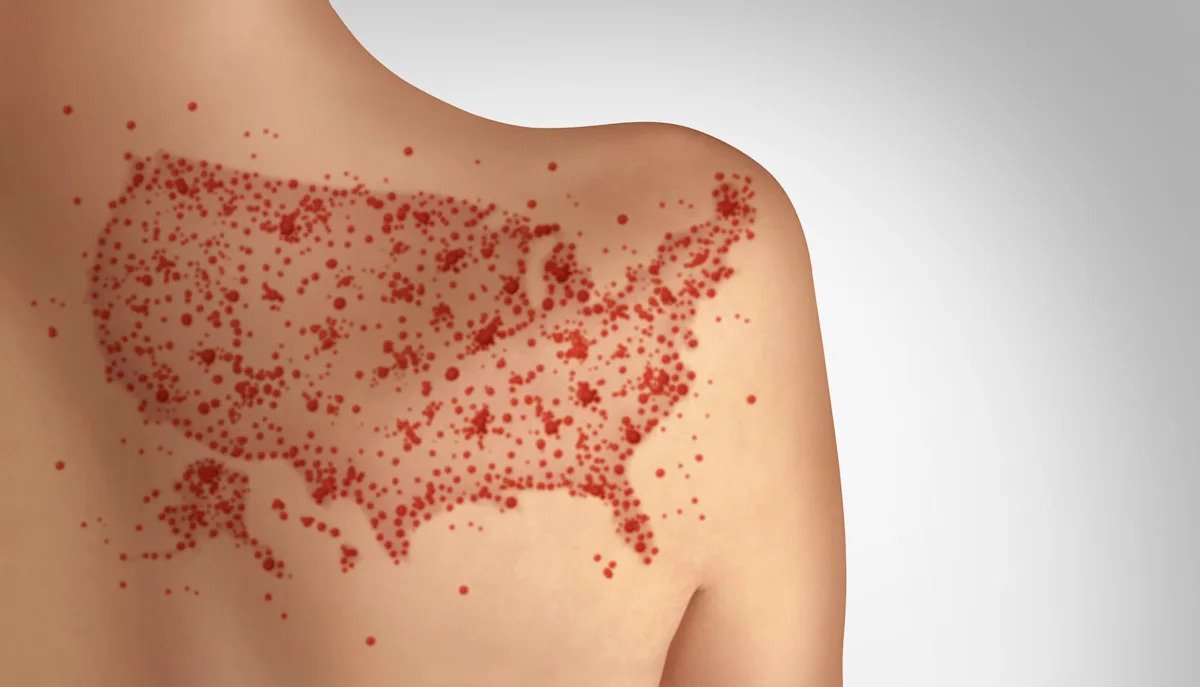
The United States could soon no longer be a country considered free of measles.
The Pan American Health Organization, the part of the World Health Organization that tracks infectious disease in the Americas, is set to review the U.S. and Mexico’s measles elimination status in April. The review stems from the sweeping outbreaks that began in the U.S. in January, 2025, the organization said in a statement.
Losing this status, defined by the WHO as freedom from the continuous spread of a disease for at least a year, backtracks on what the Centers for Disease Control and Prevention called a “historic public health achievement.”
The U.S. is currently suffering from a series of measles outbreaks that took off at the beginning of 2025, reaching a three-decade high by the end of the year. The spread began in Gaines County, Texas, an epicenter that later expanded to engulf surrounding areas. Texas led with the highest number of cases nationwide, eventually declaring the outbreak “over” in August.
How the measles outbreak spread: A look at vaccine exemption rates in Texas
Still, the U.S. is being asked to prove that current outbreaks in South Carolina and other states are not related to the one in Texas. PAHO already removed Canada’s elimination status in November after three decades.
As of Jan. 13, the CDC has recorded 171 confirmed measles cases in nine states in 2026, 95% of which were in people who were unvaccinated or had unknown vaccine status.
Here’s what to know about “elimination status” and why the U.S. could lose it.
What is ‘elimination status’?
When referring to contagious illnesses like measles, “elimination status” means there is no continued transmission (or cases that can be linked to each other) of the disease circulating in the country, and those that do crop up are brought in from outside.
The term “locally acquired” or “locally transmitted” is sometimes used to describe infections, meaning that an illness originated and was spread from person-to-person within a location. In this case, it would mean people got sick with measles without having recently traveled to an outside country where it is commonly found.
To reach elimination status as per the WHO, a country must be free from locally transmitted or acquired cases of the same strain of illness for 12 months or longer.
In 1978, the U.S. aimed to eliminate measles by 1982, a goal it missed but made strides toward with an 80% reduction in cases by 1981, according to the CDC. The U.S. officially eliminated measles from the country in 2000, thanks to a “highly effective vaccination program in the United States, as well as better measles control in the Americas region,” according to the agency.
The last major outbreak that threatened elimination status in the U.S. happened in 2019, when a total of 1,249 measles cases and 22 measles outbreaks were reported nationwide between Jan. 1 and Oct. 1. According to the CDC, this was the second-highest number of reported outbreaks since 2000 and the highest in a single year since 1992.

A measles outbreak has infected dozens in Arizona, Texas and New Mexico, with cases reported in other states, including Alaska, Georgia, New Jersey, New York and Rhode Island.
How could the US lose elimination status?
The breadth of last year’s cluster of illnesses stemming from Texas prompted the upcoming review by PAHO.
Measles cases reached a 30-year high in 2025 when 2,242 cases stemming from 45 unique outbreaks were confirmed across 45 jurisdictions. Nearly 90% of cases were directly linked to known outbreaks and 93% of infections were in unvaccinated people or those without a known vaccination status. Three people, including two children, died as a result of the outbreaks, marking the first pediatric death from measles in a decade.
Measles is a vaccine-preventable disease known to impact children more severely. The MMR vaccine (measles, mumps and rubella) protects against measles with a 97% efficacy rate and is typically given to children as part of the regular vaccine course at ages 12 to 15 months for the first dose and ages 4 to 6 for the second.
Vaccination rates have declined in recent years, however, resulting in a growing number of states no longer reporting rates consistent with herd immunity, and infections have returned. When more than 95% of people in a community are vaccinated, most people are protected, even if they cannot get the vaccine themselves, because others around them are immune and not spreading it.
Vaccination coverage among U.S. kindergartners has decreased from 95.2% during the 2019–2020 school year to 92.5% in the 2024–2025 school year, well under the threshold necessary for effective herd immunity, according to the CDC.

A measles alert sign hangs outside the entrance to the Cohen Children’s Medical Center, where the state health department confirmed that a baby tested positive and that there is a possibility of exposure to others at the facility, in New Hyde Park, New York, U.S., March 14, 2025.
What happens if the US loses measles elimination status?
The designation is more symbolic than anything, according to PAHO.
“Loss of measles elimination status does not carry formal sanctions, but it is a significant public health signal,” PAHO told USA TODAY in an emailed statement. “Elimination is recoverable. The Americas have faced setbacks before—including temporary loss of status in Venezuela (2018) and Brazil (2019)—and successfully regained elimination through intensified vaccination, strengthened surveillance, and rapid outbreak response.”
RFK Jr., measles and changes to the childhood vaccine schedule
Another piece of the puzzle is a growing anti-vaccine movement, which has been bolstered by the confirmation of Robert F. Kennedy Jr., who has a history of vaccine skepticism, as health secretary. In addition to making anti-vaccine comments, Kennedy also downplayed pediatric deaths related to measles and touted false cures and preventives, such as the use of vitamin A.
Kennedy has led several changes to U.S. vaccine schedules and recommendations, including removing four from the childhood list and splitting the MMR vaccine into two separate shots. Kennedy, with President Donald Trump’s backing, said cutting the number of vaccinations aligns the U.S. with other developed nations.
The updated recommendations maintain immunizations for 11 diseases, including measles, mumps, and varicella, while categorizing others as either targeted for high-risk groups or subject to parents’ discretion with their doctors, the Department of Health and Human Services said. As of now, insurance companies have said they still plan to cover the cost of the four removed immunizations.
More: How ‘crunchy mom’ vaccine skeptics found mainstream support in RFK Jr.
Kennedy’s actions around vaccination have been admonished by major medical institutions and public health experts, with some warning that more Americans, including children, may die from preventable diseases as a result. Kennedy has said the vaccines will remain available to anyone who wants them and supporters have praised what they say is a move toward a more individual rights-based approach to public health.
The CDC still suggests vaccination as the best tool to prevent contracting or spreading measles.
This article originally appeared on USA TODAY: US could lose measles elimination status. Here’s what that means.
