


The Trump administration is signaling that it may clamp down on Chinese open-source AI models that are the talk of the industry.
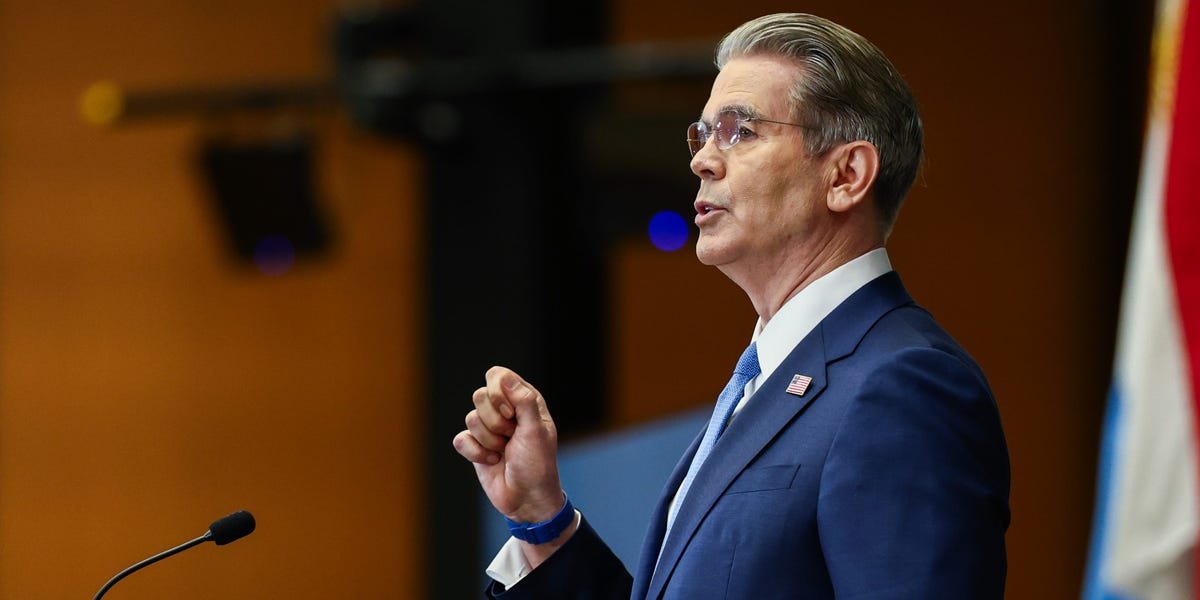
On Tuesday, Treasury Secretary Scott Bessent said the US government is looking into whether popular open-source AI models from Chinese-based companies stole the intellectual property of their US competitors.
“There’s a very technical AI word for it called distillation, but you and I would call it theft,” Bessent said during an interview on Fox Business.
Bessent said the Trump administration welcomes open-sourced AI models in general, but will not tolerate companies that build their offerings on “IP theft.”
“This administration supports open source models, but what we do not support is IP theft,” he said. “And if we see, especially that overseas models are stealing from our great companies, we have the ability to sanction them because of this theft.”
Bessent’s comments are likely to be well received by AI giants like Anthropic, which previously accused Chinese companies like Moonshot AI, the maker of Kimi K3, Minimax, and DeepSeek, of essentially ripping off its AI research through a process known as distillation.
At the time, Anthropic said the Chinese companies accessed “Claude at scale while evading detection” and then used that access to conduct improper training that violated the company’s terms of service.
Unlike Anthropic, Bessent did not name specific companies.
“We are finding watermarks of our US large language models on many Chinese models, and that’s unacceptable,” he said.
Moonshot AI’s release of Kimi K3 has upended the generative AI race. Closely watched AI benchmarks show that the Chinese model performs functions such as coding at or above the level of Anthropic’s Fable 5 or OpenAI’s GPT-5.6-Sol, the two companies’ current frontier, proprietary models.
Unlike proprietary models, open weight models are made available for users to download and to tweak at their leisure. Moonshot has promised to release Kimi 3’s full weights on July 27. In the meantime, users are accessing it through the firm’s website.
There is an intense debate brewing in tech over what, if anything, the US government should do in response to Kimi K3.
Dean Ball, a former senior advisor on AI to President Donald Trump who is newly OpenAI’s head of strategy, faced intense pushback when he suggested that the White House may breed FUD ( fear, uncertainty, and doubt) to get the private sector to shy away from deploying Chinese open source models. Legendary tech investor Bill Gurley wrote a Washington Post op-ed on Monday that portrayed open-source models as one of the few ways the US could avoid an AI duopoly in which Anthropic and OpenAI maintain a stranglehold.
Anthropic has also faced skepticism from some quarters when it has complainbed about distillation attacks, given that its own AI models were built on copyrighted materials that authors and media companies have said were used without permission.
Bessent said that there are US companies pursuing open-source models, naming Meta, Nvidia, and Reflection AI. But for now, the Chinese companies are widely viewed as dominating the space.
“These models have to be held to the same standard as US models are, but more importantly, are they using stolen materials?” he said.
