

Close Menu
  • Home
  • AI
  • Education
  • Entertainment
  • Food Health
  • Health
  • Sports
  • Tech
  • Well Being

Subscribe to Updates

Subscribe to our newsletter and never miss our latest news

Subscribe my Newsletter for New Posts & tips Let's stay updated!

What's Hot

You can now customize Siri’s pace and expressivity in the latest iOS 27 beta

July 6, 2026

If you use Google, you’re training its AI. Here’s how to opt out.

July 6, 2026

Microsoft lays off nearly 5,000 employees across Xbox, commercial sales

July 6, 2026
Facebook X (Twitter) Instagram
  • Home
  • About Us
  • Advertise With Us
  • Contact us
  • DMCA
  • Privacy Policy
  • Terms & Conditions
Facebook X (Twitter) Instagram
IQ Times Media – Smart News for a Smarter YouIQ Times Media – Smart News for a Smarter You
  • Home
  • AI
  • Education
  • Entertainment
  • Food Health
  • Health
  • Sports
  • Tech
  • Well Being
IQ Times Media – Smart News for a Smarter YouIQ Times Media – Smart News for a Smarter You
Home » OpenAI claims it solved an 80-year-old math problem — for real this time
AI

OpenAI claims it solved an 80-year-old math problem — for real this time

IQ TIMES MEDIABy IQ TIMES MEDIAMay 20, 2026No Comments2 Mins Read
Facebook Twitter Pinterest LinkedIn Tumblr Email
Share
Facebook Twitter LinkedIn Pinterest Email


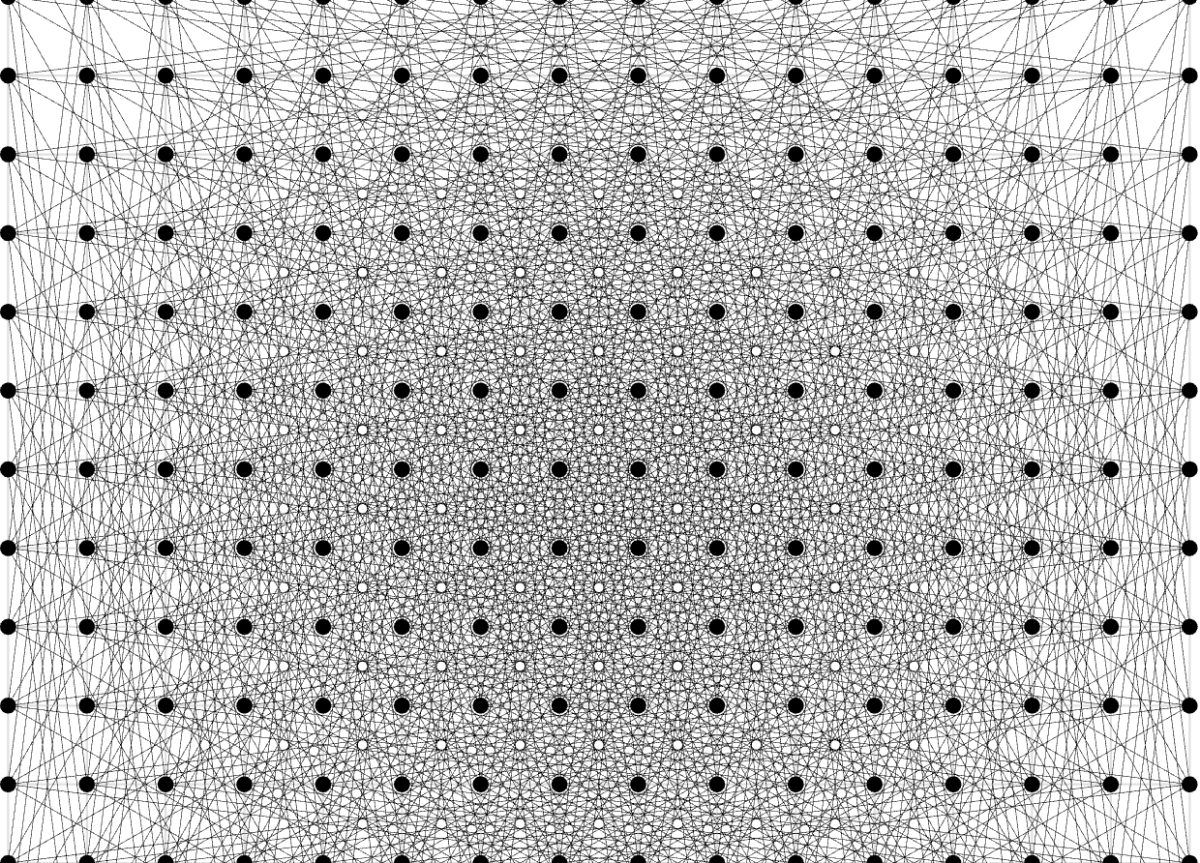
OpenAI claims its new reasoning model has produced an original mathematical proof disproving a famous unsolved conjecture in geometry, which was first posed by Paul Erdős in 1946.

If this sounds familiar to you, it’s because this isn’t the first time OpenAI has made such a bold claim. Seven months ago, the AI giant’s former VP Kevin Weil posted on X: “GPT-5 found solutions to 10 (!) previously unsolved Erdős problems and made progress on 11 others.”

It turns out, GPT-5 didn’t actually solve those problems; it just found solutions that already existed in the literature. 

Taunts from rivals like Yann LeCun and Google DeepMind CEO Demis Hassabis followed, and Weil promptly took down his premature post. Today, at least, it seems OpenAI didn’t make the same mistake twice. Alongside the announcement, the company published companion remarks in support of the disproof from mathematicians like Noga Alon, Melanie Wood, and Thomas Bloom, who maintains the Erdos Problems website, and previously called Weil’s post “a dramatic misrepresentation.” 

“For nearly 80 years, mathematicians believed the best possible solutions looked roughly like square grids,” OpenAI posted on X. “An OpenAI model has now disproved that belief, discovering an entirely new family of constructions that performs better.”

The company said this marks “the first time AI has autonomously solved a prominent open problem central to a field of mathematics.” The proof, per OpenAI, came from a new general-purpose reasoning model, not a system specifically designed to solve math problems or even this problem in particular. 

OpenAI says this is significant because it means AI systems are now more capable of holding together long, difficult chains of reasoning and connecting ideas across fields in ways researchers may not have previously explored. That has implications for biology, physics, engineering, and medicine.

“AI is helping us to more fully explore the cathedral of mathematics we have built over the centuries,” Bloom said in a statement. “What other unseen wonders are waiting in the wings?”

When you purchase through links in our articles, we may earn a small commission. This doesn’t affect our editorial independence.


Source link

Share. Facebook Twitter Pinterest LinkedIn Tumblr Email
IQ TIMES MEDIA
  • Website

Related Posts

You can now customize Siri’s pace and expressivity in the latest iOS 27 beta

July 6, 2026

If you use Google, you’re training its AI. Here’s how to opt out.

July 6, 2026

Microsoft lays off nearly 5,000 employees across Xbox, commercial sales

July 6, 2026
Add A Comment
Leave A Reply Cancel Reply

Editors Picks

UK schools turn to popsicles and sprayers to stay cool in the heat

July 6, 2026

Trump Accounts launch on USA’s 250th birthday. Here’s how to sign up

July 2, 2026

World Cup may mint more soccer fans among US kids

July 1, 2026

Could feds’ changes put more people with disabilities in institutions?

July 1, 2026
Education

UK schools turn to popsicles and sprayers to stay cool in the heat

By IQ TIMES MEDIAJuly 6, 20260

LONDON (AP) — Like hundreds of other schools across the U.K., the Welsh school where…

Trump Accounts launch on USA’s 250th birthday. Here’s how to sign up

July 2, 2026

World Cup may mint more soccer fans among US kids

July 1, 2026

Could feds’ changes put more people with disabilities in institutions?

July 1, 2026
IQ Times Media – Smart News for a Smarter You
Facebook X (Twitter) Instagram Pinterest Vimeo YouTube
  • Home
  • About Us
  • Advertise With Us
  • Contact us
  • DMCA
  • Privacy Policy
  • Terms & Conditions
© 2026 iqtimes. Designed by iqtimes.

Type above and press Enter to search. Press Esc to cancel.