


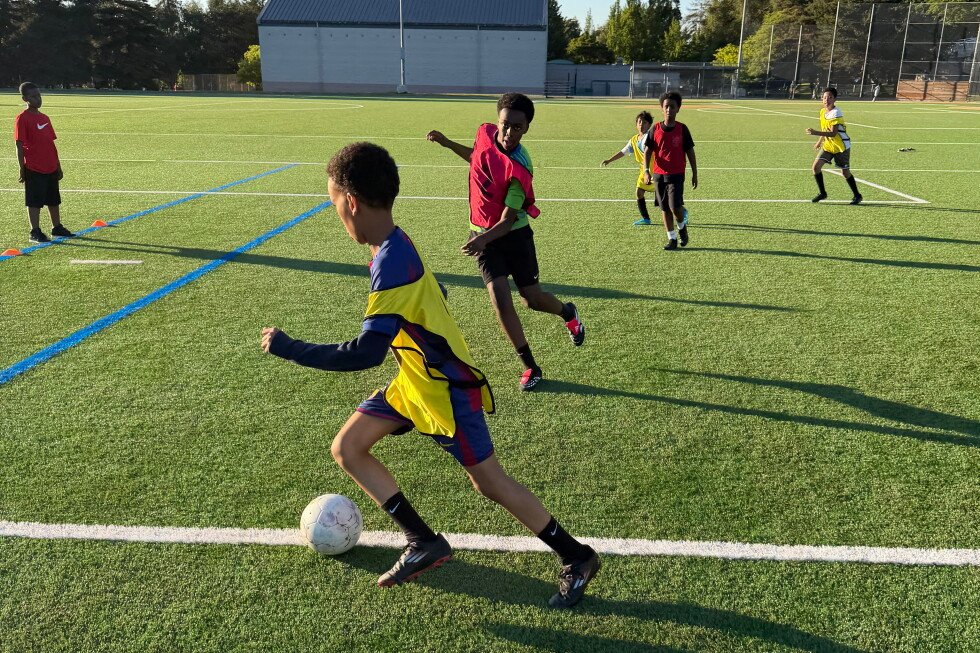
SEATTLE (AP) — Ali Abdulla was over the moon when he learned his youth-soccer nonprofit would receive 20 free tickets to the World Cup round of 16 match next month in Seattle. Many of the kids in his African Youth Sports Academy come from low-income, immigrant families, and with ticket prices hovering around $1,000, it was an incredible opportunity for them.
Then the U.S. barred Omar Artan — the first Somali referee set to officiate in the World Cup — from entering the country. Abdulla, himself a former semi-professional soccer player and Somali refugee, wanted to do something in solidarity, and first thought of giving up his position as a volunteer FIFA “ambassador.” But, he said, when he told parents and coaches about his decision, they suggested something even more significant: Give back the tickets.
A World Cup referee from Somalia who was denied entry to the United States after arriving in Miami and subsequently cut from the tournament by FIFA was set to make history for his country. (AP Video/ Mohamed Sheikh Nor)
“They all sent a message saying, ‘We feel heartbroken, we feel betrayed,’” Abdulla told The Associated Press on Friday. “We don’t feel right to go celebrate while the only person in the history of our country (selected to referee the World Cup) is feeling pain and disappointed.”
He added: “I felt so emotional when the parents said that, because to return a one-time opportunity for solidarity with our boy — that made me very proud to lead this organization.”
The free tickets were among 1,400 distributed through a program organized by Seattle Mayor Katie Wilson and the local FIFA World Cup organizing committee. Abdulla himself attended the announcement of the program and recruited about two dozen kids to be part of the mayor’s social media video promoting it.
He said learning that his nonprofit was receiving the tickets was “the best news I ever had.” The African Youth Sports Academy, which also offers mentorship and other services, decided to hold a soccer competition to help determine who would receive tickets. The plan was to award the tickets to about a dozen youth, ages 13 to 16, and several of their parents, Abdulla said.
The kids “are very sad, man, very heartbroken,” he said. “We have to teach them to stand up for the right thing.”
The mayor’s office confirmed the tickets had been reallocated but otherwise did not comment on the decision. Hana Tadesse, a spokesperson for the local FIFA World Cup organizing committee, said they had gone to another community group: the Somali Health Board, which also sponsors youth soccer. That organization did not immediately return an email seeking comment Friday.
The African Youth Sports Academy’s decision was earlier reported by The Seattle Times.
Ali Abdulla, the founder and executive director of the nonprofit African Youth Sports Academy, poses for a self-portrait outside his Seattle office on Friday, June 12, 2026. (Ali Abdulla via AP)
Abdulla, whose day job is working as a transit security officer in Seattle’s light rail system, played with the semi-pro Seattle Somali Stars before retiring in 2017. He was set to serve as a volunteer ambassador for the World Cup, welcoming fans and helping them get to the stadium. Now, he said, he won’t even watch the games on TV.
Instead, he said, he is focused on another upcoming tournament, which he formerly played and coached in and now organizes: the 28th annual Somali Week, which is bringing teams from Canada, the United Kingdom, Minneapolis and elsewhere to the Seattle suburb of Kent in August.
It draws players of African heritage and others, Abdulla said, and serves as a powerful display of how soccer can unite the community.
___
AP World Cup coverage: https://apnews.com/hub/fifa-world-cup
