


GENEVA (AP) — The World Health Organization no longer considers the mpox outbreak in Africa to be an international health emergency, the U.N. agency’s director said Friday.
The new form of mpox emerged in early 2024 in Congo and neighboring African countries, spread through close contact including sex. WHO declared it a global health emergency in August of last year.
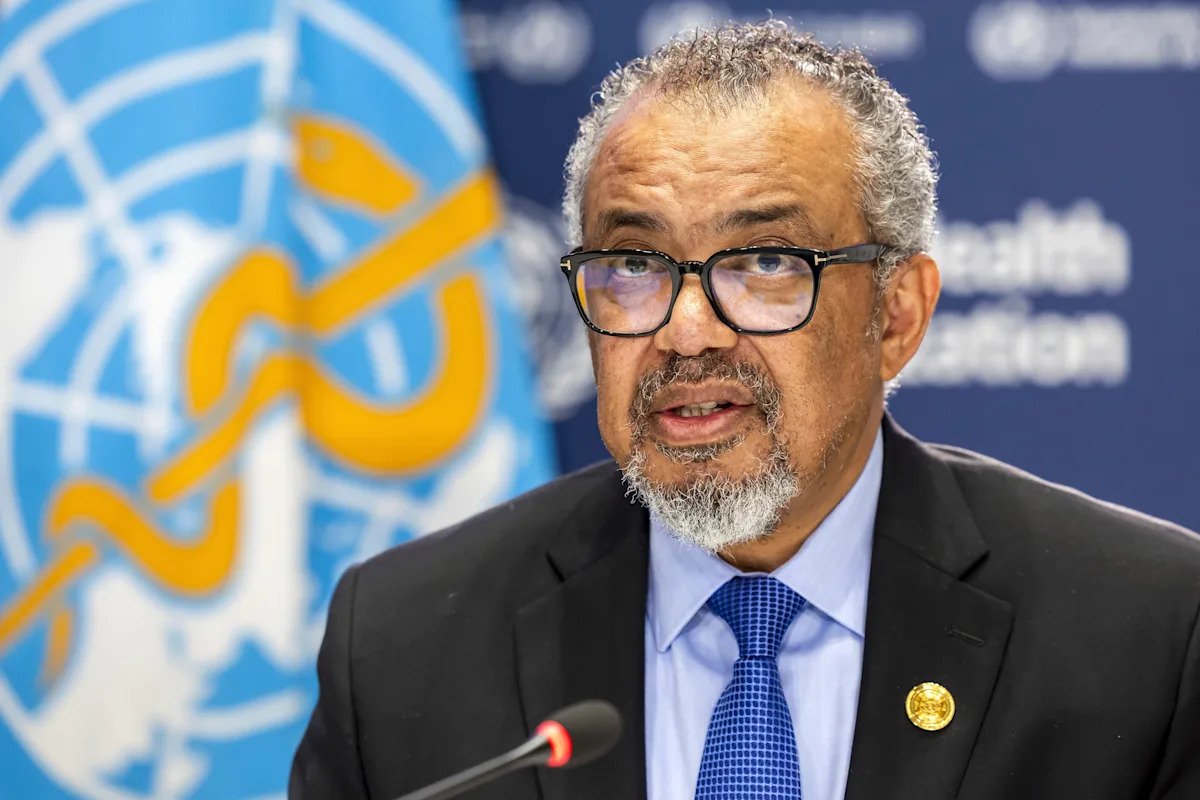
WHO Director-General Tedros Adhanom Ghebreyesus told reporters Friday that an emergency panel created after the outbreak has advised that the situation is no longer an international emergency, and “I have accepted that advice.”
The international emergency declaration, the agency’s highest level of warning about threatening health issues, triggers the release of resources and enhanced public awareness campaigns, among other measures.
“Of course, lifting the emergency declaration does not mean the threat is over, nor that our response will stop,” the WHO chief said.
Mpox — formerly known as monkeypox — is a rare disease caused by infection with a virus that’s in the same family as the one that causes smallpox.
It is endemic in parts of Africa, where people have been infected through bites from rodents or small animals. Milder symptoms can include fever, chills and body aches. In more serious cases, people can develop lesions on the face, hands, chest and genitals.
There are different versions of the virus.
One version — called clade II — was the source of an international health crisis in 2022, when cases escalated rapidly in dozens of countries, spreading mostly among men who have sex with men. At one point in the U.S., an average of close to 500 cases were reported each day.
The infections were rarely fatal, but many people suffered painful skin lesions for weeks. Those outbreaks waned later that year.
The other version — known as clade I — is spread through close contact, including through sex, and is deadlier. A newer form of the clade 1 virus has been widely transmitted in eastern and central Africa, with the bulk of the cases in Burundi, Uganda and the Democratic Republic of the Congo, leading to last year’s WHO declaration.
Cases were identified in travelers outside of the continent, but that spread has been more limited.
The U.S., for example, has reported five cases of this version of mpox, in people who had recently traveled to affected areas in Africa. The cases were not linked, and no additional spread of mpox has been reported, according to the U.S. Centers for Disease Control and Prevention.
Tedros said the decision to end the emergency followed improved public health measures and sustained declines in case counts.
Increased testing was a big factor, said Dr. Dimie Ogoina, a Nigerian infectious diseases specialist who chairs the WHO emergency committee. “Many countries have improved their ability to diagnose,” allowing them to identify cases and reduce spread, he said.
___
Stobbe reported from New York.
___
The Associated Press Health and Science Department receives support from the Howard Hughes Medical Institute’s Department of Science Education and the Robert Wood Johnson Foundation. The AP is solely responsible for all content.
