

Close Menu
  • Home
  • AI
  • Education
  • Entertainment
  • Food Health
  • Health
  • Sports
  • Tech
  • Well Being

Subscribe to Updates

Subscribe to our newsletter and never miss our latest news

Subscribe my Newsletter for New Posts & tips Let's stay updated!

What's Hot

The haves and have nots of the AI gold rush

May 16, 2026

Research repository ArXiv will ban authors for a year if they let AI do all the work

May 16, 2026

Job Postings for This Tech Job Have Grown Over 700% in the Last Year

May 16, 2026
Facebook X (Twitter) Instagram
  • Home
  • About Us
  • Advertise With Us
  • Contact us
  • DMCA
  • Privacy Policy
  • Terms & Conditions
Facebook X (Twitter) Instagram
IQ Times Media – Smart News for a Smarter YouIQ Times Media – Smart News for a Smarter You
  • Home
  • AI
  • Education
  • Entertainment
  • Food Health
  • Health
  • Sports
  • Tech
  • Well Being
IQ Times Media – Smart News for a Smarter YouIQ Times Media – Smart News for a Smarter You
Home » Man who asked ChatGPT about cutting out salt from his diet was hospitalized with hallucinations
Health

Man who asked ChatGPT about cutting out salt from his diet was hospitalized with hallucinations

IQ TIMES MEDIABy IQ TIMES MEDIAAugust 14, 2025No Comments3 Mins Read
Facebook Twitter Pinterest LinkedIn Tumblr Email
Share
Facebook Twitter LinkedIn Pinterest Email


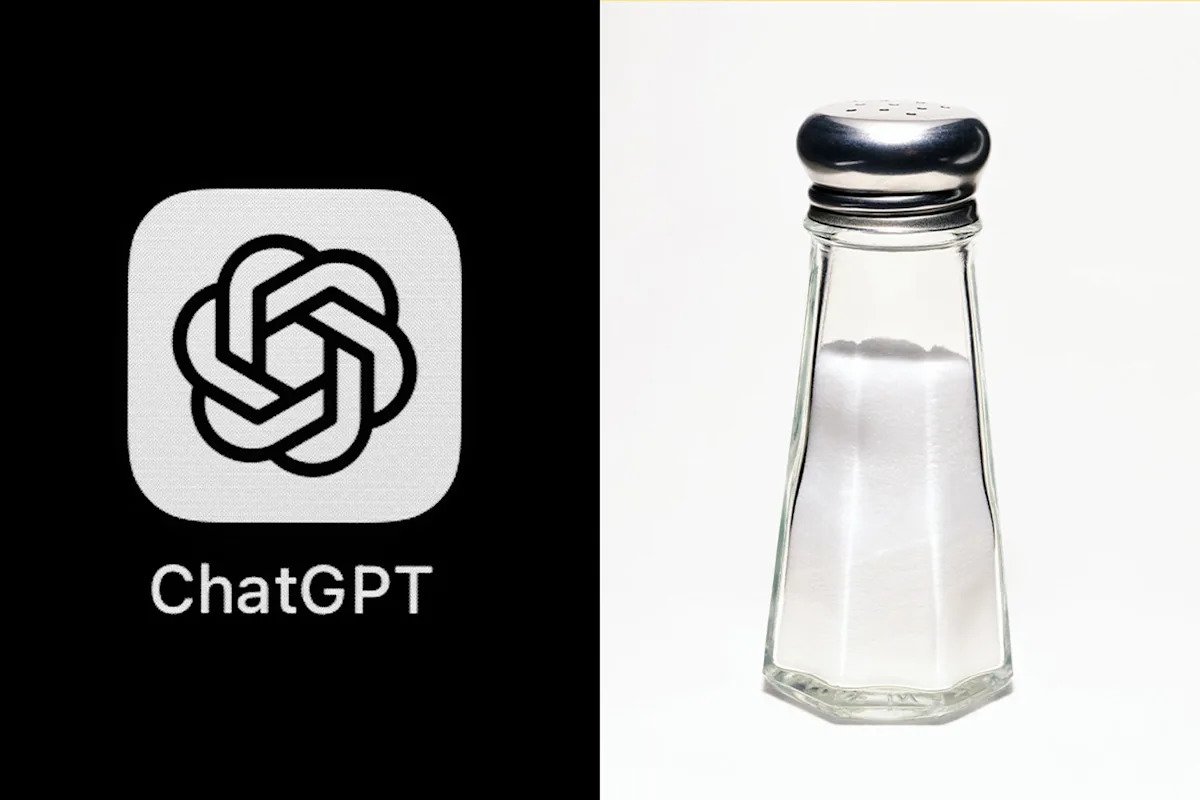
A 60-year-old man spent three weeks being treated at a hospital after replacing table salt with sodium bromide following consultation with the popular artificial intelligence bot ChatGPT.

Three physicians published a report on the case in the Annals of Internal Medicine earlier this month. According to the report, the man had no prior psychiatric history when he arrived at the hospital “expressing concern that his neighbor was poisoning him.”

The man shared that he had been distilling his own water at home, and the report noted he seemed “paranoid” about water he was offered. Bromism, or high levels of bromide, was considered after a lab report and consultation with poison control, the report said.

“In the first 24 hours of admission, he expressed increasing paranoia and auditory and visual hallucinations, which, after attempting to escape, resulted in an involuntary psychiatric hold for grave disability,” the case report said.

Once his condition improved, the man shared that he had taken it upon himself to conduct a “personal experiment” to eliminate table salt from his diet after reading about its negative health effects. The report said he did this after consulting with the chatbot ChatGPT.

He self-reported that the replacement went on for three months.

The three physicians, all from the University of Washington, noted in the report that they did not have access to the patient’s conversation logs with ChatGPT. However, they asked ChatGPT 3.5 what chloride could be replaced with on their own.

According to the report, the response they received included bromide.

“Though the reply stated that context matters, it did not provide a specific health warning, nor did it inquire about why we wanted to know, as we presume a medical professional would do,” the report said.

A representative for OpenAI, the company that created ChatGPT, did not immediately respond to a request for comment. The company noted in a statement to Fox News that its terms of service state that the bot is not to be used in the treatment of any health condition.

“We have safety teams working on reducing risks and have trained our AI systems to encourage people to seek professional guidance,” the statement said.

Bromide toxicity was a more common toxic syndrome in the early 1900s, the report said, as it was present in a number of over-the-counter medications and sedatives. It was believed to contribute to 8% of psychiatric admissions at the time, according to the report.

Bromide salt, an inorganic compound, is now typically only used in veterinary medicine as an anti-epileptic medication for cats and dogs, according to the National Library of Medicine.

It’s a rare syndrome, but cases have re-emerged recently “as bromide-containing substances have become more readily available with widespread use of the internet,” the report said.

This article was originally published on NBCNews.com


Source link

Share. Facebook Twitter Pinterest LinkedIn Tumblr Email
IQ TIMES MEDIA
  • Website

Related Posts

What an expert on the gut microbiome eats in a day

March 26, 2026

Wegovy maker Novo sharpens consumer focus with board role for Mars CEO

March 26, 2026

CDC report finds US smoking rate continues to plummet as vape use rises

March 26, 2026
Add A Comment
Leave A Reply Cancel Reply

Editors Picks

Nashville HBCU Fisk University Launches $900M Campus Transformation

May 15, 2026

Justice Department alleges Yale illegally considered race in medical school admissions

May 14, 2026

Princess of Wales highlights Italy’s Reggio Approach for children

May 14, 2026

Pope Leo XIV warns of AI and weaponry leading to global annihilation

May 14, 2026
Education

Nashville HBCU Fisk University Launches $900M Campus Transformation

By IQ TIMES MEDIAMay 15, 20260

Fisk University President Agenia Clark on Thursday announced a $900 million plan to remake the…

Justice Department alleges Yale illegally considered race in medical school admissions

May 14, 2026

Princess of Wales highlights Italy’s Reggio Approach for children

May 14, 2026

Pope Leo XIV warns of AI and weaponry leading to global annihilation

May 14, 2026
IQ Times Media – Smart News for a Smarter You
Facebook X (Twitter) Instagram Pinterest Vimeo YouTube
  • Home
  • About Us
  • Advertise With Us
  • Contact us
  • DMCA
  • Privacy Policy
  • Terms & Conditions
© 2026 iqtimes. Designed by iqtimes.

Type above and press Enter to search. Press Esc to cancel.