


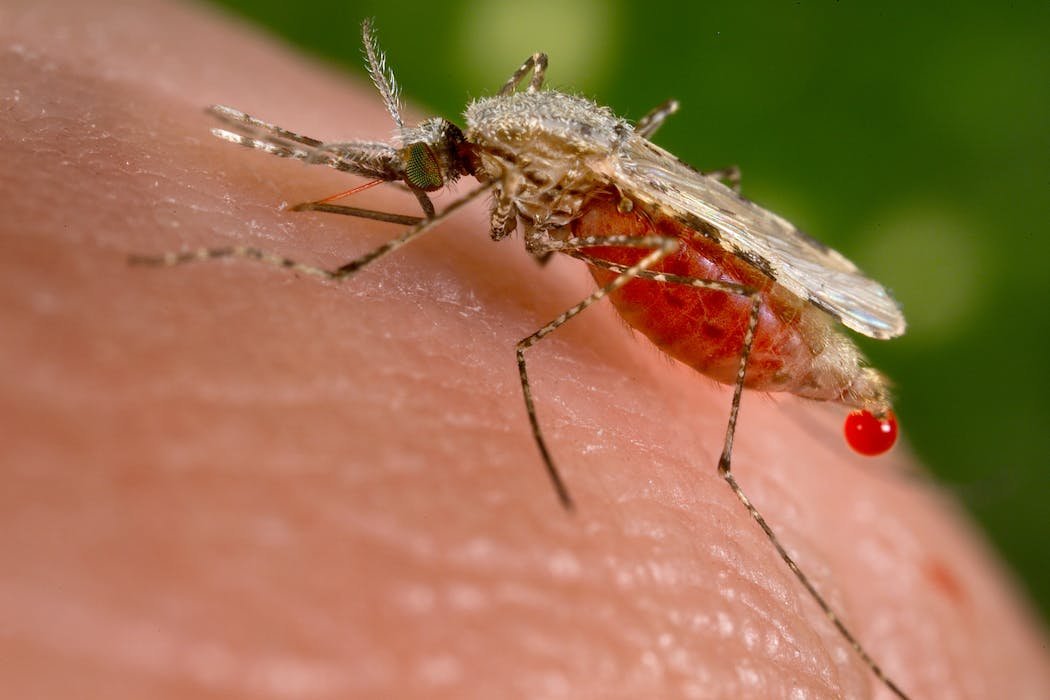
Every year, malaria kills more than 600,000 people worldwide. Most of them are children under 5 in sub-Saharan Africa. But the disease isn’t confined to poor, rural areas – it’s a global threat that travels with people across borders.
For decades, the fight against malaria has felt like running in place. Bed nets and drugs save lives, but the family of parasites that cause malaria, called Plasmodium, keeps evolving new ways to survive. These parasites transmitted to humans through the bites of infected mosquitoes.
But something is shifting. As a malaria researcher working on my Ph.D., I study how the malaria parasite develops resistance to drugs. I know what malaria feels like. I’ve had it, and I’ve lost a family member to it. That experience drove me into this field.
When I started this work in 2023, few good options existed for protecting the youngest children – the group most likely to die from malaria. Now, for the first time in my career, I’m watching real breakthroughs happen simultaneously: new vaccines, powerful antibodies and genetic surveillance tools that can predict resistance before it spreads.
2 new vaccines for children
In 2023, the World Health Organization approved two malaria vaccines for children: one called RTS,S/AS01, also known as Mosquirix, and another referred to as R21/Matrix-M. Given in four doses starting around 5 months of age, they’re the first vaccines ever shown to prevent severe malaria.
These vaccines don’t provide perfect protection. They reduce the incidence of clinical malaria cases in vaccinated children by about 75% in the first year after receiving the primary dose, and the protection they offer fades over time. But when combined with bed nets and preventive drugs, they’re already preventing thousands of deaths. As of late 2025, about 20 countries, primarily in Africa where malaria burden is highest, have introduced these vaccines into childhood immunization programs.

This matters enormously because children under 5 years old do not have fully developed immune systems and haven’t built up any natural resistance to malaria. A single infection can turn deadly within hours.
The vaccine is effective because it contains a molecule that mimics a key protein on the parasite’s surface, called circumsporozoite protein. This molecule trains the immune system to recognize the parasite upon infection after a mosquito bite, before the parasite can hide inside human cells.
Discovering a parasite’s hidden weak spot
In January 2025, researchers found something surprising about how the malaria parasite invades cells.
To invade liver cells, the parasite must shed a dense surface protein that acts as a protective shield. This briefly exposes specific hidden spots of proteins, called epitopes, that were previously invisible. That momentary unmasking could give the immune system a chance to recognize the parasite and stop the invasion.
Because this vulnerability is exposed only for a split second, most immune responses miss it. However, scientists discovered an antibody called MAD21-101 that is precise enough to catch it.
An antibody is essentially a microscopic security tag produced by the immune system that can stick to invaders. While standard antibodies fail to latch because of the parasite’s protein shield, MAD21-101 waits for the unmasking moment and locks directly onto the exposed spot.
In lab tests, this action blocked the parasite from entering liver cells, stopping the infection completely. Scientists envision turning this antibody into a treatment that prevents infections in high-risk infants, potentially to be used alongside existing vaccines to strengthen protection against malaria.

Protecting and treating the youngest patients
Because of their undeveloped immune systems, infants have historically faced a double gap: limited ways to prevent malaria, and almost no safe treatments formulated for their tiny bodies when they inevitably got sick.
In 2022, the WHO began recommending a malaria prevention strategy called perennial malaria chemoprevention for babies starting at 2 months. Infants receive a full dose of a standard antimalarial medication, such as sulfadoxine-pyrimethamine, during their routine vaccination checkups. The treatment clears out parasites and provides temporary prevention, regardless of whether the child has a fever or other symptoms.
A new treatment has recently become available. Coartem Baby, approved by Swiss regulators in 2025, is the first malaria treatment designed specifically for infants weighing as little as 4.4 pounds. Unlike older drugs, this formula safely accounts for a baby’s immature metabolism. It contains one ingredient, artemether, which acts fast to reduce the parasite count immediately, and a second ingredient, lumefantrine, which stays in the blood longer to mop up any survivors.
Tracking parasite evolution around the globe
The malaria parasite has an uncanny ability to rewrite its genetic code under pressure, allowing it to adapt and withstand the very medicines designed to destroy it. This adaptability is now threatening the drug artemisinin, the backbone of global malaria treatment, which is starting to fail in parts of Africa and Southeast Asia. But researchers like me are getting a clearer picture of how resistance develops and how it might be interrupted.
One of the parasite’s tricks is to make extra copies of the genes that help it survive antimalarial drug treatment. In my research, I use a high-precision technique that counts the number of genes to estimate a sort of resistance score: A parasite with more copies is far better equipped to survive treatment than a parasite with only one.
Scientists around the world are using molecular scanning tools to hunt for specific mutations – single-letter changes in the parasite’s DNA – that make the parasite more resistant to the drug. For example, researchers in my lab are working to pin down the parasite’s genetic code as it’s in the act of changing, in order to catch dangerous mutations while they’re still rare. That would give researchers time to deploy alternative treatments before children start dying from drug-resistant infections.
These tracking tools allow epidemiologists to create early warning systems that can identify where drug resistance is emerging and predict where it might spread next, as the pathogen hitchhikes across continents in travelers’ bloodstreams. Based on those warnings, health officials can switch treatment strategies before a drug fails completely. What’s more, knowing exactly which genes the parasite modifies may enable researchers to block those changes to prevent resistance from emerging.
Malaria research is entering a new era where, although the parasite adapts, scientists like me can now adapt faster. A malaria-free childhood isn’t guaranteed yet, but for the first time in my career, it feels like a realistic goal rather than a distant dream.
This article is republished from The Conversation, a nonprofit, independent news organization bringing you facts and trustworthy analysis to help you make sense of our complex world. It was written by: Kwesi Akonu Adom Mensah Forson, University of Virginia
Read more:
Kwesi Akonu Adom Mensah Forson receives no funding, compensation or financial support from any companies or organizations related to malaria vaccines, drugs or diagnostic technologies. His research on malaria parasite genetics is conducted as part of Ph.D. project at the University of Virginia, supported by university and academic research funds.
