


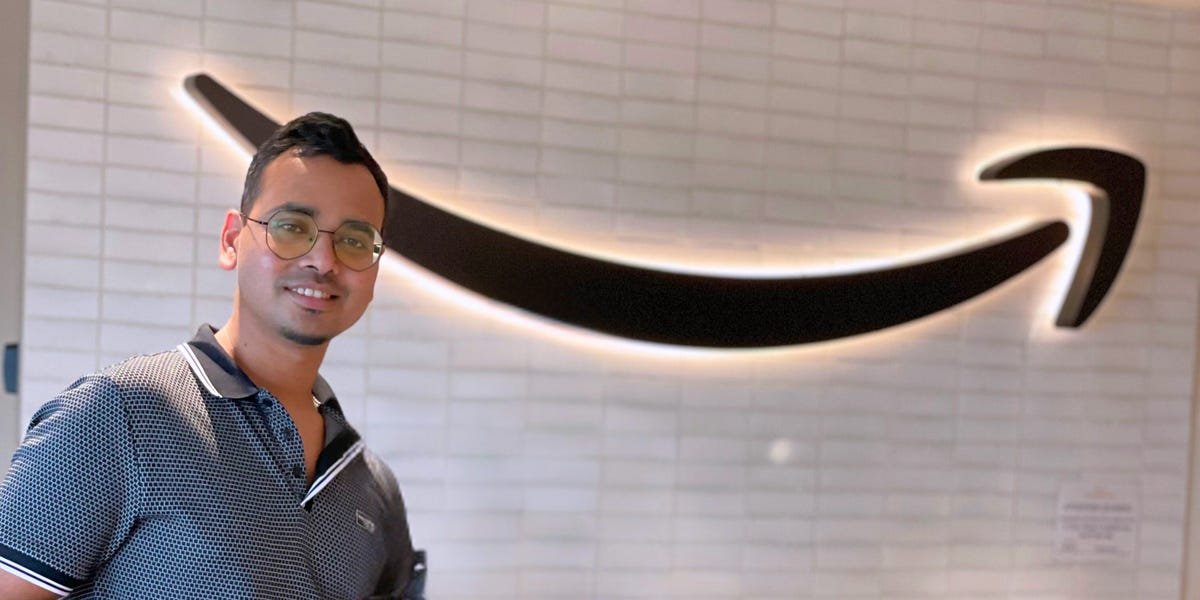
This as-told-to essay is based on a conversation with Suvendu Mohanty, a 37-year-old machine learning engineer at Amazon. It’s been edited for length and clarity.
I got my Master’s in Computer Science in 2011, and like others, I got tracked into coding as a software engineer. I started my career as a Java engineer developing software applications. Six or seven years later, I came across the profile of machine learning.
Machine learning was not in a boom at that moment. The projects we got were almost always software engineering; machine learning projects were really, really hard to get.
The college education system also hadn’t properly adopted AI and machine learning in its curriculum. When you’re doing a master’s degree you can take a specialization, or you are doing a Ph.D. But what about the millions of software engineers who are early in their career and are not formally trained?
The first thing I did was take some interest in learning what machine learning is. I grabbed some online free resources and joined hackathon projects.
That got my manager’s attention. He hadn’t thought about it, but he told me, “Since you’re doing machine learning, we want to build something. Can you work with it?” Technically I got exposure at work itself, even though it wasn’t full-blown.
Right now, ML is booming. Everyone is talking about ML. Back then, there was a fear that ML is difficult to grab at or difficult to get. They had a misconception; I had to step out of my comfort zone and take some initiative on my own interests.
I found out that machine learning was another stream of software engineering. There’s nothing magical about it.
Now there’s lots of exposure to it. You need to talk to your manager, talk to your PM or stakeholders about opportunities. That should be your first step. Directly coming out of your company and finding an ML role with only software engineering would be difficult.
That’s the quickest way to go in and get your hands dirty, rather than just going through online resources.
Related stories

Business Insider tells the innovative stories you want to know
Business Insider tells the innovative stories you want to know
ML is not always the solution. It’s one way to help you stay relevant in the market.
There’s noise and there’s a signal. On the social media platforms that everyone’s on, you need to filter out the noise. You need to find: What is the innovation area that is silently going on? Which people are working to make the future? Those are called signals.
Signals come from research papers, following leaders, following conferences. I followed that. I found who are the authenticated sources that can give you a glimpse of what’s coming next.
For example, robotics is next.
We need to identify, in the next five or 10 years, where the demand will be. If you’re only writing code and you’re not innovating much, then you may be at a lag behind and your job will be at risk.
Three years back, I got into Amazon. Working at Amazon, you always need to be innovating. You need to be very competitive. That’s the part of Amazon I like most: The culture motivates you to build something and will never slow you down.
