


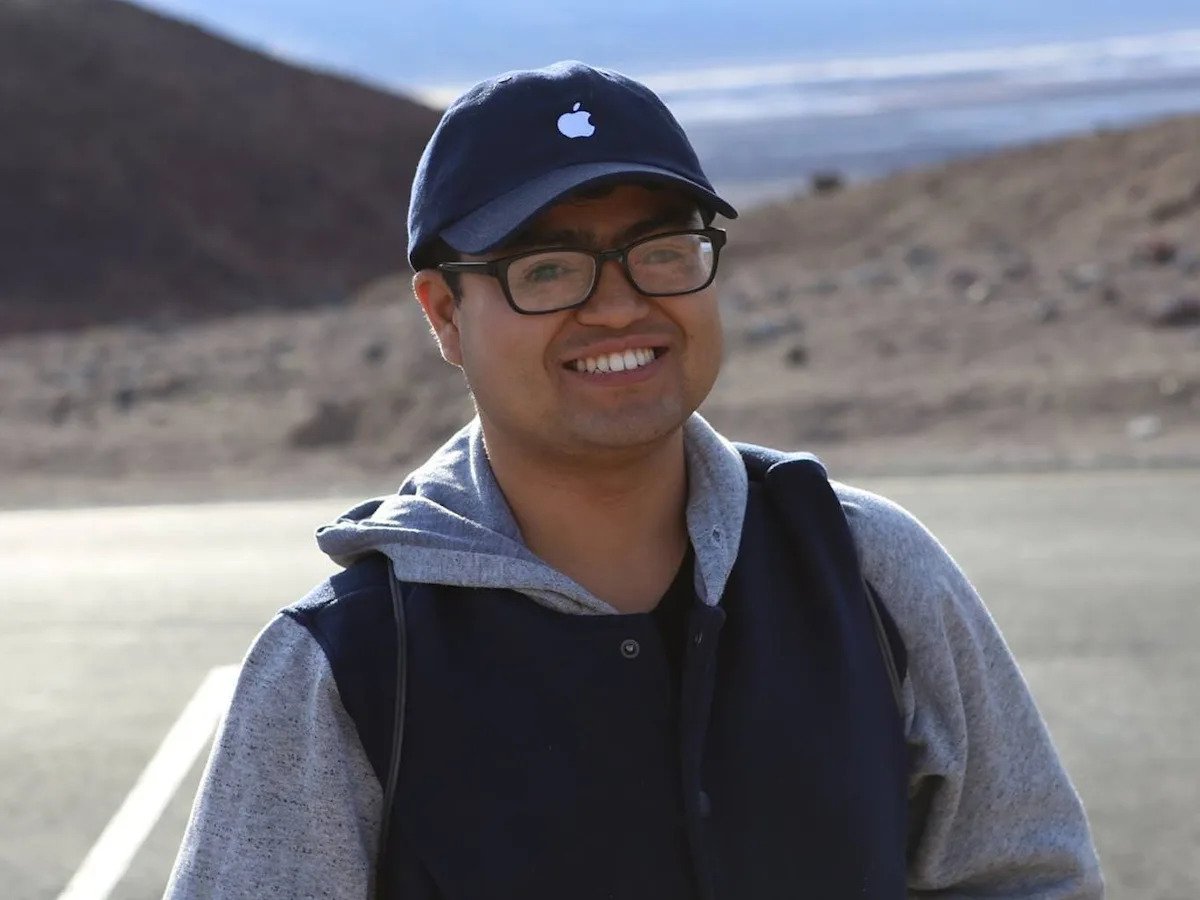
Dennis Tran says being autistic helped him excel in quality assurance without a tech degree.
Tran’s autism diagnosis in 2020 helped him understand his unique problem-solving skills.
He now thrives in roles valuing neurodiversity, working with Community-led Autism Research.
This as-told-to essay is based on a conversation with Dennis V. Tran, a 32-year-old research collaborator in Los Angeles. Business Insider has verified Tran’s employment history with documentation. The following has been edited for length and clarity.
I wasn’t diagnosed with autism until late 2020 at 27 years old. But as a professional with autism, my skills gave me an edge in breaking into quality assurance (QA) without a tech degree.
During my undergraduate studies, I didn’t know what QA was or that it could be a viable career option. After graduating in 2015 with a degree in public health policy, I applied for an internship at a healthcare startup, and they assigned me to my first real taste of QA. From there, I transitioned into software QA almost by accident.
I’ve learned that autism isn’t a limitation. It allows me to innovate, problem-solve, and build systems that serve people better. It’s my superpower.
I never planned on working in the tech industry
While at the University of California, Irvine, I became involved in research labs and clinical research. I monitored metrics, kept experiments on track, and streamlined iPad processes in trials.
After graduating and completing my internship, a marketing colleague posted about me on social media to help me find work. A QA software company, Vablet, saw it and took me on.
I had no tech background, but I taught myself everything from scratch. I’d quickly glance over tutorial videos and the user guide, but most importantly, I just spent time playing and using the app and platforms. I was able to grasp platforms with ease within a couple of hours and days, which helped set me up for success in my role.
Before my autism diagnosis, I struggled to understand why I seemed to have more difficulty than others
I struggled with forming deep connections and friendships. After college, it became even lonelier.
Despite excelling in my QA role, the job ultimately became repetitive, and I needed novelty, innovation, and challenge. I worked at Vablet from 2016 to 2022. I had a difficult time finding a new job elsewhere. I’d send applications, but nothing landed.
After a family member suggested I might be autistic, I went to fill out questionnaires with a psychiatrist and was formally diagnosed. I started to understand I’d been living a neurodivergent life all along.
That’s when I learned the statistic that 85% of college grads with autism are unemployed or underemployed. I realized my brain works differently. I could accomplish tasks in months that employers thought required five years of experience, but I didn’t fit their expectations.
People often call me unique and rare. My diagnosis gave me a sense of empowerment, but it negatively affected my self-esteem and worth, as I kept getting turned down for jobs. Because I couldn’t get a full-time job, I felt like a failure, despite my previous achievements.
After my diagnosis, I had to unmask
After my diagnosis, it became clear that I wanted to thrive and coexist with my disability & neurodivergence, so I reached out to a life coach.
Since working with my life coach, I started my own podcast and journey to help others, and this led to the advocacy work I do today and being open about who I am, my mental health, and my disability. For years, I had operated in survival mode, adapting to fit environments that weren’t built for me. When I stopped masking, I had to relearn how to use my skills authentically.
My autism enables me to identify what others often miss: inefficiencies, bottlenecks, and trends. I translate those insights into strategy, making systems more intuitive, responsive, and human. When I’m engaged, I hyperfocus with precision and produce high-quality, thoughtful work. I approach problems differently, with creativity and nonlinear thinking, which often leads to innovative solutions.
My autism makes me a systems thinker with a big-picture vision. I don’t just fix problems, I redesign processes to be more inclusive and effective.
I thrive in spaces that value my differences
I wanted to work in the disability and neurodiversity space, so in May, I started my new role as a research collaborator for Community-led Autism Research, Engagement, and Service (CARES). Instead of struggling to fit in, I’ve found places where my autism is seen as an asset. These environments let me leverage my skills fully and communicate my needs more clearly.
It’s painful when people see disability or neurodivergence as less than, but the stigmas reflect a system that hasn’t caught up, not our worth.
Being autistic, ADHD, partially blind, queer, and Vietnamese American from a low-income household isn’t something to hide; it’s what makes me who I am. What once felt like a weakness has become my superpower.
Do you have a story to share about being neurodiverse in tech? Contact the editor Tess Martinelli at tmartinelli@businessinsider.com.
Read the original article on Business Insider
