


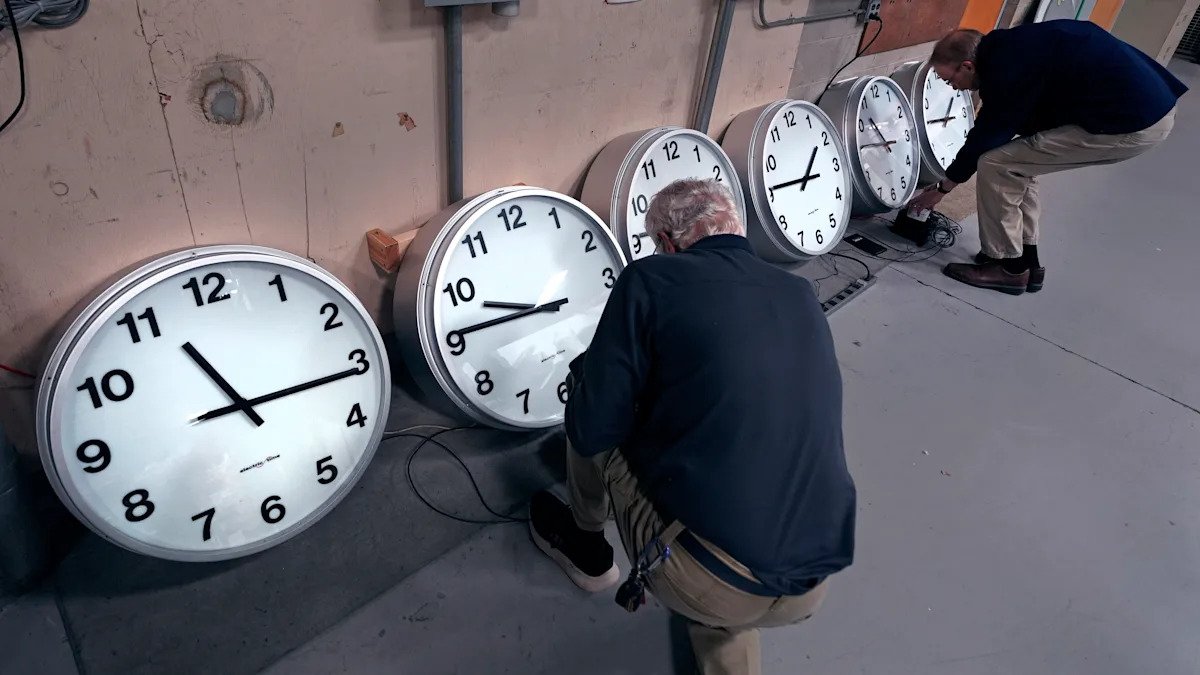
Plan on a glorious extra hour of sleep as most of America “falls back” into standard time. But make sure to get outside for some morning sun, too — it’ll help your body clock reset faster.
Daylight saving time ends at 2 a.m. local time Sunday, which means you should set your clock back an hour before you go to bed. Standard time will last until March 8 when we will again “spring forward” with the return of daylight saving time.
There’s a lot of grumbling about the twice-a-year time changes. The spring switch tends to be harder, losing that hour of sleep we allegedly recover in the fall. But many people also mourn fall’s end of daylight saving time, when days already are getting shorter and moving the clocks can mean less daylight after school or work for exercise or outdoor fun.
Some health groups, including the American Medical Association and American Academy of Sleep Medicine, have long urged adopting standard time year-round.
New research from Stanford University agrees, finding that switching back-and-forth is the worst option for our health. The study showed sticking with either time option would be a bit healthier, but they found permanent standard time is slightly better — because it aligns more with the sun and human biology, what’s called our circadian rhythm.
“The best way to think about it is as if the central clock were like a conductor of an orchestra and each of the organs were a different instrument,” said Jamie Zeitzer, who co-directs Stanford’s Center for Sleep and Circadian Sciences.
More light in the morning and less at night is key to keeping that rhythm on schedule — all the instruments in sync. When the clock is regularly disrupted by time changes or other reasons, he said each of the body’s organ systems, such as the immune system or metabolism, “just works a little less well.”
Most countries do not observe daylight saving time. For those that do — mostly in North America and Europe — the date that clocks are changed varies. In the U.S., Arizona and Hawaii don’t change and stay on standard time.
Here’s what to know about the twice-yearly ritual.
How the body reacts to light
The brain has a master clock that is set by exposure to sunlight and darkness. This circadian rhythm is a roughly 24-hour cycle that determines when we become sleepy and when we’re more alert. The patterns change with age, one reason that early-to-rise youngsters evolve into hard-to-wake teens.
Morning light resets the rhythm. By evening, levels of a hormone called melatonin begin to surge, triggering drowsiness. Too much light in the evening — whether from later time outdoors doing daylight saving time or from artificial light like computer screens — delays that surge and the cycle gets out of sync.
And that circadian clock affects more than sleep, also influencing things like heart rate, blood pressure, stress hormones and metabolism.
How do time changes affect sleep?
Even an hour change on the clock can throw off sleep schedules because even though the clocks change, work and school start times stay the same.
The spring change to daylight saving time can be a little rougher as darker mornings and lighter evenings make it harder to fall asleep on time. Those first few days have been linked to increases in car crashes and even an uptick in heart attacks.
Some people with seasonal affective disorder, a type of depression usually linked to the shorter days and less sunlight of fall and winter, may struggle too.
Many people easily adjust, like how they recover from jet lag after traveling. But a time change can add pressure on shift workers whose schedules already are out of sync with the sun, or those regularly sleep-deprived for other reasons.
About 1 in 3 U.S. adults sleep less than the recommended seven-plus hours nightly, and more than half of U.S. teens don’t get the recommended eight-plus hours on weeknights.
Chronic sleep deprivation is linked to heart disease, cognitive decline, obesity and numerous other problems.
How to prepare for the time change
In both fall and spring, changing bedtimes by as little as 15 minutes a night in the days before the change can help ease into it.
But sunshine in the morning is critical to helping reset your circadian rhythm for healthful sleep. If you can’t get outdoors, sit by windows.
Will the US ever get rid of the time change?
In Congress, a bill named the Sunshine Protection Act that proposes making daylight saving time permanent has stalled in recent years.
____
The Associated Press Health and Science Department receives support from the Howard Hughes Medical Institute’s Science and Educational Media Group. The AP is solely responsible for all content.
