


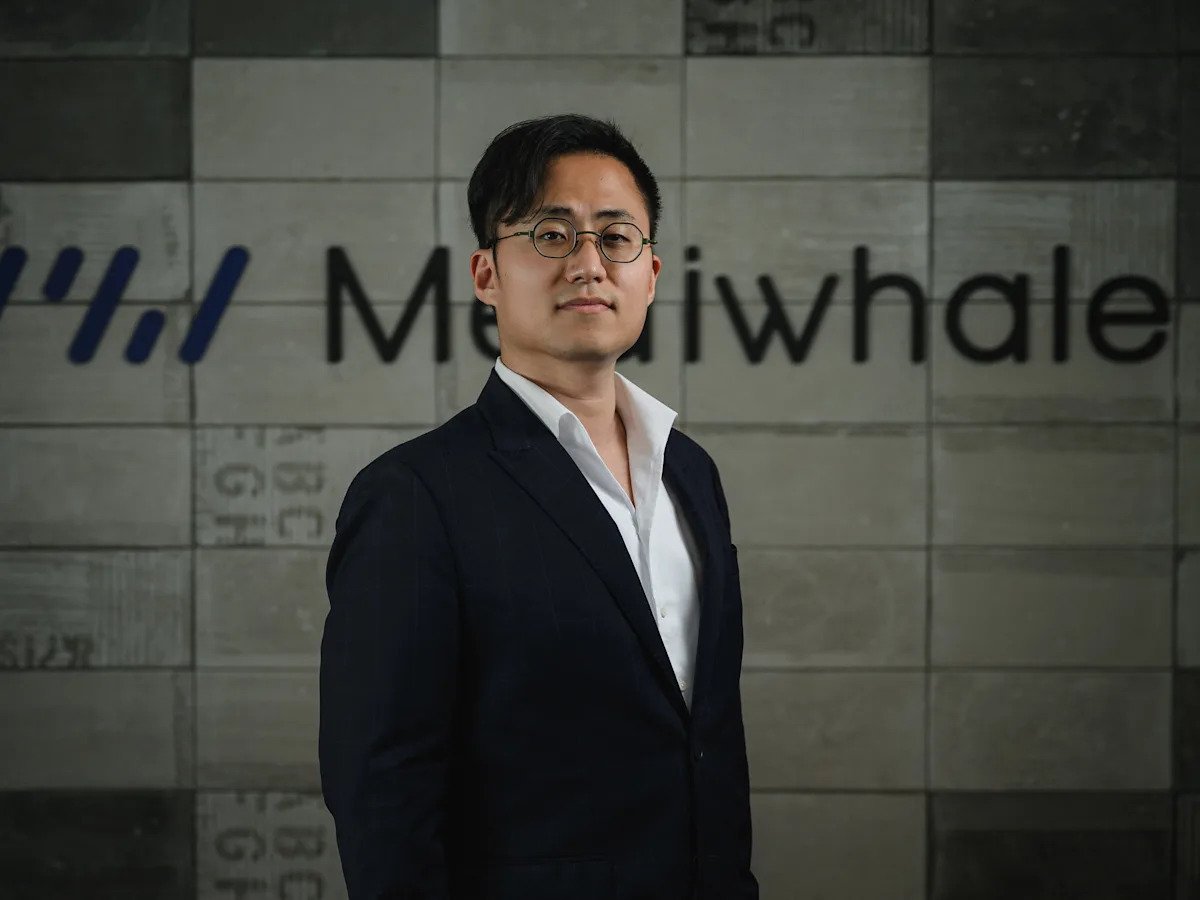
At 26, Kevin Choi lost half his vision to glaucoma — a progressive eye disease.
The diagnosis sparked the start of his healthtech startup, which uses AI to detect critical diseases.
At 26, Kevin Choi got a diagnosis that changed his life: glaucoma.
It’s a progressive eye disease that damages the optic nerve, often without symptoms until it’s too late. By the time doctors caught it, Choi had lost half his vision.
An engineer by training — and a former rifleman in South Korea’s Marine Corps — Choi thought he had a solid handle on his health.
“I was really frustrated I didn’t notice that,” he said.
The 2016 diagnosis still gives him “panic.” But it also sparked something big.
That year, Choi teamed up with his doctor, a vitreoretinal surgeon, to cofound Mediwhale, a South Korea-based healthtech startup.
Their mission is to use AI to catch diseases before symptoms show up and cause irreversible harm.
“I’m the person who feels the value of that the most,” Choi said.
The tech can screen for cardiovascular, kidney, and eye diseases through non-invasive retinal scans.
Mediwhale’s technology is primarily used in South Korea, and hospitals in Dubai, Italy, and Malaysia have also adopted it.
Mediwhale said in September that it had raised $12 million in its Series A2 funding round, led by Korea Development Bank.

Antoine Mutin for BI
AI can help with fast, early screening
Choi believes AI is most powerful in the earliest stage of care: screening.
AI, he said, can help healthcare providers make faster, smarter decisions — the kind that can mean the difference between early intervention and irreversible harm.
In some conditions, “speed is the most important,” Choi said. That’s true for “silent killers” like heart and kidney disease, and progressive conditions like glaucoma — all of which often show no early symptoms but, unchecked, can lead to permanent damage.
For patients with chronic conditions like diabetes or obesity, the stakes are even higher. Early complications can lead to dementia, liver disease, heart problems, or kidney failure.
The earlier these risks are spotted, the more options doctors — and patients — have.
Choi said Mediwhale’s AI makes it easier to triage by flagging who’s low-risk, who needs monitoring, and who should see a doctor immediately.
Screening patients at the first point of contact doesn’t require “very deep knowledge,” Choi said. That kind of quick, low-friction risk assessment is where AI shines.
Mediwhale’s tool lets patients bypass traditional procedures — including blood tests, CT scans, and ultrasounds — when screening for cardiovascular and kidney risks.
Choi also said that when patients see their risks visualized through retinal scans, they tend to take it more seriously.

Choi said AI can help healthcare providers make faster, smarter decisions — the kind that can mean the difference between early intervention and irreversible harm.Antoine Mutin for BI
AI won’t replace doctors
Despite his belief in AI’s power, Choi is clear: It’s not a replacement for doctors.
Patients want to hear a human doctor’s opinion and reassurance.
Choi also said that medicine is often messier than a clean dataset. While AI is “brilliant at solving defined problems,” it lacks the ability to navigate nuance.
“Medicine often requires a different dimension of decision-making,” he said.
For example: How will a specific treatment affect someone’s life? Will they follow through? How is their emotional state affecting their condition? These are all variables that algorithms still struggle to read, but doctors can pick up. These insights “go beyond simple data points,” Choi said.
And when patients push back — say, hesitating to start a new medication — doctors are trained to both understand why and guide them.
They are able to “navigate patients’ irrational behaviours while still grounding decisions in quantitative data,” he said.
“These are complex decision-making processes that extend far beyond simply processing information.”
Read the original article on Business Insider
