


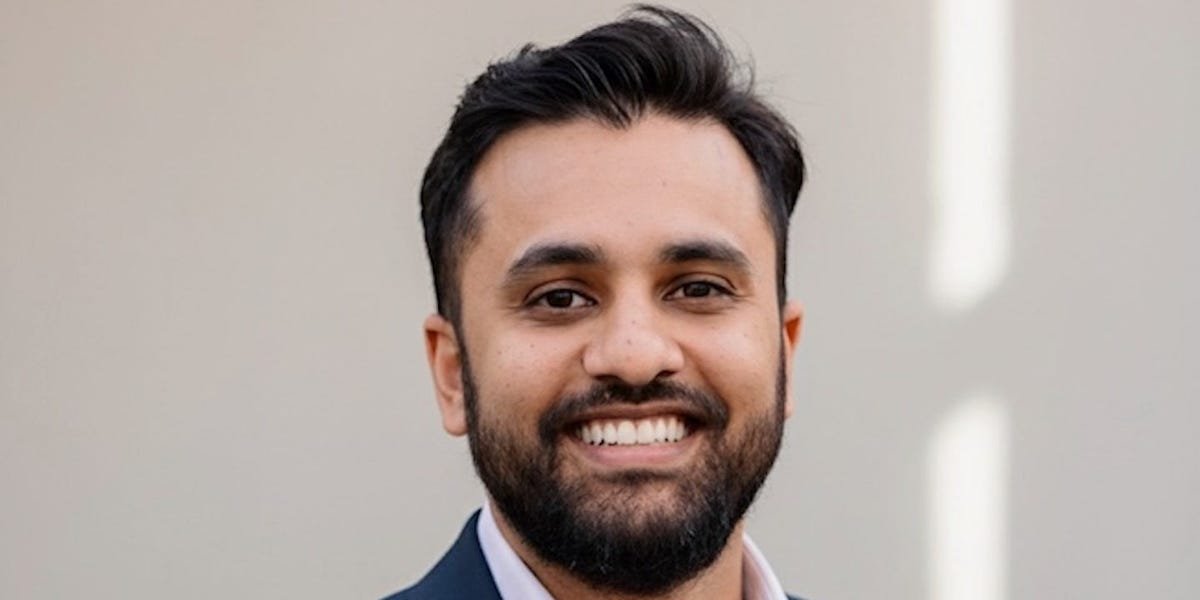
This as-told-to essay is based on a conversation with Yousuf Imran, a 41-year-old former account executive at Google based in the Bay Area. It’s been edited for length and clarity.
I earned nearly $1 million last year as an account executive at Google, but I felt some “FOMO” around the AI boom.
I think most people at Google would tell you the same if they were being candid.
Google pays very well, but the equity packages at OpenAI and Anthropic are in a different universe. A three- or four-year stock grant at one of these companies can be life-changing money.
That math was part of my own calculus in deciding to start my own business focused on AI sales tools. If the only way to get real upside in this AI moment is equity, at some point, you ask yourself whether the equity should be in your own company.
How I built a million-dollar sales career
I grew up in Queens and got into sales because it’s a profession where talent can outrun credentials.
After a roughly 15-year career in sales, I joined Google in 2020, helping customers solve business problems using Google’s AI and machine-learning technologies.
My base salary last year was roughly $170,000, but commissions made up the majority of my compensation. My W-2 income was about $986,000.
I think part of my success came from what I call the immigrant hustle. My family moved to New York when I was five years old from Bangladesh, and I grew up believing that if you don’t put in the work, you won’t get results.
Also, I believe my curiosity differentiated me. I spent a lot of time learning about my customers’ businesses, understanding the problems they were trying to solve, and becoming deeply knowledgeable about AI and machine learning so I could help them use the technology effectively.
Business Insider is speaking with workers who’ve found themselves at a corporate crossroads — whether due to a layoff, resignation, job search, or shifting workplace expectations.
Share your story by filling out this form.
AI became more than my day job
Over time, my interest in AI went beyond my work at Google. While I was selling AI products during the day, I was spending nights and weekends experimenting with tools like ChatGPT, Claude, and Gemini.
At first, I was building small projects for myself. Since I’m not a software developer by trade, I’d talk to multiple AI tools to try to figure things out and, after some trial and error, get a win. Vibe coding felt kind of like a video game.
As AI tools improved, those projects became more ambitious. I built several apps and side projects over a roughly year-and-a-half period and began thinking seriously about the opportunity to start my own business.
I also thought about my job security at Google, given the company’s layoffs in prior years. What struck me about the recent layoff rounds at Google was that they hit genuinely talented people. The uncertainty of a potential layoff was another input into my decision to bet on myself.
In April, six years after joining Google, I left Google to found Mangosteen Studio, an AI product lab building go-to-market tooling for account executives. The thesis is simple: I spent 20 years quota-carrying at some of the biggest companies, so I’m building the tools I wish I’d had.
Read more about people who’ve found themselves at a corporate crossroads
I prepared financially before taking the leap
Leaving Google wasn’t something I did impulsively. Google is a vast organization with incredible resources and teams working on bleeding-edge AI. Losing that “insider” access and being less visible in that world was a major point of hesitation for me.
There were also financial considerations, particularly making sure I had enough savings to give the business a real chance without having to make major changes to my lifestyle.
I set aside $200,000 to fund the business for two years and another $150,000 to cover my mortgage and personal expenses during that time.
My primary goal is to bootstrap the business for as long as possible and not feel pressured to raise money, because investors quickly take your equity. I also wanted to be comfortable enough financially to focus on building the business rather than worrying about paying my bills.
AI is changing entrepreneurship
Today, I’m running the company as a solo founder with a small team of engineers, marketers, and other contractors. It’s still early, but many sales professionals have already used our AI tools free of charge, which has given me confidence that we’re building something people find useful.
For people who feel stuck in their careers or aren’t being challenged, AI is giving people an opportunity to build something of their own. The key is having domain expertise you can lean on. I wasn’t a software engineer, but I spent 20 years learning the problems salespeople face.
Ultimately, I recognized that leaving Google meant leaving a lot of things behind — both financially and professionally. But my confidence and domain expertise made me feel like this was the right moment to take the risk.
Do you have a story to share? Reach out to the reporter via email at jzinkula@businessinsider.com, or via Signal at jzinkula.29.
