

Close Menu
  • Home
  • AI
  • Education
  • Entertainment
  • Food Health
  • Health
  • Sports
  • Tech
  • Well Being

Subscribe to Updates

Subscribe to our newsletter and never miss our latest news

Subscribe my Newsletter for New Posts & tips Let's stay updated!

What's Hot

Dyson’s Biggest Hits and Most Spectacular Flops

September 2, 2026

Gavin Baker: Data Centers Are ‘Awesome for Blue-Collar Americans’

September 2, 2026

Meta Bricks Cameras on Thousands of AI Glasses Over Tampering

September 2, 2026
Facebook X (Twitter) Instagram
  • Home
  • About Us
  • Advertise With Us
  • Contact us
  • DMCA
  • Privacy Policy
  • Terms & Conditions
Facebook X (Twitter) Instagram
IQ Times Media – Smart News for a Smarter YouIQ Times Media – Smart News for a Smarter You
  • Home
  • AI
  • Education
  • Entertainment
  • Food Health
  • Health
  • Sports
  • Tech
  • Well Being
IQ Times Media – Smart News for a Smarter YouIQ Times Media – Smart News for a Smarter You
Home » Dyson’s Biggest Hits and Most Spectacular Flops
Tech

Dyson’s Biggest Hits and Most Spectacular Flops

IQ TIMES MEDIABy IQ TIMES MEDIASeptember 2, 2026No Comments5 Mins Read
Facebook Twitter Pinterest LinkedIn Tumblr Email
Share
Facebook Twitter LinkedIn Pinterest Email


Hair damage. Dusty floors. Hot rooms.

These are the everyday annoyances Dyson thought it could fix with futuristic, highly engineered gadgets. The company, which carries the surname of its inventor-founder, James Dyson, built a billion-dollar business by taking sleepy home appliances and trying to make them less annoying.

When those products hit, they hit big. When they don’t, they’re big flops.

Neil Saunders, a retail analyst at GlobalData, tells Business Insider that Dyson is best when it solves “genuine problems that many other products fail to.” However, big flops occur when the company “comes up with solutions to things that are not really problems.”

Now, Dyson is trying to enter an altogether new place in the house: your mouth.

The company is launching the CameraJet, a $500 toothbrush with a tiny camera that scans a user’s molars and sprays mouthwash between them. It promises to remove the annoyance of flossing with synthetic plastics — but also asks users to be comfortable with a camera peering at their teeth.

Saunders calls the brush “innovative and very clever,” but also a “big ask to expect consumers to fork out such a huge sum of money on a simple product.”

Here are the Dyson products that changed their categories — and the ones that missed the mark with consumers:

Bagless vacuums: Big hit

A customer carries a Dyson vacuum box away from a store.

Dyson’s OG consumer win was the vacuum.

Bloomberg/Getty Images

The vacuum cleaner launched James Dyson’s legacy.

Before founding his company — as he grew frustrated with constantly clogging, bag-dependent vacuums — Dyson spent years refining cyclonic technology designed to separate dust from air without relying on a bag. A Japanese company first put its G-Force vacuum into production in the 1980s, and Dyson brought his own bagless DC01 vacuum to market in the UK in 1993.

The clear-bin machine was meant to avoid the loss of suction that came with old-school vacuum bags filled with dust. It helped turn a largely ignored cleaning appliance into a conspicuously high-tech piece of consumer gear.

Dyson’s vacuums are still popular, 33 years later.

Bladeless fans: Success

The inside of a Dyson store. There are two displays of its fans and air purifiers.

Dyson’s fans reimagined how to make air flow inside without a dusty blade.

Bloomberg/Getty Images

Dyson rethought the humble desk fan. Instead of spinning blades, dust-gathering grills, and a cord forever tangled in the back, the company designed a modern-looking stack with a hole in the middle.

Launched in 2009, the Air Multiplier fans hid a motor and impeller in the base, effectively propelling air through a ring-shaped top.

The same aerodynamic and motor technology now powers Dyson’s hand dryers, found in public restrooms.

Dyson N526 EV: Flop

A Silver Dyson EV prototype sits in a warehouse room. A few people dressed in semi-formal clothes walk around.

Dyson’s EV project was canceled before it reached customers.

Getty Images

It’s hard to build a profitable electric car (and even legacy carmakers are struggling with the task).

Dyson learned this the hard way. In 2014, the vacuum-maker, hoping to lean into its well-established supply of batteries, wanted to build its own EV SUV with around 600 miles of range on a charge.

In 2019, after spending about $750 million on five years of research and development, Dyson scrapped the much-hyped project, saying it could not find a way to make the car commercially viable.

The cars never made it into consumers’ hands.

“It was a difficult decision to stop,” the inventor wrote in a blog post. “We learned a lot and Dyson has benefited from a huge influx of engineering talent from the automotive industry.”

Robot vacuums: Not a flop, but not a hit either

A Dyson robotics vacuum rests on a white floor.

Dyson has tried to make autonomous vacuums. The results haven’t been a runaway success.

Joseph Branston/T3 Magazine/Future via Getty Images

Dyson was dreaming about robot vacuums long before most people trusted a robot not to chew on a living room charging cable.

In 2003, the company built the DC06 — a prototype with removable batteries and 90 sensors — but decided it was too complicated and expensive to sell.

The company finally launched its camera-equipped 360 Eye robot vacuum in 2015. It still sells robot vacuums today, but the category has not become Dyson’s next bagless-vacuum-style breakthrough.

Air purifying headphones: Recent flop

British DJ Ashley James tries on Dyson's headphones.

Dyson tried to pair sound and air purifying technology. It wasn’t a big hit.

Dave Benett/Getty Images for Dyson

Dyson spent years building the Zone, a pair of $949 noise-canceling headphones with a detachable visor that blows purified air toward the user’s nose and mouth.

The problem, Jake Dyson, the founder’s son and chief engineer, later said, was that customers did not quite know what it was: headphones or an air purifier?

“I’ll be completely honest, quite often we work in an obsessive nature,” he told Wired in 2025. “Sometimes before actually evaluating what the market response might be. And the market didn’t exist. So you’ve got to take those risks.”

Washing Machines: Flop

Inventor James Dyson sticks his hand into a Dyson washing machine.

Dyson tried to build washing machines that cleaned clothes like a standard hand wash. It didn’t pan out.

Stefan Rousseau – PA Images/PA Images via Getty Images

Dyson’s washing machine — the ContraRotator, launched in 2000 — had two drums spinning in opposite directions to mimic hand-washing, all while tackling bigger loads faster.

It was certainly distinctive compared to the rest of the washing machine market. The market didn’t respond to its roughly $1,000 starting price, and it ended production in 2004.

But it still found a way to live on.

“I use them,” James Dyson said during a 2025 sitdown with the “David Senra” podcast. “It’s great, and people have now copied a lot of the ideas, like the big door.”

Hair care: Huge success

A bag with multiple Dyson hair products

Dyson’s hair care has become a massive cultural and sales hit.

: ruelleruelle/UCG/Universal Images Group via Getty Images

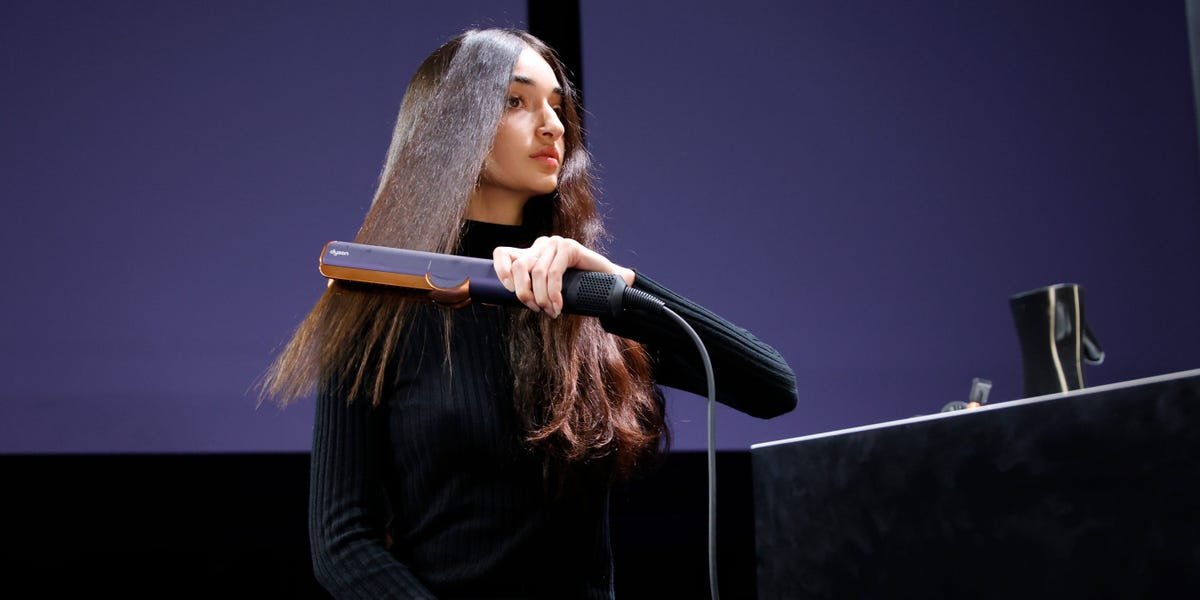
Dyson brought its vacuum-cleaner obsession with motors and airflow to hair care in 2016 with the Supersonic hair dryer. Two years later, the Airwrap arrived, using airflow to curl, smooth, and dry hair without extreme heat.

The tools were expensive from the start, but they turned into beauty-world status symbols. They remain popular, especially among influencers filming “get ready with me” videos.


Source link

Share. Facebook Twitter Pinterest LinkedIn Tumblr Email
IQ TIMES MEDIA
  • Website

Related Posts

Gavin Baker: Data Centers Are ‘Awesome for Blue-Collar Americans’

September 2, 2026

Meta Bricks Cameras on Thousands of AI Glasses Over Tampering

September 2, 2026

Sam Altman Says AI Water Use Fears Are Overblown but Hard to Dispel

September 2, 2026
Add A Comment
Leave A Reply Cancel Reply

Editors Picks

How Shabana Basij-Rasikh escaped Taliban rule to educate Afghan girls in Rwanda

September 2, 2026

Justice Department sues Kansas school system on transgender policies

September 1, 2026

Higher education is transforming lives in Wyoming prisons

September 1, 2026

Ukraine’s students begin a 5th school year under Russian attack

September 1, 2026
Education

How Shabana Basij-Rasikh escaped Taliban rule to educate Afghan girls in Rwanda

By IQ TIMES MEDIASeptember 2, 20260

Shabana Basij-Rasikh smiles as she points to the sign in the middle of campus: School…

Justice Department sues Kansas school system on transgender policies

September 1, 2026

Higher education is transforming lives in Wyoming prisons

September 1, 2026

Ukraine’s students begin a 5th school year under Russian attack

September 1, 2026
IQ Times Media – Smart News for a Smarter You
Facebook X (Twitter) Instagram Pinterest Vimeo YouTube
  • Home
  • About Us
  • Advertise With Us
  • Contact us
  • DMCA
  • Privacy Policy
  • Terms & Conditions
© 2026 iqtimes. Designed by iqtimes.

Type above and press Enter to search. Press Esc to cancel.