


The biggest names in AI are fighting over how the future of work will shake out.
Loading audio narration…
Anthropic CEO Dario Amodei has long warned of a white-collar wipeout, predicting around 50% of entry level office jobs will be eliminated.
After an old clip recirculated, Meta’s former chief AI scientist Yann LeCun recently wrote on X: “Dario is wrong.”
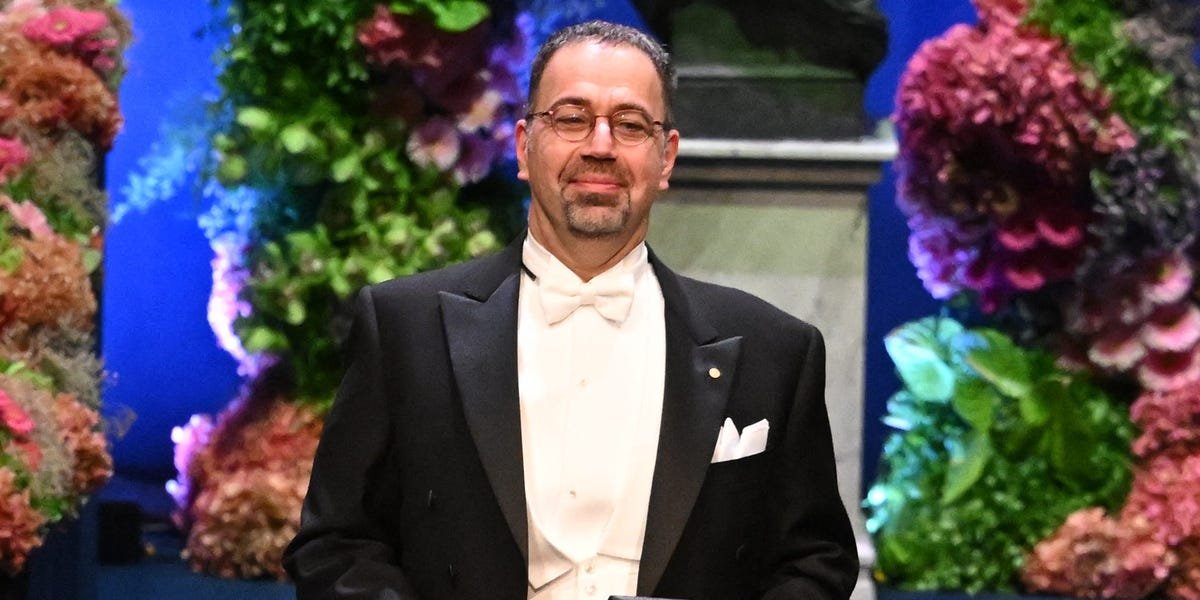
Instead of trusting figures in the business of AI like Amodei, Sam Altman, or even himself, LeCun wrote that the public should listen to the economists instead. He listed a few notable names, including Daron Acemoglu, the Massachusetts Institute of Technology professor and 2024 Nobel Prize in Economics winner.
Taking LeCun’s advice, we rang up Acemoglu to hear his view.
Acemoglu has long voiced worries about the direction of AI. “What we’re concerned about is that the skills of large numbers of workers will be much less valuable,” he told Business Insider in 2023. “So their incomes will not keep up.”
Unlike Amodei, he’s not so willing to predict a complete bloodbath. He’s skeptical of Amodei’s argument, too, calling it an example of “motivated reasoning.”
LeCun and Amodei did not respond to requests for comment. The interview has been edited for length and clarity.
What did you think about Yann LeCun’s post?
Daron Acemoglu: It’s very nice of him, and he’s obviously right that economists have a lot to say about this.
People at the front lines of developing these models have superior knowledge. On the other hand, they also have what economists or social psychologists would call “motivated reasoning.” They tend to think and want to think that their models are very capable. They also have incentives for raising money to emphasize the coming attractions.
I’m convinced that Dario actually believes what he says. But, does he believe that because that’s also good for the race that he’s locked into with OpenAI or raising capital for his company? That’s what motivated reasoning gets you.
How the labor market responds to these advances is also an economic problem. It depends on not just the model capabilities, but what happens to wages and how other aspects of jobs improve or don’t improve. There will be new job creation as well as job displacement. People like myself and David Autor have been studying this for more than two decades.
Dario often talks about an impending “white-collar bloodbath.” What do you think of his argument?
Acemoglu: I think he’s very bullish on these model capabilities. Whether the models really improve that quickly, that’s the question. He may also underestimate how messy some of those jobs are.
That being said, Claude Code is a major improvement over the previous model. So, if there are improvements like that, the world will be a very different place than it was last year.
What’s confusing about our time is that you’re getting two completely contradictory arguments from technologists. One is that the future of work will be great, because these models are going to make everyone more productive. Then the second is, they’re going to destroy a lot of jobs. Both of those things, in principle, can be correct in two parallel universes. They cannot be correct at the same time.
The first one — which is not Dario’s argument — is that these models are going to make people more productive, and you’re going to be so much better at your job. That doesn’t necessarily follow because, if you make customer service representatives 20 times as productive, you may have completely commodified the job. As a result, you will need many fewer representatives, and you will need to pay them much less. It’s an economic problem that’s not as easy as: “Oh, we’re going to get you AI support agents.”
The second is: You might displace workers from some jobs, but you might create new jobs, which I think is what Yann LeCun has in mind. That’s what Dario is ignoring. But, that’s very difficult to know, because creating jobs is not an automatic process. It may happen, it may not happen. It will depend on what technologies and organizations do.
That’s why we need both technologists and economists to weigh in on these questions.
If I’m the average white-collar worker who’s keeping an eye on AI, what should I think of it?
Acemoglu: There are several things you should be worried about. If you are actually doing a job that is very routine and can be done by AI models today, you’re probably already in trouble. Coding and some aspects of customer service and translation are already within the frontiers.
Even those jobs will not completely disappear, because the occupation of a customer service representative has many, many dimensions, and not all of them can be done with AI models. Translators do many things, including simultaneous translation and interpretation, that AI models cannot do at the current moment.
There are complications there, but I would hasten to add that there is so much more we don’t know relative to what we do know.
How do we deal with the unknown, then? Do we just sit and wait it out?
Acemoglu: No, no. Even though there is uncertainty, which complicates any kind of forecast, we do need to plan for a range of outcomes. We also need to take actions that anticipate what is suboptimal about the current path of AI. Both of those are very important, and they’re not part of the conversation.
For the first one: If we do get within a few years the kind of job displacement that Dario is predicting, we need to be prepared for it. I don’t think it’s likely, but can I imagine a world in which he turns out to be right? Sure. If we lose 20% of jobs in the United States, democracy won’t survive. There are a lot of big things riding on it.
We should also ask whether this is the best direction for AI to go. If Dario is right, why is Anthropic so keen on making even more of this automation its main priority, which then will create a lot of inequality, joblessness, social disease, and political backlash? There are other things you can do with AI, like trying to help workers or improve training.
There are decisions we need to make within the next few years about how to develop AI and what it is that we want from AI.
Have you spoken to Dario or any of the other AI CEOs?
Acemoglu: Yes, I have. In some of the conversations, they are very sympathetic to this point of view. But, on the other hand, they are also very locked into this race. The AGI rhetoric and the AGI framing have a big effect on them, and that’s what they pursue.
