


BYD is developing its own rival to Tesla’s Optimus robot, and one of the Chinese automaker’s top executives wants it on the showroom floor selling cars.
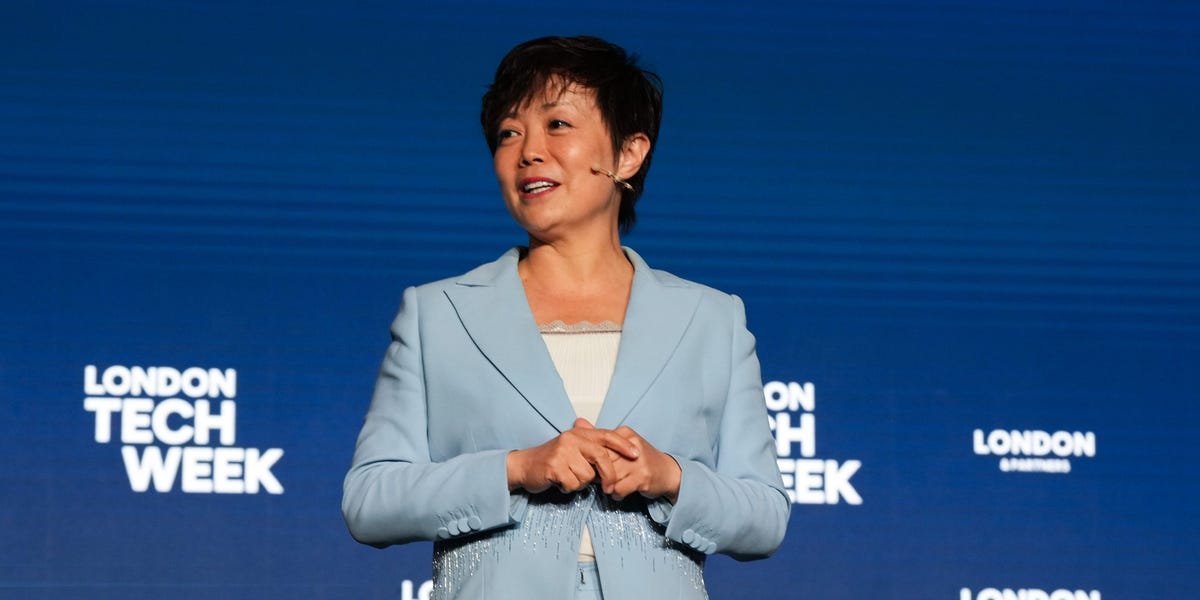
In an interview with Business Insider’s editor in chief, Jamie Heller, at the Cannes Lions festival, BYD executive vice president Stella Li said building humanoid robots for the home and service industry will be a “huge” market for the company.
“My goal is to bring two or three robots to every single store. They can explain to the customer, they can have fun, they can even show the car, demonstrate the car,” said Li, who predicted that the technology for robot car salespeople would be available in the next “one or two years.”
Li added that although she expected BYD’s showroom robots to have a role in selling its cars, they would not replace the “emotional connection” provided by a human salesperson.
“We still need the people, but now with robotics we can make our service better,” said Li, who is the Chinese carmaker’s second most senior executive and the public face of the company.
BYD is the latest company to join the race to manufacture humanoid robots, the global market for which is expected to grow from $3 billion in 2025 to $28 billion in 2030, per Morgan Stanley estimates.
The Chinese EV giant’s entry into the robotics market would see it face off once again with perennial rival Tesla. The US automaker is planning to begin production of its Optimus humanoid robot this summer, and CEO Elon Musk believes the robotic helper has the potential to be the biggest product of all time.
The market for humanoid robots is currently dominated by Chinese companies such as Unitree and UBTech. Chinese robotics firms accounted for more than 80% of all humanoid robot shipments last year, according to data from Omdia.
The majority of robot deployments so far have been in controlled factory and warehouse settings, with the greater unpredictability of home and real-world environments typically posing more of a challenge for the technology.
Li told Business Insider that the humanoid robotics industry in China is moving at a rapid pace, but said more efficient energy-consumption systems and better AI “brains” were needed before home robots could become a reality.
The BYD executive said the company would build its humanoid robot in-house, but was open to buying robots from rival companies if needed. BYD is also investing heavily in industrial robots, and Li said that the company was inching closer to so-called “dark factories,” where manufacturing is handled entirely by robots.
“I think in the next three to five years there will be a lot of revolution here,” said Li.
“Maybe we can start to have some manufacturing where there are no human beings, and then the robot will run the facility,” she added.
