

Close Menu
  • Home
  • AI
  • Education
  • Entertainment
  • Food Health
  • Health
  • Sports
  • Tech
  • Well Being

Subscribe to Updates

Subscribe to our newsletter and never miss our latest news

Subscribe my Newsletter for New Posts & tips Let's stay updated!

What's Hot

Oracle Has Drawn Plans for Another Round of Job Cuts This Month

August 11, 2026

Kevin Weil Is Raising a New Round of Funding for an AI Science Startup

August 11, 2026

Google’s Gemini app surges to one billion users

August 11, 2026
Facebook X (Twitter) Instagram
  • Home
  • About Us
  • Advertise With Us
  • Contact us
  • DMCA
  • Privacy Policy
  • Terms & Conditions
Facebook X (Twitter) Instagram
IQ Times Media – Smart News for a Smarter YouIQ Times Media – Smart News for a Smarter You
  • Home
  • AI
  • Education
  • Entertainment
  • Food Health
  • Health
  • Sports
  • Tech
  • Well Being
IQ Times Media – Smart News for a Smarter YouIQ Times Media – Smart News for a Smarter You
Home » Analysis of GLP-1 drugs suggests people who stopped using regained 60% of weight lost
Health

Analysis of GLP-1 drugs suggests people who stopped using regained 60% of weight lost

IQ TIMES MEDIABy IQ TIMES MEDIAMarch 5, 2026No Comments3 Mins Read
Facebook Twitter Pinterest LinkedIn Tumblr Email
Share
Facebook Twitter LinkedIn Pinterest Email


New research is taking a closer look at what can happen a year or more after people stop taking GLP-1 medications.

A new systematic review published in the journal eClinicalMedicine on Wednesday examined 48 studies that analyzed and predicted the outcomes of people who either had diabetes or were overweight or obese and took popular GLP-1 medications such as liraglutide (under brand names such as Victoza and Saxenda), semaglutide (under brand names such as Ozempic, Wegovy, Rybelsus) and tirzepatide (under brand names like Mounjaro and Zepbound).

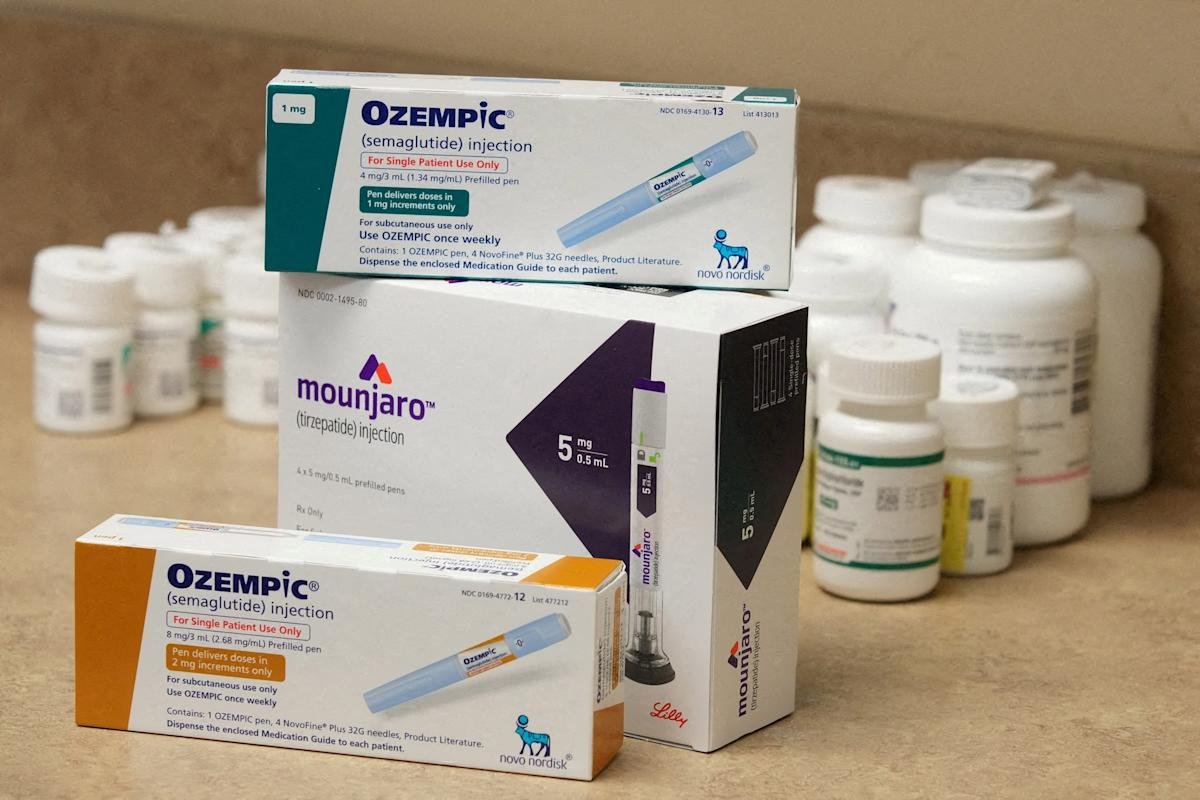
George Frey/Reuters, FILE - PHOTO: Boxes of Ozempic and Mounjaro, semaglutide and tirzepatide injection drugs used for treating type 2 diabetes and made by Novo Nordisk and Lilly at a Rock Canyon Pharmacy in Provo, Utah, March 29, 2023.

George Frey/Reuters, FILE – PHOTO: Boxes of Ozempic and Mounjaro, semaglutide and tirzepatide injection drugs used for treating type 2 diabetes and made by Novo Nordisk and Lilly at a Rock Canyon Pharmacy in Provo, Utah, March 29, 2023.

For people who stopped taking GLP-1 weight-loss medications, patients regained about 60% of the weight they lost within a year, according to the review’s analysis. When researchers used computer statistical modeling to see what could happen after more than a year off of the medications, it suggested those patients could regain about 75% of the weight they had lost.

ABC News chief medical correspondent Dr. Tara Narula said on “Good Morning America” Thursday that the new analysis underscores how weight loss requires an “individualized approach.”

GLP-1s work but when they’re stopped, the effects stop too: Expert

“There are some people who can come off of them and maintain the weight loss. There are others who will need to be on some sort of dose taper or some who need to stay on the same dose forever,” Narula said.

Because the review of 48 studies, although comprehensive, looked at a wide and diverse group of people — from those with conditions such as diabetes and kidney disease, and those with different starting and end points and who took different medications — the conclusions drawn also highlight its limitations.

Eli Lilly launches new weight-loss drug Zepbound KwikPen: What to know

Narula said the good news is that GLP-1 medications have been successfully shown to help people lose some weight overall.

“The important factor is that some weight was not regained, and when you look at the loss from baseline weight, it’s about 4% to 5% of the baseline weight that was lost and maintained. And that’s not clinically insignificant,” Narula said.

Aside from GLP-1 medications, Narula noted that other strategies such as lifestyle counseling, regular exercise and other medications can also help people lose weight and keep it off over the long-term.

“We think that some of these people may be changing behavior, nutrition, lifestyle, [and] also may be changing the hormones in their body by being on [GLP-1 medications], changing how their brain sort of operates or functions permanently,” Narula said. “There’s some data to suggest that a dose tapering strategy, so where you minimize or lower the doses over time might prevent weight regain.”


Source link

Share. Facebook Twitter Pinterest LinkedIn Tumblr Email
IQ TIMES MEDIA
  • Website

Related Posts

What an expert on the gut microbiome eats in a day

March 26, 2026

Wegovy maker Novo sharpens consumer focus with board role for Mars CEO

March 26, 2026

CDC report finds US smoking rate continues to plummet as vape use rises

March 26, 2026
Add A Comment
Leave A Reply Cancel Reply

Editors Picks

5 years on, Afghan girls still barred from education under Taliban

August 11, 2026

Former Arizona university student pleads guilty to hazing a pledge to death

August 10, 2026

Some reinstated Howard University students get to move in but others still leave

August 8, 2026

A schoolgirl dies after a shooting at school outside Bangkok, bringing toll to 8

August 8, 2026
Education

5 years on, Afghan girls still barred from education under Taliban

By IQ TIMES MEDIAAugust 11, 20260

ANKARA, Turkey (AP) — An estimated 2.4 million Afghan girls remain excluded from secondary education…

Former Arizona university student pleads guilty to hazing a pledge to death

August 10, 2026

Some reinstated Howard University students get to move in but others still leave

August 8, 2026

A schoolgirl dies after a shooting at school outside Bangkok, bringing toll to 8

August 8, 2026
IQ Times Media – Smart News for a Smarter You
Facebook X (Twitter) Instagram Pinterest Vimeo YouTube
  • Home
  • About Us
  • Advertise With Us
  • Contact us
  • DMCA
  • Privacy Policy
  • Terms & Conditions
© 2026 iqtimes. Designed by iqtimes.

Type above and press Enter to search. Press Esc to cancel.