


An entire batch of Russian low Earth orbit satellites, intended to help create Moscow’s version of Starlink, has failed to reach or remain at their anticipated altitudes just over a month after launch.
The 16 Rassvet-3 satellites, launched on July 19, were originally supposed to orbit the Earth at an altitude of roughly 500 miles, according to the company developing the constellation, Bureau 1440.
But publicly available US Space Force data shows that, as of Tuesday, the Rassvet-3 satellites are instead orbiting at altitudes of between 190 miles and 250 miles.
Atmospheric drag at that altitude significantly shortens a satellite’s operational lifespan. Without intervention, those conditions gradually pull satellites lower to Earth until they reenter the atmosphere and burn up or break apart.
Losing these 16 satellites — Bureau 1440’s second batch of the Rassvet-3 — would be a significant setback for Moscow’s ambition to create its own alternative to Starlink, a priority for the Kremlin after SpaceX cut off satellite internet service to Russian forces on February 1.
Rassvet-3 is meant to help fill that gap, but Bureau 1440 has launched only 32 satellites so far, including this latest batch.
Issues with the second satellite batch were first highlighted by journalist Anatoly Zak, who runs the website RussianSpaceWeb and identified two Rassvet-3 satellites in early August that were already headed for re-entry into Earth’s atmosphere.
It’s unclear what prevented the satellites from reaching higher altitudes. Positional data indicates that many of them engaged in maneuvers to climb upward, though none of these appear to have come close to helping the satellites reach their operational orbit yet.
“The apparent failure of all 16 satellites from the second launch to reach their intended operational altitudes suggests Russia may have been unprepared to accelerate constellation deployment at this pace and will likely face additional delays,” wrote analysts from the Institute for the Study of War, a US-based think tank, on Monday.
Press services for Bureau 1440 and Roscosmos, Russia’s space agency, did not immediately respond to comment requests sent outside regular business hours by Business Insider.
Setback to an already slow launch pace
Bureau 1440 has said that it is planning “dozens of launches and hundreds of satellites” to form its total constellation.
Its first batch of 16, launched on March 23, saw 12 satellites reach and maintain altitudes of about 340 miles. That’s still shy of the original 500-mile altitude that Russia initially set, and could indicate that Bureau 1440 shifted the target orbit closer to Earth.
Ukrainian estimates say the Kremlin will need roughly 200 to 250 operational satellites to maintain a stable internet network that Russian forces can use to communicate or operate combat drones.
SpaceX, by comparison, runs over 11,000 operational Starlink satellites.
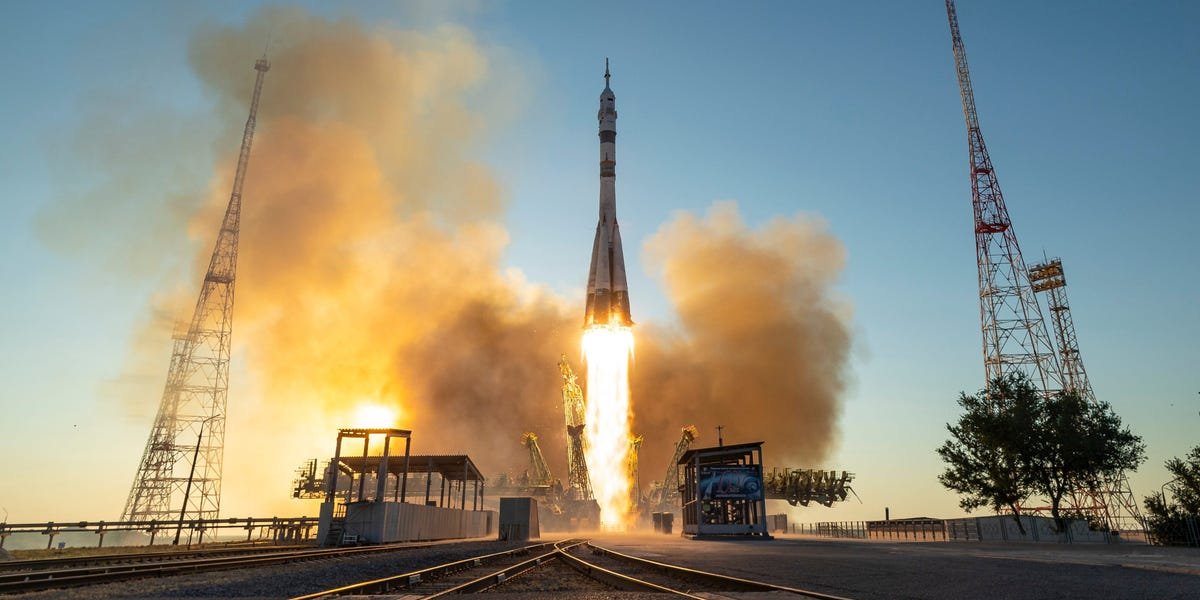
A major bottleneck for the Rassvet-3 constellation is how they’re launched. Russian spacecraft rely on the Soyuz-2.1b rocket, which has been used for 104 launches in the last two decades.
With 16 satellites per launch, keeping to that pace would mean Russia could launch roughly 80 Rassvet-3 satellites each year, taking more than two years to reach a constellation of at least 200.
And that assumes all the launched satellites remain operational in the long term.
With only 12 of the last 32 Rassvet-3 satellites reaching their apparent long-term orbits, the program has achieved a 37.5% success rate so far. SpaceX, by comparison, reported just 43 early mission failures or terminations among its first 1,383 production Starlink satellites, or a failure rate of about 3%.
Ukraine has also been attempting to undermine Russia’s efforts. In mid-August, it said one of its FP-5 Flamingo long-range missiles struck a space center in Western Russia that produces the Soyuz rocket.
Satellite internet has become one of the most crucial communications tools of the war in Ukraine, with troops from both sides using the service to stay in contact with each other, direct drones, and update commanders.
Most prominently, Russia was previously found to be using Starlink terminals to relay signals to its attack drones, allowing them to bypass typical jamming measures and receive instructions at extended range.
