


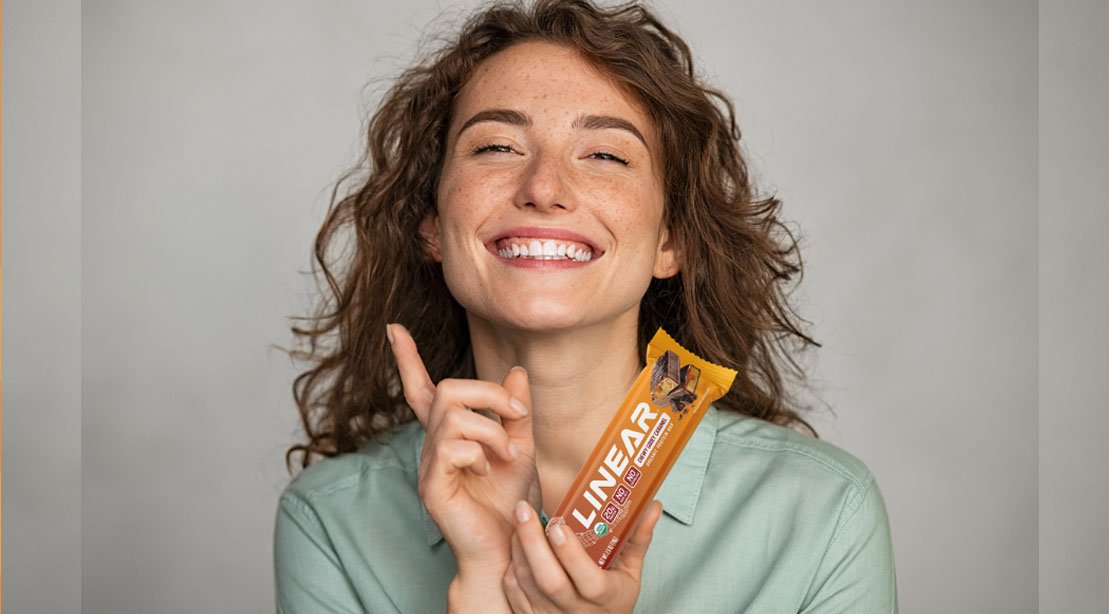
For years, Mel Scott did what most active, health-conscious consumers do: she trusted the words “protein” and “clean” on the front of the package of protein bars.
Bars marketed as fuel for performance, recovery, and convenience became something she would grab between workouts, during travel, or when real food wasn’t available. It wasn’t until her health began to unravel that she started questioning what those snacks were really made up of.
“I didn’t realize that over all those years of consuming those products, I was hurting my gut,” Scott told Muscle & Fitness.
The symptoms escalated, from leaky gut, followed by small intestinal bacterial overgrowth (SIBO), sending her into a cycle familiar to many Americans. After repeated doctor visits and testing, she eventually took a harder look at her diet.
What stood out was ingredient panels filled with additives she had never questioned before. Sweeteners, fillers, binders, and ingredients that are ubiquitous in protein bars but rarely scrutinized beyond their macro count.
That reckoning became the origin story behind Linear Bar, a solution Scott created to have a snack she enjoys and satisfy her sweet tooth without taking a toll on her health.

When Protein Bars Became a Problem
Scott’s frustration wasn’t with protein itself, but rather with what the protein bar category had become.
“People see protein and think healthy,” she says. “But they don’t always understand what else is in there or what those ingredients do over time.”
As she began auditing the major brands lining grocery store shelves, Scott saw a pattern of aggressive marketing on the front and long, often confusing, hard-to-pronounce ingredient lists on the back. She saw how most bars were designed to taste like candy, relying on artificial sweeteners, additives, and highly processed ingredients to maintain shelf life and flavor.
Even products marketed as “clean” often came with tradeoffs like digestive discomfort, bloating, or a taste profile that felt strange and was “hard to get down.”
“I realized there just weren’t enough bars that I could actually eat, enjoy, and feel good about afterward,” she says.
So she decided to give it a try on her own. She stripped everything back and started from scratch, literally, in her own kitchen.
What began as a personal experiment stretched into nearly three years of trial and error. Early versions were frozen, unrefined, and often unconvincing. Friends became taste testers, and Scott pressed them for honesty. “Tell me the truth,” she recalls asking repeatedly, aware that kindness doesn’t build better food.

Gut Health as the Starting Point
Scott’s personal health experience shaped Linear’s priorities, particularly around gut health.
“There’s almost a pandemic in America of people with poor gut health, and a lot of it comes back to ingredients people don’t even realize are affecting them,” she says, noting that gut health is an area increasingly linked to everything from inflammation to cognitive function.
Sweeteners like maltodextrin or sucralose, she argues, are among the biggest offenders. They are a common artificial sweetener in protein bars, drinks, and powders, yet increasingly scrutinized for their impact on the microbiome.
Scott is careful not to frame Linear as a solution to gut dysfunction, emphasizing that no processed food replaces whole foods or fermented staples like kefir or kimchi. But she wanted to create a bar that didn’t actively work against digestive health.
Customer feedback, she says, has been instrumental in reinforcing that. Most report no bloating or gastrointestinal distress. Still, Scott is cautious about absolutes. “Everything affects people differently,” she notes. “There’s no product that works perfectly for everyone.

The Organic Line Scott Wouldn’t Cross
If there was one non-negotiable for her from the beginning, she says it was organic sourcing.
“It’s too expensive not to buy organic,” Scott says, citing concerns around pesticide exposure and glyphosate residues.
Getting the texture and taste right, however, without relying on shortcuts, was harder than she expected. When the recipe finally held up outside her kitchen and in commercial production, it exposed another challenge. Most manufacturers weren’t equipped to handle the complexity of working with fully organic ingredients at scale.
So, Scott decided to bring production in-house and buy her own equipment, accepting higher costs.
“We have to be able to monitor every step of the way to ensure we’re really bringing a better-for-you product, and we’re not just going to become another bar out there that’s not really delivering,” she admitted.
The result is a product that costs more than many mainstream bars, a point Scott hears often from consumers. Her response, though goes back to the quality of the ingredients.
“Most of what’s in our bar is something you could recognize in your own kitchen or buy in the store,” she says. “That’s not true for most bars.”
Pushback Is OK
Linear hasn’t escaped criticism. Some consumers question the inclusion of cane sugar, while others are wary of sugar alcohol sources like coconut glycerin. Scott doesn’t shy away from those conversations. She explains that small amounts of sugar were intentional to support satiety and satisfaction rather than endless sweetness chasing.
“I love the coconut glycerin because it is coconut-derived. And unless you have an allergy to coconuts, coconut is just this wonderful powerhouse of good fat and potassium,” she explained, adding that coconut glycerin was a novel way of having a humectant that is not going to make you sick.
Importantly, Scott views the product as a work in progress. She’s actively evaluating alternative fibers, developing new textures, and exploring plant-based formulations that still meet a complete amino acid profile.

What’s Next
Scott says Linear is expanding flavors, refining formulations, and moving toward greater transparency, including publishing third-party testing and certificates of analysis in the coming years. Powders and clinically tested products are also in development.
In a category long dominated by marketing shortcuts, Linear Bar is willing to admit that convenience foods should earn their place in a healthy diet, not assume it.
For Scott, Linear’s direction is shaped by constant feedback. “The biggest part of our business is listening to people,” she says, describing conversations at expos, competitions, and everyday encounters. “I actually care about what people are eating. It matters to me,” she notes.
Learn more at LinearBar.com
Muscle & Fitness and JW Media, LLC were not involved in the creation of this sponsored content. The views and claims expressed do not necessarily reflect those of Muscle & Fitness or its editorial staff.
