


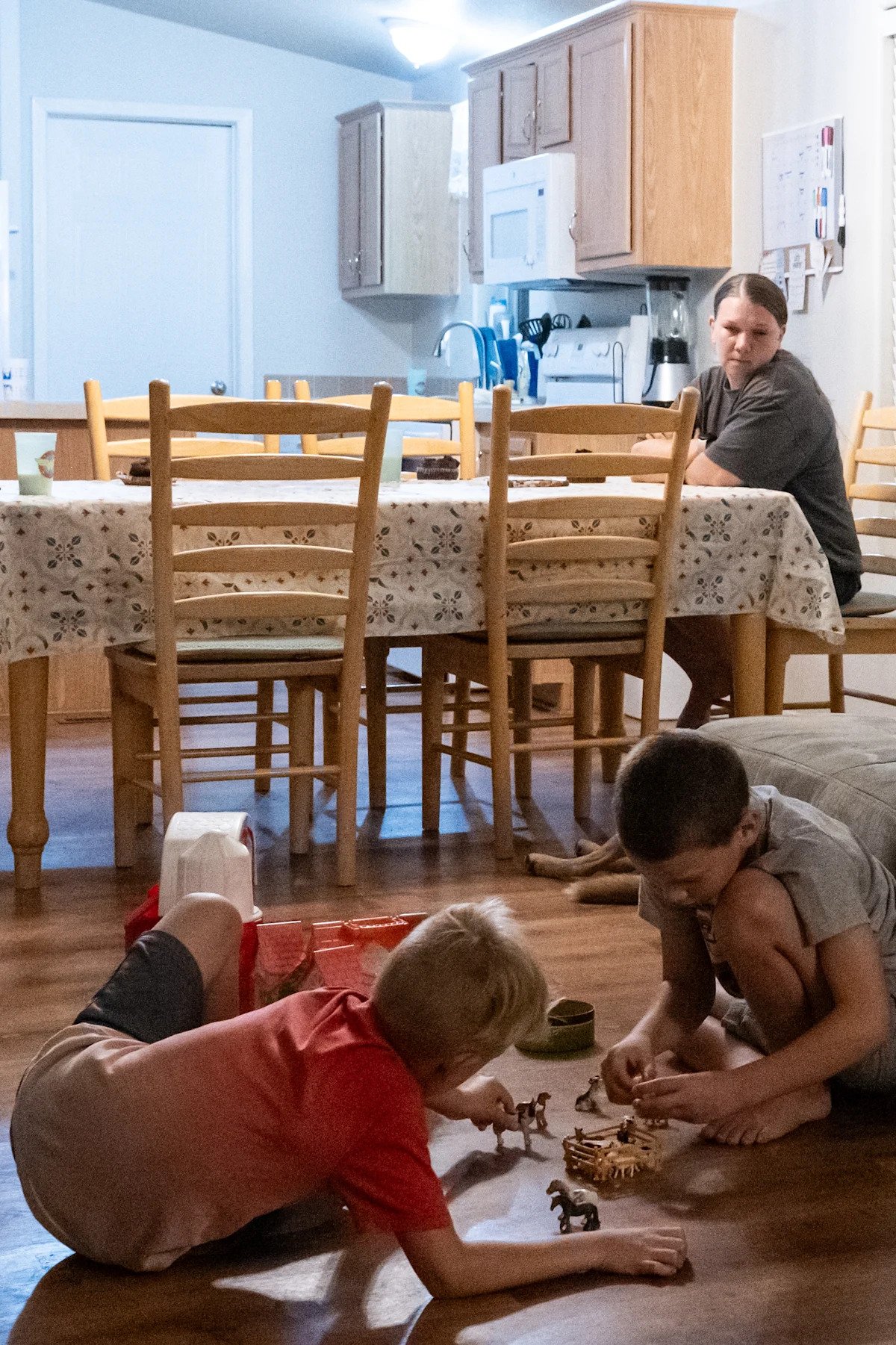
The American parents who are choosing to skip or delay vaccines for their children are more likely to home-school their children, be White and very religious, identify as Republican or be under 35, according to a wide-ranging Washington Post-KFF poll that sheds new light on what drives vaccine hesitancy.
The poll – the most detailed recent look at the childhood vaccination practices and opinions of American parents – shows that 1 in 6 parents have delayed or skipped some vaccines for their children, excluding for coronavirus or flu. Nine percent have skipped the polio or measles, mumps and rubella (MMR) shots, which public health experts say risks large outbreaks of potentially fatal diseases that have been curbed through widespread vaccination.
Subscribe to The Post Most newsletter for the most important and interesting stories from The Washington Post.
The poll finds concerns about the vaccines themselves are driving these decisions. Parents who reject vaccine recommendations are primarily worried about side effects and the risks of the shots rather than facing challenges getting them. About half of parents overall lack faith in federal health agencies to ensure vaccine safety, mirroring the findings of other surveys.
Several major polls have shown a decline in trust in childhood vaccines since the coronavirus pandemic among the broader public, largely among self-identified Republicans. The Post and KFF, a health policy research and news organization, surveyed 2,716 parents this summer, providing a detailed breakdown of why some people are avoiding childhood vaccines. It also shows that the vast majority of American parents still support immunizations.
“We still have strong support for vaccines among parents in this country,” said Liz Hamel, KFF vice president and director of public opinion and survey research. “What we don’t know yet is whether those slight cracks we’re starting to see in confidence among younger parents are going to translate into actual decisions around vaccines.”
Compared with routine vaccines required to attend schools, parents are less likely to have their children receive coronavirus or flu vaccines, which reduce the risk of hospitalization and death but offer limited protection against infection and transmission.
About half of parents (52 percent) did not vaccinate their children for flu in the past year, compared with 41 percent who did so, the poll finds. Centers for Disease Control and Prevention estimates show that a majority of children received flu shots every year since 2010 and that the coverage started declining after 2019. Roughly 13 percent of eligible children received last year’s coronavirus vaccine, according to federal estimates.
The urgency around vaccination is greater for vaccines that are very effective in preventing infections from highly infectious pathogens such as measles. More than 95 percent of a community needs to be vaccinated to achieve herd immunity to prevent measles outbreaks.
The CDC says 92.5 percent of kindergartners received their MMR vaccines last school year. But those rates are lower in parts of the country, including in West Texas, which experienced the nation’s worst measles outbreak in more than 30 years. The number of parents claiming religious or other exemptions to school mandates has been slowly rising.
Many public health experts say vaccination rates could decline further with the appointment of Health and Human Services Secretary Robert F. Kennedy Jr., a longtime anti-vaccine activist, as the nation’s top health official. In office, Kennedy has taken steps to revisit and revise immunization practices and raised concerns about the safety of vaccines that medical associations and the CDC have long said were baseless.
Pediatricians, the CDC and medical experts say recommended vaccines are proved to be safe and effective through extensive research and monitoring. “Delaying or spreading out vaccine doses leaves your child unprotected during the time when they need vaccine protection the most,” the CDC writes on its website.
– – –
Who skips or delays shots
While past polling and research have shown the vast majority of Americans choose to vaccinate, The Post-KFF poll offers a closer look at the demographics of those who do and don’t.
Democrats and Asian parents are some of the least likely to skip or delay any vaccine for their children besides coronavirus or flu, with 8 percent and 5 percent doing so, respectively.
Parents who home-school a child (46 percent) and White parents who identify as very religious (36 percent) are most likely to skip or delay vaccines. More than 1 in 5 of both groups of parents skipped or delayed the MMR or polio vaccines.
Anna Hulkow, 39, moved her five children to Arizona in part for its looser school vaccine requirements. She could no longer send her kids to public school in California because they were not vaccinated against chicken pox, polio or pertussis. Hulkow, who teaches at a private Christian school, said she doesn’t consider herself anti-vaccine, as her children have received some immunizations.
But she said she distrusts the health care system as profit-motivated and believes severe reactions to vaccines have gone unreported. After switching pediatricians a few times, she now takes her children to a physician who has her own children on a delayed vaccine schedule.
She said she wonders whether her kids are better off gaining immunity to a disease like chicken pox by getting infected rather than vaccinated.
“I don’t think my kids are worse off to get it firsthand,” Hulkow said.
– – –
Why people skip or delay shots
Most pediatricians and public health officials say the childhood immunization schedule has been designed to save lives and protect the vulnerable. They caution against assuming that natural immunity is superior to vaccine-induced immunity, which does not carry the complications and risks of the disease itself. Before vaccination, chicken pox killed 100 to 150 people a year and left thousands hospitalized, according to the CDC. Many immunizations are recommended in the first two years of life when a child is most at risk of severe disease and could infect others, such as at day care.
The Post-KFF poll finds side effects and concerns about safety are the primary reasons parents chose to skip or delay vaccination, along with doubts about whether all recommended vaccines are necessary. Those health concerns far outweigh challenges to access the health care system by factors of more than 4 to 1. Costs and securing appointments rank as the least common reasons.
Ally Barlow, who has a PhD in civil engineering, said she believes vaccines are a modern-day medical miracle and Kennedy’s views on them are not research-based. But the 31-year-old Arizona mother of two said she thinks the childhood immunization schedule, a timeline for which vaccines kids should receive and when, favors the convenience of multiple shots in a visit over allowing parents to minimize risk.
She delayed some shots for her 4-year-old daughter, including for chicken pox. She said she has only vaccinated her 2-year-old son for measles and tetanus so far because he has had a host of health and growth issues.
“Let’s talk about what the actual documented side effects are, and be honest about it,” Barlow said, “instead of being like, you have to do this if you’re a good parent, this is what the government says.”
– – –
The influence of RFK Jr.
All vaccines have side effects. The CDC says they are mostly minor, such as sore arms or low-grade fevers, and must be weighed against the risks of the diseases themselves to the child and broader community. After vaccines are in use, they are continually monitored for additional reports of complications.
As Kennedy and his allies reorient national vaccine policy, including scrutinizing the number of shots on the childhood schedule, few embrace their false claims about vaccines causing autism or chronic disease. But at least 4 in 10 parents say they don’t know enough to say whether those claims are true or false. Public health experts have expressed concern that people are receiving misinformation and anti-vaccine rhetoric from government officials and channels.
The poll finds 49 percent of parents are confident in the CDC and Food and Drug Administration to ensure the safety and effectiveness of vaccines, while 51 percent are not. Six in 10 Democrats are confident in federal health agencies overseeing vaccine safety, compared with 48 percent of independents and 41 percent of Republicans.
More than half of Republican parents (54 percent) and 36 percent of parents overall say they trust Kennedy to provide reliable information about vaccines, and of those, 22 percent skipped or delayed a vaccine for their child. Several interviewed by The Post said they felt he was giving them a voice.
Imani Schaade, 28, of Las Vegas, said she believes vaccines caused her two daughters’ autism – a link promoted by Kennedy that medical experts say has been disproved by dozens of studies – as well as allergic reactions. After losing faith in the medical establishment, she turned to a moms group on Facebook and followed advice to delay vaccinating her infant. She ultimately decided to get her son, now 3, the required vaccines to attend public school. While she doesn’t agree with everything Kennedy says, Schaade said she believes that his critique of vaccines speaks for moms like her who watched their autistic children regress.
“That created a wave of people coming out and being able to speak out about them, about vaccines, and people have an opinion,” said Schaade, who considers herself a political independent.
– – –
Vaccinating with concerns
Many parents in the poll fall into a mushy middle on vaccines, choosing to vaccinate their children while expressing some skepticism toward vaccines as a whole. While about half of parents consider themselves pro-vaccine (48 percent) and just 6 percent say they are anti-vaccine, 45 percent say they are “somewhere in the middle.” And those parents in the middle are more likely than pro-vaccine parents to express vaccine hesitancy, including lacking confidence in the safety of routine vaccines, saying that there’s not enough testing and that the CDC recommends too many vaccines.
Kennedy has repeatedly stated that vaccines are not tested enough, a claim that the American Academy of Pediatrics and federal health agencies before Kennedy’s leadership said is baseless. Vaccines go through several stages of clinical trials before approval, with thousands of people studied before they are rolled out to the public.
The coronavirus pandemic took a toll on Americans’ views of vaccinations in general, with Gallup polls finding 69 percent of Americans thought childhood vaccinations were important in 2024, down from 84 percent in 2019.
The Post-KFF poll finds 56 percent of parents are not confident coronavirus vaccines are safe for children. But the lack of confidence in coronavirus vaccines has not translated to doubts in MMR and polio vaccines. About 9 in 10 parents say it is important for children in their community to get the MMR and polio vaccines, and more than 8 in 10 say they are confident they are safe for children.
Casey Mortensen’s daughter received all of her recommended vaccines. And he said he’ll probably keep vaccinating her. But the 42-year-old Navy veteran from Idaho Falls, Idaho, said he is starting to question vaccine recommendations as he becomes more exposed to influential critics of coronavirus vaccines with large online followings.
“The bigger things I’ve been informed by a couple of those guys is the corruption and some of the bad actors,” Mortensen said. “There was obviously a suppression campaign for a little while there, but I feel like we’re in a new age now.”
– – –
Bipartisan support
Despite Republican parents being more likely to skip vaccines, 77 percent still follow vaccine recommendations and 84 percent did so for measles and polio. A conservative polling firm privately warned GOP lawmakers that overhauling vaccine policies is politically dangerous, as most of President Donald Trump’s voters believe vaccines save lives.
Elizabeth Stratford, 55, retired in January from her job as an ICU nurse. The Republican mother of six said she feels strongly about vaccinating children to protect them.
In her mostly Republican community in Utah, she said, she feels like an outlier. She said she blames “quack doctors” for spreading false information that dissuades some of her neighbors from vaccinating their children and believing their children can naturally fight viruses.
“I’ve taken care of people with polio and with rubella and with measles in my 35 years of nursing, and I don’t know why anybody would ever want those diseases,” Stratford said. “If people knew what these diseases were about, they would probably be more responsible.”
– – –
Caitlin Gilbert contributed to this report.
– – –
About the poll
This Washington Post-KFF poll of U.S. parents is the 37th in the partnership combining survey research and reporting to better inform the public. The survey was conducted July 18 to Aug. 4, 2025, among 2,716 U.S. parents and guardians of children under 18 years old living in their household via the probability-based Ipsos KnowledgePanel. Overall results have a margin of sampling error of plus or minus two percentage points, including design effects due to weighting. Error margins are larger for subgroups. In collaboration with The Post, KFF researchers worked to design the survey sample and questionnaire, analyze and report findings. The project team from KFF included Mollyann Brodie, Audrey Kearney, Ashley Kirzinger, Liz Hamel, Alex Montero and Isabelle Valdes.
– – –
Graphics:
https://washingtonpost.com/documents/fb02ae9d-3389-4707-bc28-3b1efb3967e1.pdf
https://washingtonpost.com/documents/c11f9c0d-ddfd-48bd-8c75-8d304a7fd6f8.pdf
https://washingtonpost.com/documents/2f871db4-d7cf-46b2-8c00-cc21cc0bce99.pdf
https://washingtonpost.com/documents/3996a9c0-4c7d-4d89-a15e-916910d3bb41.pdf
https://washingtonpost.com/documents/9600f72a-07d8-4e8f-ae5d-65c2ed3b3085.pdf
https://washingtonpost.com/documents/ae3a7756-bb00-401d-9b1f-f171ed8ff87c.pdf
Related Content
When did New York Fashion Week get so boring?
Even as they look ahead to midterms, Democrats keep rehashing Biden
Why your health insurance may soon cost a lot more
