


President Donald Trump and his top health officials are pursuing a new initiative that will allow people to share their personal health and medical records with doctors and hospitals.
Technology giants Apple, Amazon, Google and Open AI as well as health industries companies UnitedHealth Group and CVS Health are among more than 60 companies that have agreed to develop standards to share health information across computer systems.
Trump touted the idea of eliminating redundancies such as filling out paperwork at multiple health providers offices.
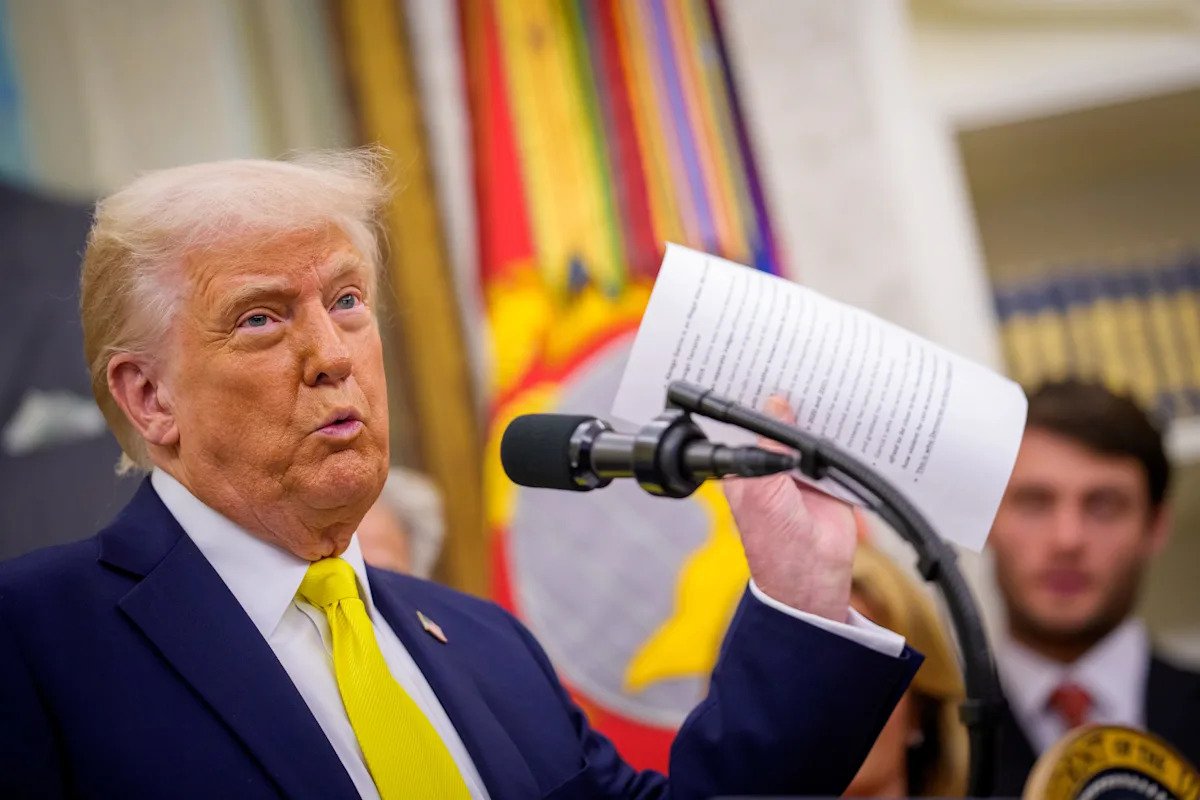
“This will allow patients to easily transmit information from one doctor to another,” Trump said during a July 30 briefing with Health and Human Services Secretary Robert F. Kennedy Jr. and Centers for Medicare & Medicaid Services Administrator Mehmet Oz.
Trump emphasized the initiative will be voluntary and require patients to opt in. He added there will be no centralized, government-run database storing patients’ personal records.
“People are very concerned about the personal records,” Trump said. “That’s their choice … it will be absolutely quiet.”
Large hospital systems and some doctors allow patients to share health information, fill out forms and schedule appointments through websites and mobile apps. And health tech companies have developed apps that allow people to track their health information, but these apps often can’t access medical records from health providers, said Amy Gleason, acting administrator of the Department of Government Efficiency, or DOGE.
Companies operating 21 networks have agreed to an “interoperability framework” to meet Centers for Medicare & Medicaid Services criteria, according to the Trump administration. Hospital systems and electronic health records vendors have agreed to cooperate in the effort, according to CMS.
Participating apps would help people manage obesity and diabetes, including the use of AI assistants to help check symptoms or schedule appointments, CMS said.
Privacy, data security remain top worries
The health care industry and tech companies have been attempting to reduce paperwork and seamlessly share electronic health records for three decades, said Chris Pierson, CEO of BlackCloak, an Orlando, Florida-based cybersecurity company.
Hospitals, doctors, labs and vendors that directly handle such sensitive medical records are subject to a federal privacy law, called the Health Insurance Portability and Accountability Act, or HIPAA.
To make health information and records more portable and accessible, consumers need to be guaranteed strong privacy protections and granted control over what information is shared, Pierson said.
A consumer might be willing to share their sensitive information with doctors, hospitals or labs. But the same person might want to block an app from sharing records with third parties such as exercise equipment vendors or nutritional supplement retailers.
Pierson said such apps would likely still need to comply with HIPAA and other federal and state laws. Given that the apps are voluntary and require consent, they likely would comply with privacy laws, Pierson said.
Companies also would need to safeguard information technology security to protect the sensitive information from data breaches.
Hackers target health records
Digital medical records are a popular target for hackers seeking sensitive health information, bank records and a person’s identifiable information such as dates of birth and Social Security numbers.
The number of attacks has surged in recent years and are often carried out by organized hackers, often operating overseas, who target the computer systems of health providers and the vendors and companies that serve them.
HHS investigates whether breaches involve violations of health information privacy and security laws and publicly reports attacks that affect 500 or more on its website.
In July alone, more than two dozen data breaches compromised the records of more than 3 million people, HHS records show.
The largest hack in recent years involved the February 2024 attack on UnitedHealth-owned subsidiary Change Healthcare. The attack disrupted the health care industry because doctors and hospitals were unable to collect payments for weeks when computer systems went down.
This article originally appeared on USA TODAY: Trump plan eases sharing of computerized health records
