


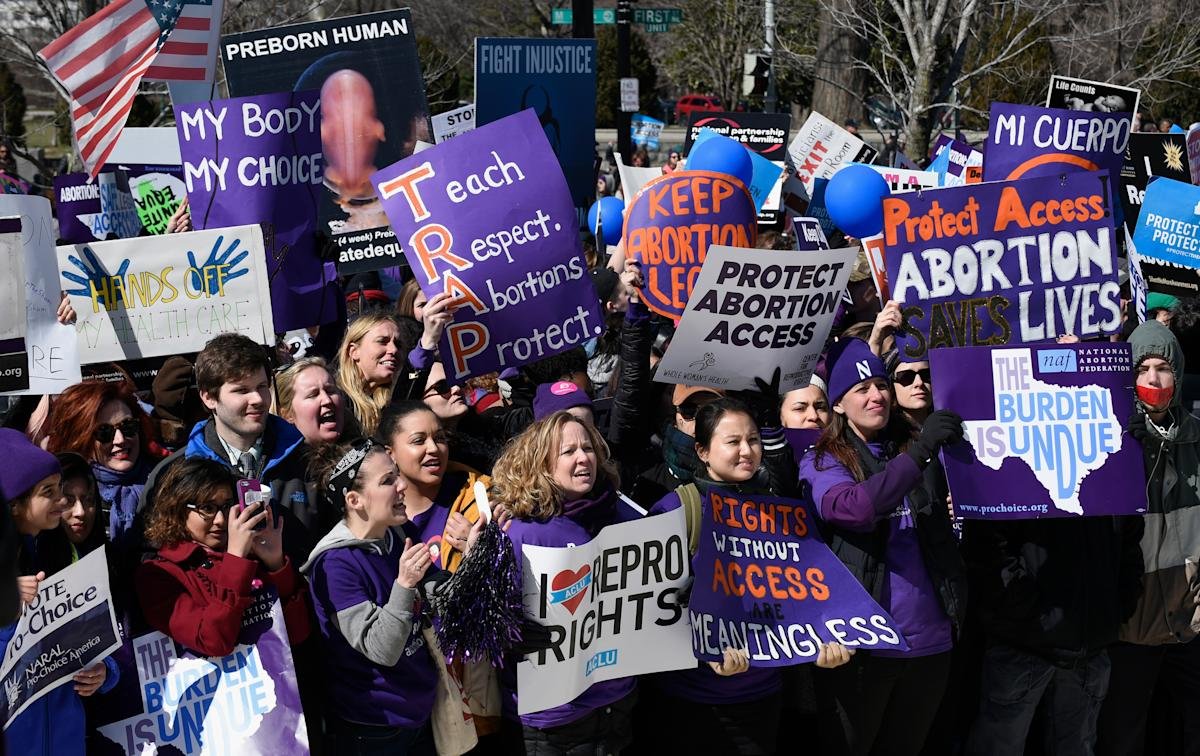
The abortion funding system across the U.S. is battered three years after the Supreme Court overturned Roe v. Wade and allowed states to enforce bans.
An initial surge of donations has subsided, scores of clinics have closed and advocates fear that federal policy changes will result in more shutting down.
“We’re all collectively struggling,” said Ramsie Monk, director of development at the Women’s Health Centers of West Virginia and Maryland, which opened a clinic in 2023 in western Maryland after abortion was banned in West Virginia.
“I honestly don’t know if it’s a sustainable model,” said Mercedes Sanchez, executive director at the Cedar River Clinics in Washington. “Clinics, providers, funds are all very committed to making sure people can access care, but it is definitely going to be more of a challenge.”
Bans in some states mean travel has become a bigger part of obtaining an abortion, bring a host of costs.
A mitigating factor is that most abortions are now done with medications. They can be prescribed by telehealth, including to women in states where abortion is banned. But they can’t be used in every case, some women prefer procedures, and there are challenges to the legality of pills and how they’re prescribed.
Abortion isn’t funded like other health care
Not all private insurance plans cover abortions. Federal taxpayer funds cannot be used for abortions, but state Medicaid funds cover them in some places. And a network of private funding helps cover procedures or travel and other costs.
The increase in contributions that followed the 2022 Supreme Court ruling has declined for most funds and clinics. “The resources have not kept pace with demand continuing to surge,” Lynn McCann-Yeh, co-executive director of the Baltimore Abortion Fund.
With bans on abortion at all stages of pregnancy now being enforced in 12 states and bans at about six weeks’ gestation being enforced in four others, travel for abortion has become more frequent. Costs for each trip can include plane tickets or gas for long drives, meals, hotels and child care — all on top of clinic fees.
Last year, the National Abortion Federation’s hotline fund reduced the portion of clinic costs it covers for people with financial needs to 30% from 50% so it could help more people as demand increased. The group’s says travel costs now average over $1,000 per person.
Travel needs have made the job for abortion funds not only more expensive but more intricate.
Before the Texas ban started in 2021, Fund Texas Choice got about 40 calls a month, executive director Anna Rupani said. Now, it’s over 200. And assisting each caller can take more time because they involve arranging flights and hotels, not just lining up rides to clinics in the state.
Some people cobble together money from a hodgepodge of groups to pay for an abortion. Grace McGarry, who manages the phone line for Whole Woman’s Health, which operates five clinics across the U.S., said he talked to a patient who was getting aid from nine different groups.
Clinics have closed, even in states without new bans
Since the Supreme Court’s ruling in Dobbs v. Jackson Women’s Health Organization, I Need An A, which operates a website dedicated to providing information about abortion options, has tallied 105 clinics closing.
Twenty-nine closures were in states where abortion is now banned at all stages of pregnancy. Eleven were in states where it’s banned at about six weeks’ gestation, before many women realize they’re pregnant. But 65 of the closures were in other states.
At the same time, 34 clinics have opened anew or moved to states where abortion is legal.
“Each and every one of those has been a blow to that community that hasn’t been refilled,” said Rebecca Nall, the founder of I Need An A.
Planned Parenthood North Central States announced in May that it would close eight locations in Iowa and Minnesota while expanding services at some other clinics.
Ruth Richardson, the CEO of that Planned Parenthood affiliate, said the reorganization recognizes that the number of abortions in Iowa plummeted after the state started enforcing its strict abortion law. It also reflects that the regional group’s overall budget is down.
“We’ve got the compounded challenges of the fact that sexual and reproductive health care has been politicized in this environment,” she said.
Marjorie Dannenfelser, president of SBA Pro-Life America, said in a statement that the closures are warranted: “Planned Parenthood’s focus is squarely on abortions, gender transitions and political spending.”
The federal government has moved to cut funding for clinics
In March, the Department of Health and Human Services withheld $27.5 million that groups were expecting to provide family planning, contraception, cancer screening and sexually transmitted infection tests and treatment. Some of the groups also provide abortions and include at least 11 regional Planned Parenthood affiliates.
“We’re absolutely in a public health crisis of epic proportions,” said Brittany Fonteno, president and CEO of the National Abortion Federation. “We’re in a situation where there are reproductive health care deserts, not just abortion care deserts.”
President Donald Trump’s tax and budget bill that is up for consideration in the Senate after getting House approval would deliver more blows to abortion funding.
It would bar federally subsidized health insurance plans from covering abortion, except if it’s necessary to save the life of the woman, or in cases of rape or incest.
The bill also would bar Medicaid funds from flowing to Planned Parenthood, the nation’s biggest abortion provider.
Planned Parenthood said those provisions could lead to the closures of about half its clinics that provide abortion —- and about one-fourth of abortion clinics nationwide. The biggest impact on affiliate clinics would be in states where abortion is legal.
Alexis McGill-Johnson, president and CEO of Planned Parenthood Federation of America, said it’s almost been a challenge to fund abortion — and all health care — for low-income people.
“If the market could have figured it out,” she said, “then we wouldn’t exist.”
