


Ultra-processed foods make up the bulk of what kids eat — and adults aren’t far behind, a report published Thursday by the Centers for Disease Control and Prevention finds.
About 62% of kids’ and teens’ daily calories came from ultra-processed foods, the CDC’s National Center for Health Statistics found, compared with 53% for adults.
The report marks the first time CDC has provided estimates about how much ultra-processed foods make up Americans’ diets.
Health and Human Services Secretary Robert F. Kennedy Jr. in May cited ultra-processed foods among his list of top issues that need to be addressed to curb what he says is an epidemic of childhood chronic diseases.
Last month, the Department of Health and Human Services took the first step to formally define “ultra-processed foods” — a move, experts say, that could open the door to regulation, including what types of food are eligible for food assistance programs. Diets high in ultra-processed foods have been linked to a number of health problems, including depression, Type 2 diabetes and early death.
Previous administrations have also tried to take action on ultra-processed foods, but those efforts have focused mostly on labeling and individual ingredients — such as added sugars and trans fats — rather than on regulating or classifying foods based on their level of processing. In January, during the Biden administration, the Food and Drug Administration proposed requiring a new label on the front of most packaged food and drinks that would alert consumers to how much saturated fat, salt and added sugar they contained.
Thursday’s report was based on findings from the National Health and Nutrition Examination Survey, from August 2021 to August 2023.
The report’s lead author, Anne Williams, a researcher with the National Center for Health Statistics, said the agency identified ultra-processed foods using the NOVA classification system — a framework developed by Brazilian researchers that’s the most commonly used tool to evaluate processed foods. NOVA defines ultra-processed products as “industrial creations” made with little — if any — whole foods.
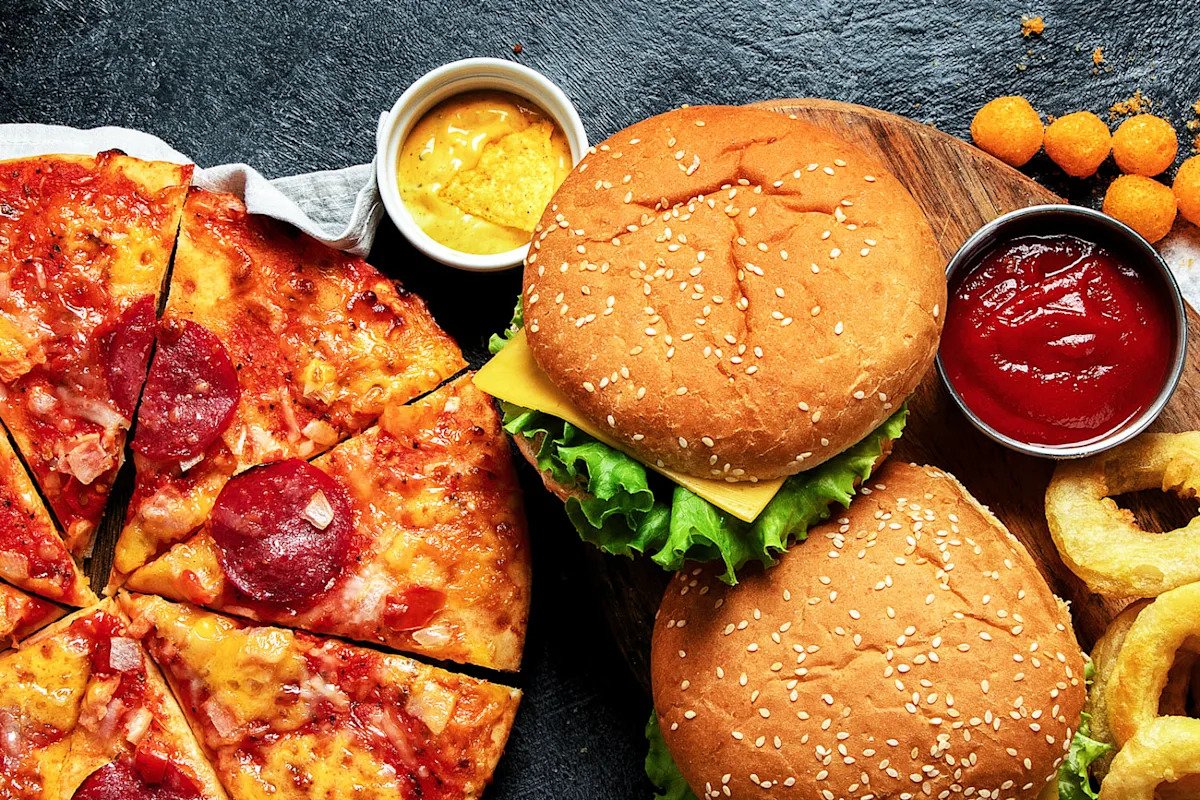
The top source of ultra-processed foods for both kids and adults was sandwiches, such as burgers, hot dogs and PB&Js, Williams said. That was followed by baked goods, salty snacks and sugary drinks.
The report found that adults with higher incomes tended to eat fewer ultra-processed foods.
It also found that intake of ultra-processed foods for both kids and adults dropped slightly from 2017-18 to August 2021–23. For adults, the decline started even earlier, going back to 2013–14. Williams cautioned that the decline so far has been small — a 56-calorie difference over roughly a decade.
Marion Nestle, professor emerita of nutrition, food studies and public health at New York University, said the CDC’s findings align with what outside researchers have found about Americans’ eating habits.
Nestle said parents tend to gravitate toward ultra-processed foods for their kids because they’re easy to throw in a school lunch bag.
But, she added, probably the biggest reason kids eat so many ultra-processed foods is that the food industry heavily markets it to them.
“They’re the most profitable products in the supermarket, and the companies sell them, they market them directly to kids,” Nestle said. “They’re seen as cool and are iconic and you’re lucky to eat them, because that’s how they’re marketed.”
The term “ultra-processed food” was created around 2009 and has primarily been used for research purposes, said Susan Mayne, who was director of the FDA’s Center for Food Safety and Applied Nutrition in both the Biden and the first Trump administrations.
Mayne said research has shown that eating ultra-processed foods in general is linked to increased caloric intake and weight gain and that it is associated with greater risk of chronic diseases.
The problem with defining ultra-processed foods, she said, is that not all of them are linked to greater health risks. In fact, some — like certain yogurts, whole grain breads and cereals — are actually associated with reduced risks of chronic diseases like colon cancer. States like California have tried to address that by coming up with a definition of “particularly harmful” ultra-processed foods, she added.
The NOVA classification system also has limitations, as it doesn’t directly measure processing, Mayne said. Rather, it uses additives and specific ingredients as a proxy for the level of processing.
“FDA is engaging in a public process to attempt to define UPF, which is a good first step,” Mayne said in an email, referring to ultra-processed foods. “But it would be important to repeat studies to demonstrate that the new definition is as or more predictive of chronic disease risk than existing definitions before it could be used for policies.”
HHS hasn’t said when it plans to formally define “ultra-processed.”
Nestle said she hopes the Trump administration also targets marketing.
“These are highly convenient products, and the kids will eat them because the kids have been trained to eat them,” she said.
This article was originally published on NBCNews.com
