


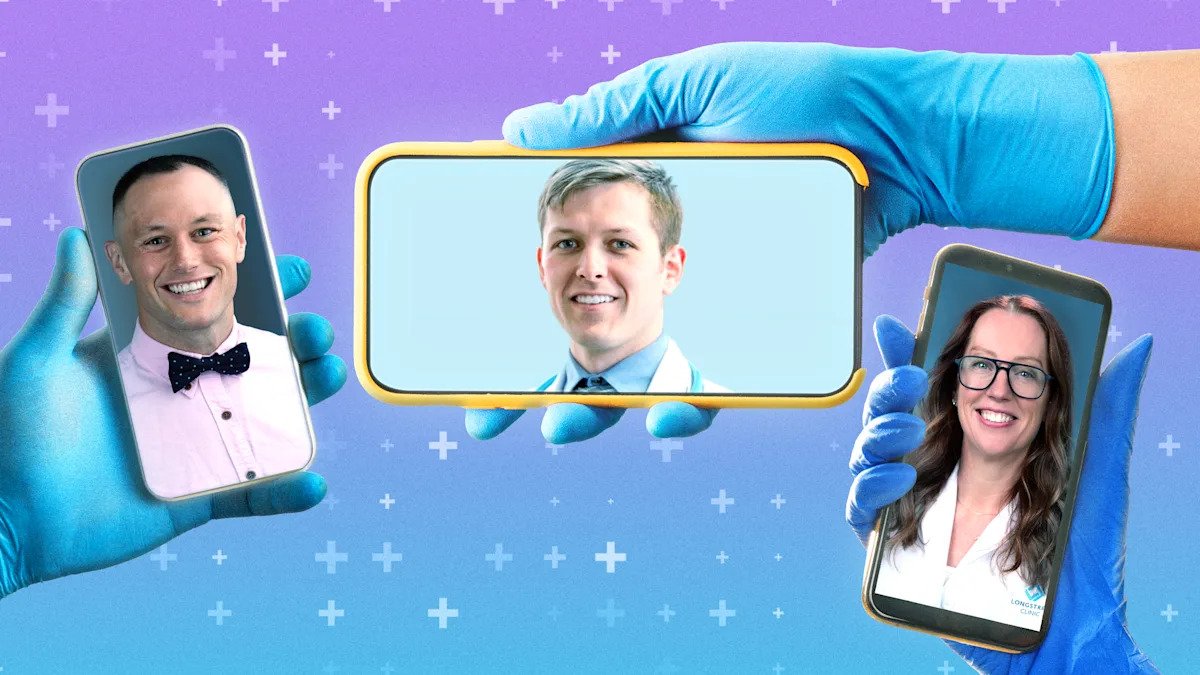
Dr. Betsy Grunch is a neurosurgeon in Georgia, where she’s been operating on brains and spines for 13 years. Since 2020, her role has expanded to content creator. To her combined 3.8 million followers on Instagram and TikTok, Grunch is known as “Ladyspinedoc,” a source of guidance on health matters ranging from weighted vests to chiropractors. She does it, she tells Yahoo, for the sake of “combating misinformation.”
“I really felt like I could reach a population of people that didn’t have the correct information,” says Grunch, whose posts have taken on claims regarding vaccine safety and the Guardian Caps some NFL players wear. What’s more, her expertise in neurosurgery felt like “a niche that was unfulfilled.” And she makes it more entertaining than it sounds. Scroll through Grunch’s feed and you’ll find her offering behind-the-scenes footage of spine surgery, cracking 6-7 jokes and breaking down the science behind why we have a favorite side of the bed.
Despite her large following, Grunch hasn’t quit her day job. Instead, she’s part of a growing number of medical professionals who are juggling their doctor’s office duties alongside TikToks. And it’s connecting: A KFF Health poll found that more than half of U.S. adults use social media for health information and advice at least occasionally. But social media can also be the Wild West when it comes to health claims, and that same poll found a lot of skepticism surrounding the information users find online. For Grunch and other MDs, this isn’t just a side hustle in scrubs; it’s a chance to set the record straight.
Combating misinformation
Dr. Tommy Martin, an internal medicine and pediatrics doctor in Massachusetts, has been active on social media since he was a medical student in 2014. At the time, he was offering study tips on YouTube and Instagram to help fellow students navigate medical school. Shortly after he was introduced to TikTok in 2019, his content started to change.
“Through the COVID pandemic, I continued to make social media content, no longer as a medical student, but as a resident physician, on stopping the spread of misinformation,” Martin tells Yahoo.
He posted videos directly addressing the influx of medical misinformation relating to the coronavirus, details on the side effects of COVID vaccines and the long-term effects of having COVID. He also worked with the World Health Organization (WHO) on its efforts to bring science-based health information onto TikTok.
His content isn’t limited to COVID. A few of Martin’s recent videos show him debunking claims and reacting to dubious advice from other creators — like drinking your own urine to cure a urinary tract infection, offering “knockout bottles” for babies and consuming raw milk.
“When we look to research, we see that misinformation reaches far more people than accurate information, especially in the health domain,” Martin says. “We also know that a very high percentage of people in the United States look toward social media for their health advice. We have access to close to 5 billion people around the world [on social media].”
Dr. Zachary Meade, an anesthesia resident who goes by “Dr. Zack MD” on TikTok and Instagram, is hoping his content offsets some of the bad health advice out there. “I started posting back then just for fun, to engage people and put out good information,” Meade, who set up his social media accounts in 2024, tells Yahoo. “And then at that point, I realized how much misinformation there really was.”
Meade points to coming across videos in which other creators discouraged people from taking prescription medications and advocated against chemotherapy as a cancer treatment. “I was just blown away because those statements and videos could kill people,” he says.
Another trend that made him concerned: distrust in doctors.
Creating trust
Patient trust in physicians and hospitals decreased over the course of the pandemic, setting off a trend that persists today. According to a 2025 Edelman report, Gen Z and young millennial populations trust the advice of friends and family nearly as much as they do their doctor when it comes to decisions about their health. And 45% of people ages 18 to 34 have made health decisions based on uncredentialed advice.
“I just saw this theme of people and comments saying, ‘I don’t trust you. You’re a physician. We don’t trust doctors anymore,’” says Meade. “A lot of people actually comment that you’re not even a real doctor, you’re just some AI bot.”
Being intentionally personable in his content has made a difference. “Once I started interacting with [followers] in an organic manner and posting very natural content, I’ve had many people go, ‘Oh, I didn’t really trust doctors, but you seem to be one of the good ones. So I’m going to follow along,’” he says.
Martin has incorporated a lot of personal content onto his page in an effort to gain trust. That includes videos of his son, Ollie, who lives with a rare genetic disease and autism. His wife, Dr. Phoebe Martin, is also a physician with a sizable social media following.
“I feel like when people can see my heart and the realness of who I am and what I show, it allows people to maybe put a little bit more trust back into doctors,” Martin says. “It lends itself to provide some more humanity to medicine, rather than seeing doctors as just robots churning out prescriptions.”
Grunch thinks her perspective as a working mother has done the same. “People know me and my family and my kids. It’s helped me build more trust,” she says. “Even with my patients, they feel almost like I’m their friend and physician because they know more about me than they would about another physician, per se.”
The price of posting as a physician
Grunch knows that her approach to both her profession and her content isn’t for everyone. “There may be [other physicians] that don’t want to share and don’t feel the need to share,” she says. “We already have a stable job and, really, by being a physician content creator, I think you’re risking things more than you’re benefiting.”
Posting online can be lucrative for some, like Dr. Franziska Haydanek, aka Paging Dr. Fran, who makes triple her doctor’s salary with content creation. “It’s very easy to make more money as a content creator than as a physician, if [you have a big following]. If you do it right and you get it right, there are many ways of earning money through your content,” says Grunch, who herself gets income from pay-per-view monetization, brand deals and even long-term brand partnerships, like the one she has with Figs. But it’s not always a financial game changer. “Neurosurgeons make a lot of money. So, am I making what I make as a neurosurgeon in content creation? No.”
She’s also careful to consider what she’s advertising on her channels. “Just because someone offers me money, I’m not going to take it. I really want to make sure it makes sense for me, because identification and authenticity, and the way you hold yourself, are really important for making sure your followers really trust your advice and health care,” says Grunch. “It’s a reputation that can be easily lost.”
Martin says it’s a tough balance to strike. “For medical creators, I think you have to be very cautious. You need to only do brand deals that are evidence-based, that are ethical and that you truly love and support,” he says.
Martin sees a lot of value in creating content like he does. He also knows it’s a burden not all medical professionals can take on.
“I generally would say that it is no longer a luxury to use social media but rather a necessity for every health care provider. But how is it fair to ask them to work more outside of their day job, where they’re so tired after working, after fighting misinformation in a busy clinic day, after they’ve seen 30 patients? How can they have the energy then to go to their phone and make a video to try to stop this spread of misinformation?” he says. “For those that have the capacity to and the desire to, and the mental stamina to do it, then I think it is a necessity for doctors to be online.”
For him, it’s worth it. “I am very passionate about [creating content], and I do enjoy it,” he says. “If my content helps one person, then it’s worth all of the work I put into it.”
