


We may receive an affiliate commission from anything you buy from this article.
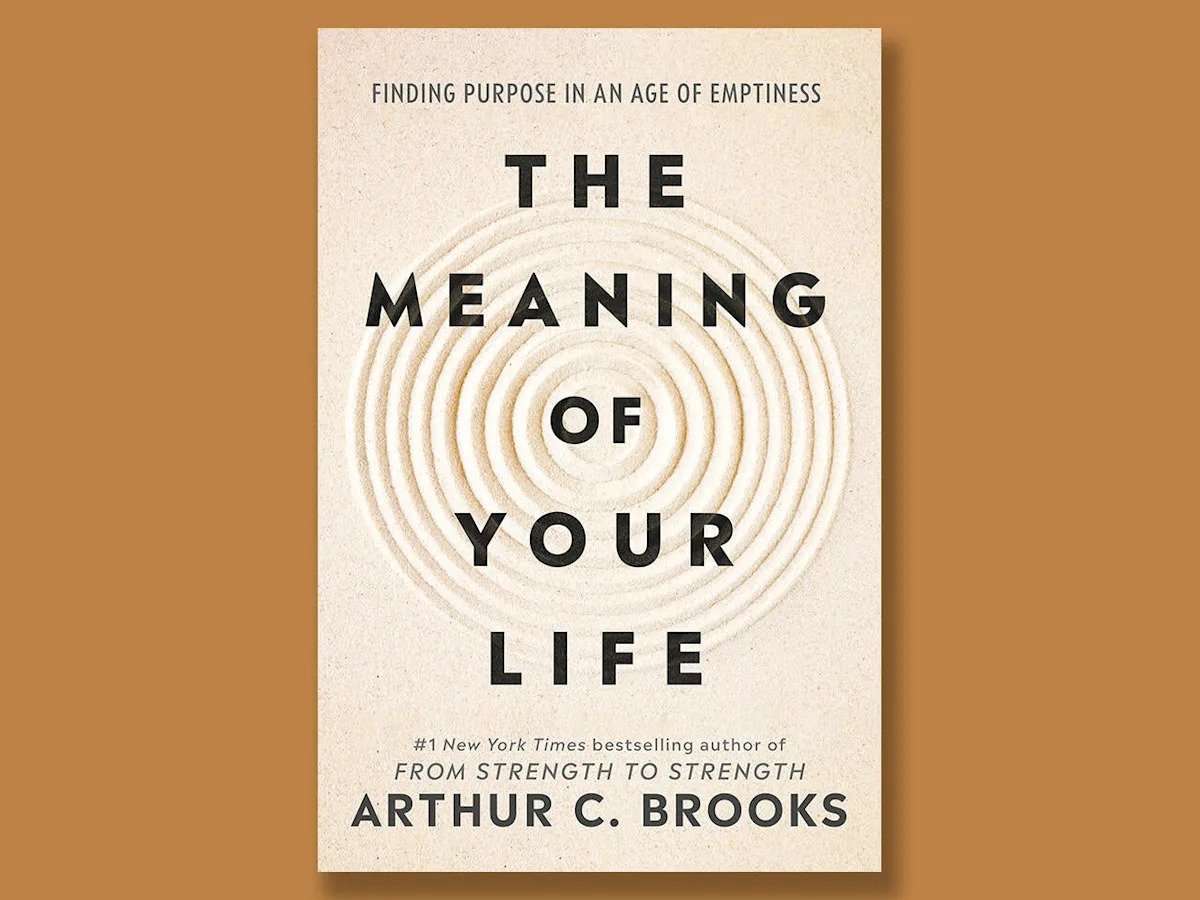
In his latest book, “The Meaning of Your Life” (to be published March 31 by Portfolio), New York Times bestselling author Arthur C. Brooks writes of a cultural crisis: an increase in anxiety and depression, concurrent with a rise in social media use, that is impinging upon our ability to find purpose in life, during what he terms an “Age of Emptiness.”
Read an excerpt below, and don’t miss Brooks on “CBS Sunday Morning” March 22!
“The Meaning of Your Life” by Arthur C. Brooks
Prefer to listen? Audible has a 30-day free trial available right now.
In January of 2009, I temporarily left my campus home, taking a ten-year hiatus to be the president of a big nonprofit organization in Washington, DC, and didn’t return until the fall of 2019. I always intended to return to academia, and after a decade, I quit my executive job and accepted a position at Harvard University. My intention was to get back the optimism and vigor students had always given me in times past—to get back home.
But when I returned, it was very unheimlich. The atmosphere had darkened, as larger and larger percentages of students were suffering from depression and anxiety. At some colleges and universities, more than half of students were receiving mental health treatment. My office hours were more like counseling sessions than tutoring. Hope and optimism seemed like they had been replaced by anger and sadness. And fear: students feared exposure to ideas they found objectionable and made them feel emotionally unsafe, and faculty were terrified to lecture on anything that might offend the students.
I saw the crisis on campus, but that was just where it was most obvious and visible to me. Depression, anxiety, loneliness, fear, and anger were cropping up everywhere, especially among young adults. Pretty soon, everyone was talking about a mental health crisis. The percentage of American adolescents with symptoms of major depression nearly tripled from 2005 to 2019, while anxiety almost doubled. According to the General Social Survey, the percentage of American adults of all ages who are “not too happy” about their lives had more than doubled from 2000 to 2023. Women were hit especially hard: 45 percent of female Americans between ages twelve and twenty-six had received a formal diagnosis of anxiety or depression by 2024. From 2004 until 2024, the percentage of women thirty and under who said their mental health was “excellent” plummeted, from 48 percent to 15 percent.
What the data show—and what everyone has seen with our own eyes—is what we social scientists call a psychogenic epidemic, a phenomenon that causes tremendous suffering but has no organic cause, meaning the onset is social or psychological, not biological. As a specialist in the science of happiness, I naturally began writing and speaking publicly about this epidemic, searching for its cause. And as I did this work, I found something even more mysterious: those who should be the best off—the hardworking strivers at places like my university—were actually suffering the most.
Over the course of my investigation into the cause of the epidemic, I started by looking at the popular explanations we all hear. A very common one is that young adults have gotten a bait-and-switch from older generations, who promised them that if they worked hard and played by the rules, they would have a great life. Instead, they found that houses are impossibly expensive in the cities that offer the most rewarding jobs, and raising kids gets harder every year. Meanwhile, the social security and medical systems they are paying into will be bankrupt by the time they are old. On top of that, there are looming environmental threats, rising inequality, and a host of other problems. Thanks for all the empty promises and the screwed-up world, boomers.
On the other side, older people claim that the problem is young adults themselves, with their supposed culture of indulgence, narcissism, and entitlement. When many people my age hear the complaint that life is so much worse today, and that they had things so much easier in the old days, they just roll their eyes. When their adult kids talk about environmental problems, they recall growing up with smog-choked free-ways, burning rivers, and nuclear-bomb drills during the Cold War. When they hear how unaffordable housing is, they’re likely to point out the lousy apartment they rented—with a rolled-up futon in the corner and a two-ring burner to cook on—when they were starting out.
But neither of these scapegoating explanations holds water. They just blame a deep philosophical and psychological problem on another generation’s selfishness. There’s nothing new about that: every generation resents their elders and then looks down on “kids these days.” But this psychogenic epidemic is real and unprecedented.
A more scholarly explanation focuses on what people are doing to entertain and distract themselves—generally, staring down at their phones. In my own research, I find a clear relationship between social media use and emotional problems. As a general rule, the more time you spend looking at your phone, the more depressed, lonely, and anxious you will become.
It still leaves the big mystery, however, of what people are missing—what they truly want but can’t find while they scroll away for hours. The overuse of tech is a soothing behavior because something important is absent in their lives—and this behavior is probably also making that something harder to find. It’s like alcohol or recreational drugs, which people often abuse when what they really want in life—hope, opportunity, love—is absent, but which makes their problem worse.
What is it that the young strivers so deeply crave but can’t find? And why can’t they find it? I needed more than data and statistics to answer this, so I started asking people to tell me their stories.
And in interview after interview, their stories illuminated the data. The challenge we face today goes much deeper than, say, unaffordability or generational entitlement. We have found ourselves in a cultural crisis of meaning.
Excerpted from “The Meaning of Your Life: Finding Purpose in an Age of Emptiness” by Arthur C. Brooks, in agreement with Portfolio, an imprint of Penguin Publishing Group, a division of Penguin Random House LLC. Copyright © 2026 by Arthur C. Brooks.
Get the book here:
“The Meaning of Your Life” by Arthur C. Brooks
Buy locally from Bookshop.org
For more info:
“The Meaning of Your Life: Finding Purpose in an Age of Emptiness” by Arthur C. Brooks (Portfolio), in Hardcover, Large Print Trade Paperback, eBook and Audio formats, available March 31arthurbrooks.com
Body found in Barcelona identified as missing American student James Gracey
Joseph Duggar arrested, facing child sex abuse charges
A lot of Iran’s nuclear capabilities “still has survived,” UN watchdog chief says
