


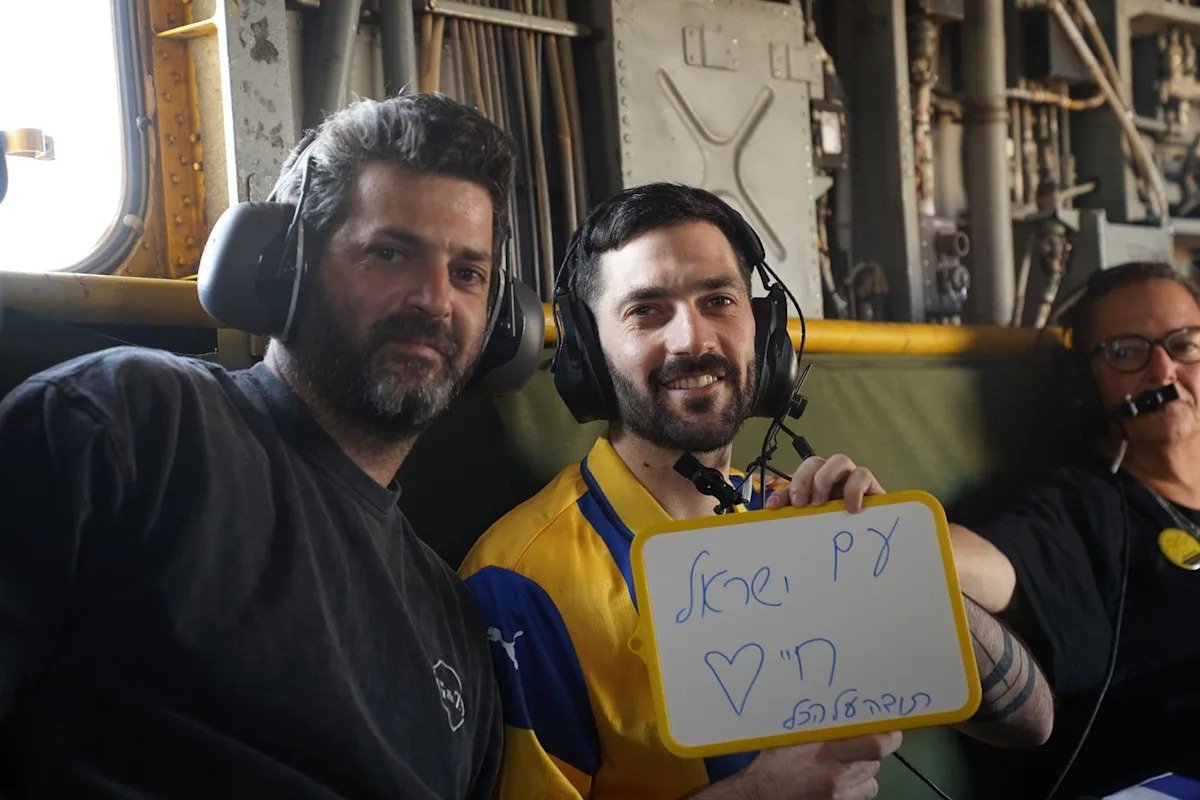
TEL AVIV, Israel (AP) — They will be treated for malnutrition, lack of sunlight and the trauma of wearing leg chains for months. They suffer from unexplained pain and unresolved emotions, and they will have to relearn how to make everyday decisions as simple as when to use the bathroom.
The last 20 living hostages released by Hamas are beginning a difficult path to recovery that will also include rebuilding a sense of control over their lives, according to Israeli health officials. Along the way, each one will be accompanied by a team of doctors, nurses, specialists and social workers to guide their reentry to society after two years of captivity in Gaza.
All of the hostages were in stable condition Monday following their release, and none required immediate intensive care.
“But what appears on the outside doesn’t reflect what’s going on internally,” explained Dr. Hagai Levine, the head of the health team for the Hostages Family Forum, who has been involved in medical care for returned hostages and their relatives.
The newly freed hostages will stay in the hospital for several days as they undergo tests, including a full psychiatric exam, according to protocols from the Israeli Ministry of Health. A nutritionist will guide them and their families on a diet to avoid refeeding syndrome, a dangerous medical condition that can develop after periods of starvation if food is reintroduced too quickly.
Hostages emerged thin and pale
After previous releases, some hostages and their families chose to stay together in a hotel north of Tel Aviv for a few weeks to get used to their new reality. Others returned home immediately after their discharge from the hospital.
All of the hostages who emerged Monday were exceptionally thin and pale, the likely result of enduring long periods without enough food, Levine said.
The lack of sunlight and nutrition can lead to issues with the kidneys, liver and cognition, as well as osteoporosis. Many hostages wore leg chains for their entire captivity, which can lead to orthopedic problems, muscle waste and blood clots.
Elkana Bohbot told his family he suffers from pain all over his body, especially his back, feet and stomach due to force-feeding, according to Israeli television’s Channel 12.
“Ahead of his release, he received food in large portions so he will look a bit better for the world,” Rebecca Bohbot, Elkana’s wife, told reporters Tuesday from the hospital.
Some hostages who previously returned had minor strokes in captivity that were not treated, Levine said. Many also had infections and returned with severely compromised immune systems, which is why the number of visitors should be kept to a minimum, Levine said. He denounced politicians’ visits to the hostages as both unnecessary and potentially dangerous. Prime Minister Benjamin Netanyahu visited five hostages Tuesday evening and was diagnosed Wednesday with bronchitis.
“Previously released hostages were told they look ‘pretty good,’ but some needed surgeries that were very complicated. Some had constant pain. Many have all types of pains that they are not able to explain, but it’s really impacting their quality of life,” Levine said.
Levine said Israel also learned from the 1973 Arab-Israeli war, when more than 60 Israeli soldiers were held for six months in Syria. Many of them later developed cancer, cardiovascular problems and accelerated aging and were at risk for early death.
The war began when Hamas-led militants burst across the Israeli border, killing around 1,200 people and kidnapping 251. The fighting has killed more than 67,600 Palestinians, according to Gaza’s Health Ministry, which is part of the Hamas-run government. The ministry maintains detailed casualty records that are seen as generally reliable by U.N. agencies and independent experts. It does not say how many of the deaths were civilians or combatants.
Restoring a sense of autonomy
The most important step for returning hostages is to help them regain a sense of control, explained Einat Yehene, a clinical neuropsychologist and the head of rehabilitation for the Hostages Families Forum. Many of the hostages were brought straight from Hamas tunnels, seeing sunlight for the first time in nearly two years, she said.
“I’m happy to see the sun. I’m happy to see the trees. I saw the sea. You have no idea how precious that is,” Elkana Bohbot told his family, according to Israeli media.
“Stimulation-wise and autonomy-wise, it’s really overwhelming,” Yehene said. “Someone is asking you a question — do you need to go to the bathroom? Would you like to eat something? These are questions they never heard for two years.”
Hostages’ sense of autonomy can be jump-started by allowing them to make small decisions. According to protocol, everyone treating them must ask their permission for each thing, no matter how small, including turning off a light, changing bedsheets or conducting medical tests.
Some returned hostages are terrified of the physical sensation of thirst because it makes them feel as if they are still in captivity, Yehene said. Others cannot spend time on their own, requiring a family member to be present around the clock.
Among the hostages who have experienced the smoothest integration from long-term captivity were those who were fathers, Levine said, though it took some time to rebuild trust with their young children.
“It’s a facilitator of recovery because it forces them to get back into the role of father,” Levine said. None of the women held in captivity for long periods of time were mothers.
The world starts ‘to move again’
The first few days after being released, the hostages are in a state of euphoria, though many feel guilty for the pain their families have been through, Yehene said.
For those who saw little media and have no idea what happened in Israel, people should take care to expose them to information slowly, she added.
Yehene said she also saw an immediate psychological response from hostages who were released in previous ceasefires after Monday’s release. Many of the previously released hostages have been involved in the struggle to return the last hostages and said they were unable to focus on their own recovery until now.
“I see movement from frozen emotions and frozen trauma,” Yehene said. “You don’t feel guilty anymore. You don’t feel responsible.”
Iair Horn was released from captivity in February, but it did not feel real until Monday, when his younger brother, Eitan, was finally freed.
“About eight months ago, I came home. But the truth is that only today am I truly free,” Horn said, sobbing as he spoke from the hospital where his brother is being evaluated. Only now that Eitan is back “is my heart, our heart, whole again.”
Liran Berman is the brother of twins Gali and Ziv Berman, who were also released.
“For 738 days, our lives were trapped between hope and fear,” Liran Berman said. “Yesterday that chapter ended. Seeing Gali and Ziv again, holding them after so long, was like feeling the world start to move again.”
