


When you buy through our links, Business Insider may earn an affiliate commission. Learn more
Few things are more annoying than setting up a new TV, console, or streaming box, turning everything on, and seeing a dreaded “No Signal” message. A lot of the time, the problem isn’t your TV or device at all — it’s an old or broken HDMI cable. To help you avoid that frustration, our tech experts rounded up the best HDMI cables that actually work reliably with today’s gear.
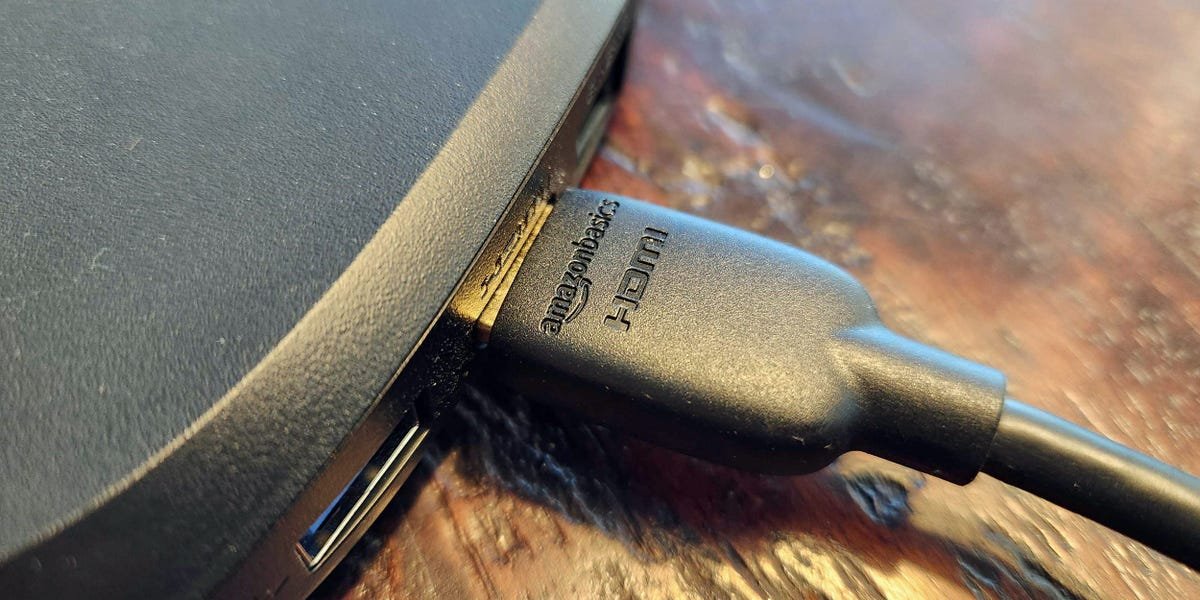
For most people, the Amazon Basics 48Gbps HDMI cable is the best pick. It’s inexpensive and consistently dependable in our testing with TVs, game consoles, and media players. It comes in three-, six-, and 10-foot lengths and supports all modern HDMI features. If you want something tougher, the Highwings 48Gbps HDMI cable is another solid choice, thanks to its braided design that resists bending and wear.
Every pick on our list of the best HDMI cables supports ultra-high-speed bandwidth, which means full compatibility with HDMI 2.1 features like 4K at 120Hz. While only certain devices — such as the PS5 or high-end gaming PCs — take full advantage of that bandwidth, ultra-high-speed HDMI cables cost about the same as older versions and work with any HDMI-equipped device. Even if you don’t need the extra speed right now, buying one helps future-proof your setup.
This affordable cable can transmit 4K/120Hz signals with support for all HDMI 2.1 features. It comes in sizes that range from three to 10 feet.
This ultra-high-speed HDMI cable has a rugged design with anti-break SR ports and a durable, nylon-braided, tangle-free construction.
Although pricey, this 25-foot HDMI cable uses an active chipset to boost its signal to prevent degradation over longer distances.
This braided cable is for connecting your TV or monitor to a device that has an HDMI Mini port, like a camera, tablet, or laptop.
This is an ideal option for buyers who need an HDMI cable that can fit into tight spaces without obstructing other ports in the area.
HDMI cable FAQs
Steven Cohen/Business Insider
What speed HDMI cables are available?
There are several HDMI cable types, each certified for different bandwidth levels, which determine the resolutions, refresh rates, and features they support.
Standard: An older cable type that supports up to 720p or 1080i.High Speed: Rated for up to 10.2Gbps, supporting 1080p, 4K at 30Hz, 3D, and Deep Color.Premium High Speed: Certified for 18Gbps, enabling 4K at 60Hz, HDR, and wider color.Ultra High Speed: Rated for up to 48Gbps and supports all HDMI 2.1b features, including 4K at 120Hz, 8K at 60Hz, VRR, ALLM, dynamic HDR, and eARC.Ultra96: A new 96Gbps standard designed mainly for commercial HDMI 2.2 applications, which don’t apply to consumers.
What length HDMI cables are available?
Most HDMI cables come in three-, six-, and 10-foot lengths, which are ideal for most setups. Longer cables are available, but they require more care when choosing.
As cable length increases, signals can degrade, and cables become more prone to bending damage. For runs longer than 15 feet, we recommend using an active HDMI cable with built-in signal boosting to maintain full bandwidth and reliable performance.
What are the different sizes of HDMI connectors?
HDMI cables come with different connector sizes. Most TVs, monitors, game consoles, soundbars, and Blu-ray players use standard Type-A HDMI connectors.
Smaller devices may use other types:
Type-C (Mini HDMI): Smaller than Type-A and commonly found on cameras and some tablets.Type-D (Micro HDMI): Even smaller and less common, typically used on very compact devices like smartphones.
Always check your device’s port before buying a cable to ensure compatibility.
Do you need an expensive HDMI cable?
Not usually. As long as an HDMI cable meets the right speed standard for your setup, it should deliver the same picture and sound as a more expensive option. Pricier cables don’t magically improve image quality — they mainly offer nicer materials or better durability. In most cases, there’s little reason to spend more than around $10 for a six-foot ultra-high-speed HDMI cable.
Can a bad HDMI cable cause no signal, flickering, or audio dropouts?
Yes. A faulty or outdated HDMI cable can cause issues like a blank screen, intermittent flickering, or audio cutting out. Swapping in a known-good cable is often the fastest way to troubleshoot these problems.
Do I need a specific cable to enable HDMI 2.1 gaming features?
Yes. To use HDMI 2.1 gaming features like 4K at 120Hz, you need an ultra-high-speed HDMI cable rated for 48Gbps. Every device in the signal chain must also support HDMI 2.1 and be connected with ultra-high-speed cables.
For example, if you connect a PS5 to a soundbar to a TV, all three devices must support HDMI 2.1 and 4K/120Hz. HDMI 2.1 ports are usually labeled on the device itself. Many of the best TVs include at least one HDMI 2.1 port. HDMI 2.1 ports are less common on audio gear, but some of the best soundbars now offer HDMI 2.1 passthrough.
All of the HDMI cables we recommend in this guide support ultra-high-speed bandwidth and can enable HDMI 2.1 features when used with compatible devices.
You can purchase logo and accolade licensing to this story here.
Disclosure: Written and researched by the Insider Reviews team. We highlight products and services you might find interesting. If you buy them, we may get a small share of the revenue from the sale from our partners. We may receive products free of charge from manufacturers to test. This does not drive our decision as to whether or not a product is featured or recommended. We operate independently from our advertising team. We welcome your feedback. Email us at reviews@businessinsider.com.
