

Close Menu
  • Home
  • AI
  • Education
  • Entertainment
  • Food Health
  • Health
  • Sports
  • Tech
  • Well Being

Subscribe to Updates

Subscribe to our newsletter and never miss our latest news

Subscribe my Newsletter for New Posts & tips Let's stay updated!

What's Hot

Young Cubans turn to church and state as cheap, synthetic drugs flood the streets

March 12, 2026

One-third of Americans cut back on other expenses to cover healthcare in 2025, survey shows

March 12, 2026

Trump visa changes squeeze rural schools relying on international teachers

March 12, 2026
Facebook X (Twitter) Instagram
  • Home
  • About Us
  • Advertise With Us
  • Contact us
  • DMCA
  • Privacy Policy
  • Terms & Conditions
Facebook X (Twitter) Instagram
IQ Times Media – Smart News for a Smarter YouIQ Times Media – Smart News for a Smarter You
  • Home
  • AI
  • Education
  • Entertainment
  • Food Health
  • Health
  • Sports
  • Tech
  • Well Being
IQ Times Media – Smart News for a Smarter YouIQ Times Media – Smart News for a Smarter You
Home » Tennis star Monica Seles reveals myasthenia gravis diagnosis
Sports

Tennis star Monica Seles reveals myasthenia gravis diagnosis

IQ TIMES MEDIABy IQ TIMES MEDIAAugust 12, 2025No Comments4 Mins Read
Facebook Twitter Pinterest LinkedIn Tumblr Email
Share
Facebook Twitter LinkedIn Pinterest Email


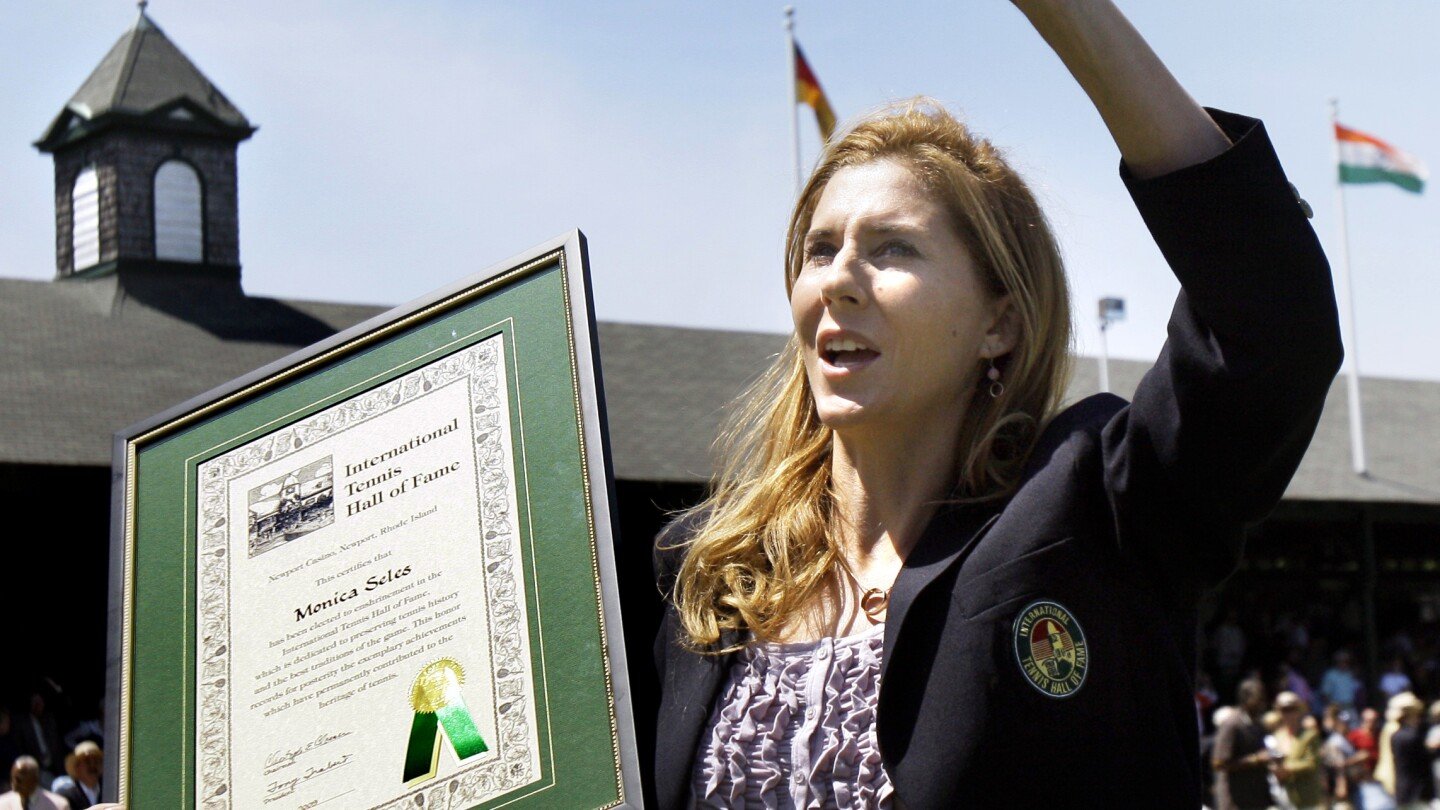
Monica Seles first noticed the symptoms of myasthenia gravis — a neuromuscular autoimmune disease she discussed during a recent interview with The Associated Press — while she was swinging a racket the way she’d done so many times during, and after, a career that included nine Grand Slam titles and a place in the International Tennis Hall of Fame.

“I would be playing with some kids or family members, and I would miss a ball. I was like, ‘Yeah, I see two balls.’ These are obviously symptoms that you can’t ignore,” Seles said. “And, for me, this is when this journey started. And it took me quite some time to really absorb it, speak openly about it, because it’s a difficult one. It affects my day-to-day life quite a lot.”

Monica Seles speaks at her induction into the Court of Champions during a ceremony before the women's singles final of the 2013 U.S. Open tennis tournament, Sept. 8, 2013, in New York. (AP Photo/Darron Cummings, file)

Monica Seles speaks at her induction into the Court of Champions during a ceremony before the women’s singles final of the 2013 U.S. Open tennis tournament, Sept. 8, 2013, in New York. (AP Photo/Darron Cummings, file)

Monica Seles speaks at her induction into the Court of Champions during a ceremony before the women’s singles final of the 2013 U.S. Open tennis tournament, Sept. 8, 2013, in New York. (AP Photo/Darron Cummings, file)

Read More

The 51-year-old Seles, who won her first major trophy at age 16 at the 1990 French Open and played her last match in 2003, said she was diagnosed with myasthenia gravis three years ago and is speaking publicly about it for the first time ahead of the U.S. Open, which starts on Aug. 24, to raise awareness about what is known as MG.

The National Institute of Neurological Disorders and Stroke calls it “a chronic neuromuscular disease that causes weakness in the voluntary muscles” and “most commonly impacts young adult women (under 40) and older men (over 60) but … can occur at any age, including childhood.”

Monica Seles returns the ball to Conchita Martinez of Spain during the semifinals at the U.S. Open, Sept. 8, 1995 in New York. (AP Photo/Elise Amendola, file)

Monica Seles returns the ball to Conchita Martinez of Spain during the semifinals at the U.S. Open, Sept. 8, 1995 in New York. (AP Photo/Elise Amendola, file)

Monica Seles returns the ball to Conchita Martinez of Spain during the semifinals at the U.S. Open, Sept. 8, 1995 in New York. (AP Photo/Elise Amendola, file)

Read More

Seles said she’d never heard of the condition until seeing a doctor and being referred to a neurologist after noticing symptoms such as double vision and weakness in her arms — “just blowing my hair out … became very difficult,” she said — and legs.

“When I got diagnosed, I was like, ‘What?!’” said Seles, who is partnering with argenx, an immunology company headquartered in the Netherlands, to promote their Go for Greater campaign. “So this is where — I can’t emphasize enough — I wish I had somebody like me speak up about it.”

It’s been three decades since Seles returned to competition at the 1995 U.S. Open, making it to the final, more than two years after she was attacked by a man with a knife at a tournament in Hamburg, Germany.

“The way they welcomed me … after my stabbing, I will never forget,” Seles said about the fans in New York. “Those are the moments that stay with you.”

She talks about learning to live a “new normal” nowadays and characterized her health as another in a series of life steps that required adapting.

USA's Monica Seles holds the trophy and a toy Kangaroo after winning the women's final over Germany's Anke Huber at the Australian Open tennis Championships in Melbourne, Jan. 27, 1996. (AP Photo/Steve Holland, file)

USA’s Monica Seles holds the trophy and a toy Kangaroo after winning the women’s final over Germany’s Anke Huber at the Australian Open tennis Championships in Melbourne, Jan. 27, 1996. (AP Photo/Steve Holland, file)

USA’s Monica Seles holds the trophy and a toy Kangaroo after winning the women’s final over Germany’s Anke Huber at the Australian Open tennis Championships in Melbourne, Jan. 27, 1996. (AP Photo/Steve Holland, file)

Read More

“I had to, in tennis terms, I guess, reset — hard reset — a few times. I call my first hard reset when I came to the U.S. as a young 13-year-old (from Yugoslavia). Didn’t speak the language; left my family. It’s a very tough time. Then, obviously, becoming a great player, it’s a reset, too, because the fame, money, the attention, changes (everything), and it’s hard as a 16-year-old to deal with all that. Then obviously my stabbing — I had to do a huge reset,” Seles said.

“And then, really, being diagnosed with myasthenia gravis: another reset. But one thing, as I tell kids that I mentor: ‘You’ve got to always adjust. That ball is bouncing, and you’ve just got to adjust,’” she added. “And that’s what I’m doing now.”

___

Howard Fendrich has been the AP’s tennis writer since 2002. Find his stories here: https://apnews.com/author/howard-fendrich. More AP tennis: https://apnews.com/hub/tennis


Source link

Share. Facebook Twitter Pinterest LinkedIn Tumblr Email
IQ TIMES MEDIA
  • Website

Related Posts

Another No. 1 pick QB, another fired coach: Titans’ Brian Callahan out after six games

October 15, 2025

Yamamoto pitches 3-hitter as Dodgers beat Brewers 5-1 for 2-0 lead in NLCS

October 14, 2025

Max Muncy sets Dodgers record by hitting his 14th career postseason homer

October 14, 2025
Add A Comment
Leave A Reply Cancel Reply

Editors Picks

Trump visa changes squeeze rural schools relying on international teachers

March 12, 2026

A 12-year-old Georgia girl dies following a fight near a school bus stop

March 11, 2026

17 state attorneys general sue over Trump policy on race in admissions

March 11, 2026

Los Angeles schools superintendent denies wrongdoing, wants reinstatement amid federal probe

March 11, 2026
Education

Trump visa changes squeeze rural schools relying on international teachers

By IQ TIMES MEDIAMarch 12, 20260

Like many school systems facing teacher shortages, South Carolina’s Allendale County has looked overseas for…

A 12-year-old Georgia girl dies following a fight near a school bus stop

March 11, 2026

17 state attorneys general sue over Trump policy on race in admissions

March 11, 2026

Los Angeles schools superintendent denies wrongdoing, wants reinstatement amid federal probe

March 11, 2026
IQ Times Media – Smart News for a Smarter You
Facebook X (Twitter) Instagram Pinterest Vimeo YouTube
  • Home
  • About Us
  • Advertise With Us
  • Contact us
  • DMCA
  • Privacy Policy
  • Terms & Conditions
© 2026 iqtimes. Designed by iqtimes.

Type above and press Enter to search. Press Esc to cancel.