


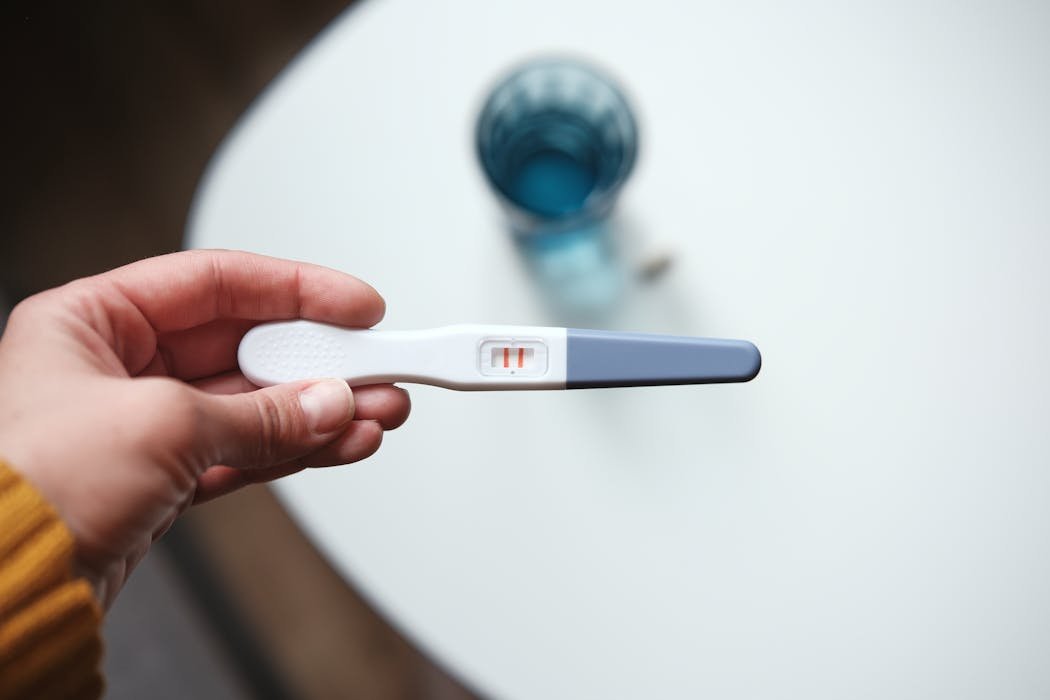
Teens in the U.S. are obtaining medication abortion pills through telehealth, and young people age 18 to 24 are ordering medication abortion at much higher rates than older adults.
Those are the key findings of a new study that my colleagues and I published in the journal JAMA Health Forum.
We examined requests for medication made to an online telemedicine service – one of the few to support people in all 50 states, without age restrictions. We compared average weekly request rates both before and after the Supreme Court overturned Roe vs. Wade in June 2022. Over time, we examined request rates across three age groups (15-17, 18-24 and 25-49) and by the severity of state-level abortion restrictions.
After Roe was overturned, researchers expected the number of abortions across the U.S. to fall. Intuitively, this makes sense, as most states have at least one law substantially restricting abortion services, which limits access at a clinic.
However, research from the Society of Family Planning #WeCount project shows the opposite: that the number of abortions has increased nationwide. The trend was even seen in states that ban abortion.
The main reason for this is the steep rise in medication abortion services through telehealth, which has expanded access for tens of thousands of people. As of early 2025, an estimated 1 in 4 abortions are done via telehealth. Until now, research and media attention have largely focused on this phenomenon among adults rather than among teenagers.
Why it matters
Understanding this trend among adolescents is important because minors – or teenagers under 18 – face a unique legal situation when it comes to abortion.
More than 7 million teenage girls age 13 to 17 live in a state with an abortion ban, and the legal landscape is quickly changing for teens.
In most states, adolescents seeking abortion services must navigate parental involvement laws, which require a minor to obtain consent for, or notify a parent of, their abortion. Such laws make it difficult or even impossible for many teens under 18 to obtain care, even in states like Massachusetts or Pennsylvania that have moved to protect abortion access.
In some cases, teens seek judicial bypass services, which help them circumvent the parental involvement process. In addition to legal barriers, teens who seek abortion may already face stigma around teen pregnancy and sex, likely lack reliable access to a car – or may not even have a driver’s license – and probably don’t have US$600 or more on hand to pay for an abortion at a clinic.
To circumvent these barriers, minors are bypassing parental involvement requirements and requesting telehealth at higher rates in states with parental involvement laws, compared with their counterparts in more liberal abortion access states.
This is important because this trend may be evidence of the huge barrier of parental involvement laws. It may also signal that states with parental involvement laws also have additional policies restricting abortion – such as mandatory waiting periods or gestational bans – and that minors are living in an even more restrictive policy context than adults.
What still isn’t known
More research is needed to understand how and why teens are turning to online providers. Findings will help clinicians and advocates support adolescents who are ordering telehealth medication abortion online.
There are some very real legal risks involved for any teenager ordering pills online, and young people have been criminalized for taking abortion pills ordered from online sources.
Furthermore, anti-abortion prosecutors and lawmakers frequently target teens. For example, Idaho has become notorious for passing an “abortion trafficking” law, which makes it illegal to help minors access abortion.
At the federal level, attempted revisions to the Food and Drug Administration’s approval of the abortion drug mifepristone have explicitly tried to ban access for minors, and federal officials continue to spread misinformation about the safety of medication abortion for teens.
The Research Brief is a short take on interesting academic work.
This article is republished from The Conversation, a nonprofit, independent news organization bringing you facts and trustworthy analysis to help you make sense of our complex world. It was written by: Dana Johnson, University of Wisconsin-Madison and Laura D. Lindberg, Rutgers University
Read more:
Dana Johnson receives funding from the National Institute of Health, the Society of Family Planning Research Fund, and the UW-Madison Collaborative for Reproductive Equity. She also serves on the Board of Directors for Jane’s Due Process.
Laura D. Lindberg is affiliated with Youth Reproductive Equity and Power to Decide
