


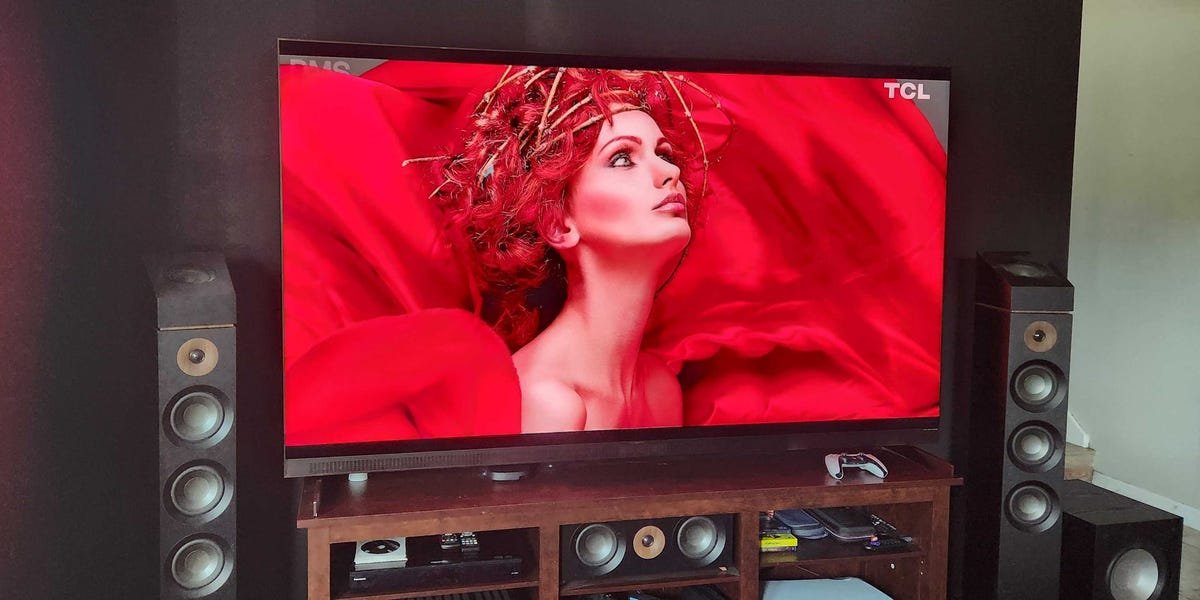
If you’re shopping for a high-end TV in 2026, you’ll likely hear a lot about new Micro RGB or RGB Mini LED technology. Many brands are positioning RGB TVs as the next big thing in color performance. But while TCL isn’t ignoring that trend, it’s taken a different approach with its flagship X11L 4K TV. Instead of using a Micro RGB panel, the X11L is the first TV to use what TCL is calling SQD (Super Quantum Dot) tech.
In essence, an SQD TV is still a QLED TV, but it’s one with souped-up performance in a few key areas. The TV still uses a Mini LED backlight like TCL’s top models from last year, but it’s now paired with larger super quantum dot crystals and an Ultra Color Filter. The company says this combo delivers performance that rivals or surpasses that of Micro RGB TVs while avoiding some of their drawbacks. I know that’s a lot of tech jargon to sift through, and on paper, it’s easy to dismiss it all as branding fluff. But after spending time with the X11L, it’s clear that TCL is on to something.
Though the measurements I took didn’t quite reach some of TCL’s lofty claims, the X11L is one of the most impressive high-end TVs I’ve ever tested. Its brightness is exceptional, its color performance is top-tier, and its local dimming is the best I’ve encountered on a Mini LED. Simply put, the X11L is one of the best TVs for picture quality, and the top QLED TV I’ve ever reviewed.
That said, this is an expensive set, with the 85-inch size carrying a list price of $7,999. That’s a lot to spend on a TV, so if you’re thinking about splurging on the X11L, here’s everything you need to know about its performance.
TCL 85-inch X11L SQD QLED 4K TV
The X11L is TCL’s flagship premium TV for 2026 and the first to use its SQD (Super QLED) tech. Brightness, color, and contrast performance are all among the best on the market, resulting in the most impressive QLED ever made.
A premium TV that looks the part
Steven Cohen/Business Insider
The TCL X11L is currently available in 85- and 98-inch sizes, with a 75-inch model set to launch in the coming months. I tested the 85-inch version for this review. Given the TV’s flagship positioning, it makes sense that TCL is focusing on larger screen sizes, and the X11L looks like a display worthy of being a home theater centerpiece.
The TV’s design is appropriately premium. Like the brand’s QM8K and QM9K from 2025, the X11L uses TCL’s ZeroBorder panel, which minimizes the black border around the display’s picture, so more of the screen shows the TV’s image with less framing. It’s one of those design choices that sounds minor but really does add an extra dash of style to the TV.
The display itself has a sturdy build, as expected, given its size and the advanced backlight hardware packed inside. It doesn’t have the ultra-thin profile of a flagship OLED, but it’s still very thin for a Mini LED TV and looks sleek. The included feet are low-profile and attractive, resting near the panel’s far left and right edges. They give the TV a stable stance, but they also demand a wide console, so you’ll want to double-check your furniture dimensions before buying.
Steven Cohen/Business Insider
The TV houses part of its speaker array at the bottom of the panel beneath an elegant horizontal grille. Additional drivers are integrated toward the top of the display and are visible on the back of the panel. The audio system has been tuned by Bang & Olufsen and sounds above average for TV speakers. However, I still highly recommend that anyone ponying up for a flagship TV like this pair it with a solid soundbar or surround sound system.
I’m a big fan of the included remote. Its backlit keys are a useful touch for nighttime viewing. There’s also a unique brightness adjustment on the right, along with a shortcut to change the TV’s picture mode. Given how brightness is a big selling point of this display, this is a cool touch.
Connectivity is excellent. You get four HDMI 2.1 ports, all capable of handling up to 4K at 144Hz. That’s a nice step up from last year’s TCL QLED lineup, which had only two HDMI 2.1 ports.
Brightness and color are nearly unmatched
Steven Cohen/Business Insider
The X11L’s picture quality is its main draw, and overall, this is the most impressive QLED TV I’ve ever seen. The TV’s performance backs up the idea that SQD is more than a marketing buzzword. In actual use, the X11L does look better than a standard QLED without SQD tech.
Let’s start with brightness, since that’s one of TCL’s biggest talking points. The company says the X11L can reach up to 10,000 nits. As always, claims like that need context. In my testing, I briefly measured a burst of around 9,300 nits using a 5% HDR test pattern with all brightness adjustments maxed out, but that level fell off a cliff almost immediately. So yes, the TV may briefly get close to TCL’s advertised figure under very specific conditions, but that number doesn’t represent sustained real-world performance.
Using a standard 10% HDR test pattern in the TV’s default Filmmaker Mode (which places brightness at 50), I measured around 2,600 nits. That alone is already great and enough to put the X11L in flagship territory. When I pushed Filmmaker Mode further by setting brightness to 100, peak brightness to boost, and the TV’s dynamic tone mapping to brightness priority, I measured a stable 4,000 nits, with a brief burst to around 6,000 nits. That’s an incredible result, but it’s not the configuration I’d recommend for everyday viewing.
Steven Cohen/Business Insider
The combination I ultimately preferred was Filmmaker Mode with brightness set to around 70, dynamic tone mapping off, and peak brightness set to high. That delivered a 10% pattern reading of around 3,000 nits, and struck the best balance between accuracy, intensity, and overall image quality.
Now I know that’s a lot of numbers that won’t mean much to casual viewers, but the takeaway is simple: the TV’s brightness is exceptional, producing some of the most impactful HDR highlights I’ve seen on a consumer display. Such high brightness translates beautifully to actual movies and TV shows. HDR content has a stunning sense of punch and brilliance, with highlights that carry more of the intensity filmmakers intended when mastering their content. Bright flashes of light, glints off metallic surfaces, and fiery explosions all leap off the screen with tremendous force.
The X11L’s brightness also helps it fight glare in rooms with ambient light. This TV holds up well for daytime viewing or in rooms that aren’t fully light-controlled. That said, its screen is still reflective, so it’s not perfect for every room. In especially challenging spaces, you can still run into glare issues, even with all that brightness pumped up. For those with big reflection headaches, a TV with a matte-like coating (like the Samsung S95F or QN90F) will still be a better fit.
Steven Cohen/Business Insider
Color is another major strength and a key benefit that TCL touts for its SQD tech. I measured the TV covering around 88% of the BT.2020 color space, putting it among the most capable TVs on the market for color. Though Hollywood productions that actually take advantage of such a wide range of colors are rare, the X11L’s ability to produce a broad gamut is impressive. Accuracy out of the box isn’t on par with premium sets I’ve tested from Sony, LG, and Samsung, but pro users can fine-tune this with the TV’s settings. When actually watching content, I found colors to appear rich and vibrant without drifting into an overly artificial presentation.
Bright HDR movies like “Mad Max: Fury Road” and “Aquaman” are perfect showcases for what this TV can do. In both films, the X11L delivers vivid, expansive color with the kind of brightness needed to really sell HDR’s benefits. The lightning storm scene in “Mad Max” is especially jaw-dropping, with flashes of light so intense that some viewers might squint.
However, I did notice one minor quirk with some highlights in “Mad Max: Fury Road.” Certain reflections on cars and some large explosions could look a bit unnatural, with the very center of the highlight appearing muted. This might simply be an artifact of how the movie is graded, since I’ve seen similar behavior on other displays, but it’s worth noting all the same.
Contrast control is the best I’ve seen on a Mini LED
Steven Cohen/Business Insider
Beyond brightness and color, the TV’s local dimming performance is equally impressive. In fact, I’d say this is the best local dimming I’ve seen on a Mini LED TV. Black levels often disappear in a dark room, and blooming around bright objects is virtually nonexistent. That’s a big achievement for any LED-based display.
Of course, even the best QLED (or Super QLED) still can’t fully match an OLED’s pixel-level control. In some isolated scenes, black levels looked just a hair too bright. I also noticed some faint vertical streaking on pure-black screens and in certain, especially dark scenes, which created a subtly uneven appearance. But I want to stress how minor this was. This was only visible in a pitch-black room, and I suspect most people would never notice it during typical use.
The TCL X11L also handled all of my demo material really well. Challenging sequences I rely on to expose blooming and backlight issues from Netflix’s “Chilling Adventures of Sabrina” and Amazon Prime’s “Roadhouse” didn’t trip it up. The burning church scene in “1917” also looked excellent. I could spot a couple of small inconsistencies in backlight behavior if I scrutinized the image, but they were so subtle that they never pulled me out of the experience.
Steven Cohen/Business Insider
That said, the TV does have one weakness that OLEDs don’t: limited viewing angles. To be fair, the X11L’s off-axis performance is wide for a QLED, so TCL has done a good job here relative to what this display type usually offers. But it still can’t compete with an OLED. My “Ex Machina” test scene remains a good example of that limitation. The scene features characters bathed in harsh red light, and the red hue shifts toward orange as you move left or right. The shifting color isn’t horrible, but if you have a wide seating arrangement and prioritize consistent color from every position, OLED still has the advantage.
Thankfully, gaming performance is excellent. The X11L’s high brightness translates beautifully to HDR games on the PS5, Xbox, and Switch 2, giving bold highlights and colorful landscapes a real wow factor. Big open-world games, like “Crimson Desert,” look especially gorgeous and immersive on such a bright, large 85-inch screen. Motion was also smooth using my PS5’s 120Hz mode with VRR enabled while webslinging through New York in “Marvel’s Spider-Man,” though I did notice some faint blurring.
The TV has a max refresh rate of 144Hz, which is more than enough for console gaming and still very strong for PC use. That said, a few competing premium TVs now push up to 165Hz for PCs, so the X11L doesn’t quite match the competition there.
Google TV with Gemini offers an excellent user experience
Steven Cohen/Business Insider
The TCL X11L runs Google TV with Gemini, and it is one of my favorite smart TV systems right now. Google TV has come a long way since the Android TV days, which were marked by a drab interface and inconsistent performance. But on the X11L, Google TV navigation is smooth, responsive, and reliable. I didn’t run into any major glitches or snags, and the overall experience carried the kind of polish one would expect from a flagship smart TV.
App support is also excellent. Pretty much every streaming service you could want is here, so there aren’t any meaningful omissions in the lineup. Voice support is handled well, too. You can use voice search through the remote or go hands-free with a wake word.
The Gemini AI assistant is a handy addition that supports more conversational queries and follow-up questions. It’s particularly good at certain recommendation-based tasks. For instance, asking for movies similar to a given title can yield useful suggestions in a natural way.
Gemini can also do broader AI chatbot-style tasks, but that’s where I’m less enthusiastic. Sure, it’s kind of cool that your TV can help with requests beyond entertainment, but I don’t really need my TV to plan a trip or act as a general-purpose assistant. I’m not against having those features, but they’re more of a novelty than a must-have. Still, the good news is that the core smart TV experience is strong even if you never use the AI extras.
Should you buy the TCL X11L SQD 4K TV?
Steven Cohen/Business Insider
The TCL X11L is one of the most impressive high-end TVs ever made. TCL’s SQD technology might sound like just another confusing marketing term, but the X11L makes a convincing case that there’s real substance behind it.
That said, this still isn’t a perfect TV. Contrast, while exceptional for a QLED, can’t fully match what the best OLED TVs can do. Likewise, viewing angles are good by QLED standards, but not on par with OLEDs. And while the TV can deliver eye-popping brightness that’s well beyond any OLED’s, its sustainable real-world output is far lower than the 10,000-nit spec TCL touts.
But those caveats don’t diminish the excellence of this display. It remains to be seen how this SQD TV stacks up against flagship Micro RGB TVs from brands like Samsung and Hisense, but the bar has been set very high for those rivals to beat.
Ultimately, the biggest drawback here is price. The best TCL TVs have built a reputation for aggressive value, but the X11L is positioned as a premium product and has the price tag to prove it. To be fair, its performance is good enough to justify a premium, but the current cost is still higher than I expected. I do hope pricing becomes more competitive during sales and deal events, because that would make the TV easier to recommend.
As it stands, though, the X11L is a stunner. If you’re a home theater enthusiast with deep pockets and you want one of the brightest, most colorful, and most impressive TVs available, the TCL X11L is the QLED to beat.
