


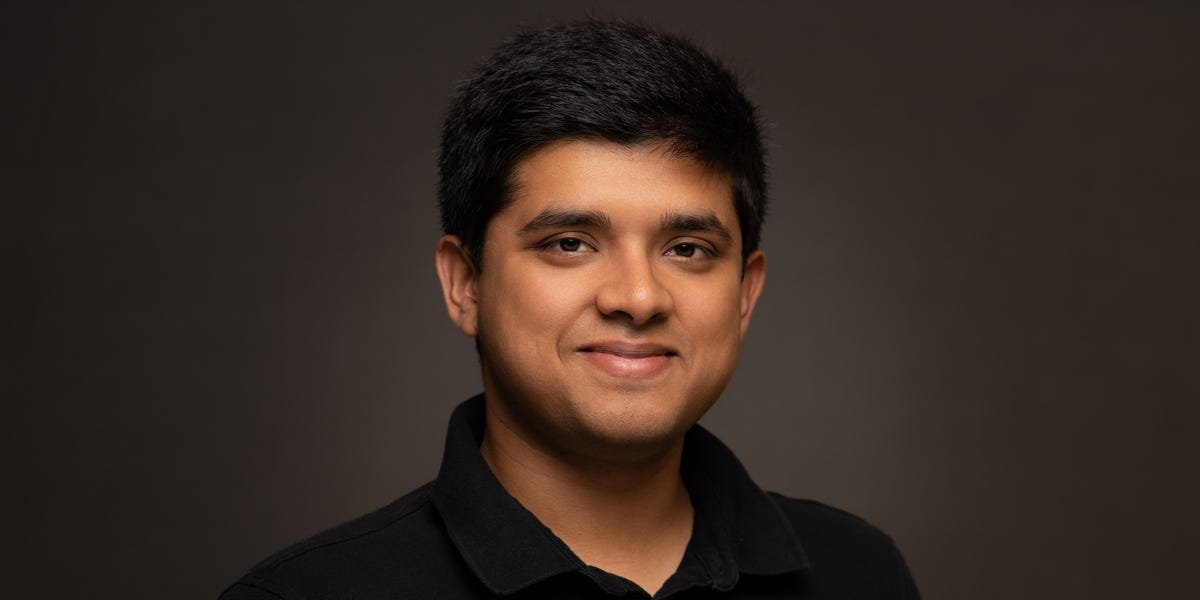
Arko Chattopadhyay, a CEO and cofounder, is planning to hire up to 10 employees in the next year for his Bay Area-based AI startup, Pipeshift.
The recent H-1B visa fee increase hasn’t changed those plans, Chattopadhyay, who goes by the name Arko C professionally, told Business Insider.
Last Friday, President Donald Trump signed an executive order raising H-1B visa application fees to $100,000. The visa program has become a mainstay of the tech industry, allowing companies to hire highly skilled workers, like engineers, from abroad.
News of the $100,000 price tag rocked tech circles, with some founders warning that it would stifle the startup ecosystem and make it harder for them to compete for talent with bigger tech companies.
But Arko C, who also sits on the Forbes Technology Council, told BI that he can find the talent he needs in the US or can use other pathways to access top talent.
“We should be able to get local talent, or we can hire them offshore through a subsidy structure as a remote worker,” said the Pipeshift CEO. “The best AI talent is in the US at the moment,” he said.
Pipeshift was founded in 2024 with Y Combinator backing, and this January secured $2.5 million in a seed funding round. The startup provides a platform for companies to build and deploy open-source AI models.
Four of Pipeshift’s employees are based in the Bay Area, and the other seven are based in India, where Arko C is from, he said.
Related stories

Business Insider tells the innovative stories you want to know
Business Insider tells the innovative stories you want to know
Arko C and his two co-founders are in the US on O-1 visas, which were funded by Y Combinator, he told BI.
O-1 visas allow immigrants with “extraordinary ability” to work in the US for up to three years. Applicants must show they have “sustained national or international acclaim” in the sciences, education, business, athletics, or the arts. Most researchers and founders travel on these visas, Arko C said.
Pipeshift is hiring two employees in the US, one who holds a green card and another who is on the Optional Practical Training (OPT) program, which allows international students to work for a year after graduating — or up to three years if you’re in STEM. It is a common path for international students to get their start in the US.
If they want to retain the OPT candidate after the 1-year term, Arko C said he could apply for an O-1 visa. The specific candidate was a researcher working under a college research professor who was “one of the pioneers of the AI world,” so would likely have applicable citations and reference letters.
It would be a challenge for most young graduates to build up the credentials to prove they were exceptionally skilled, especially for developers or software engineers who were unlikely to publish scholarly articles that count toward the accreditation for O-1s, Arko C said.
The fees are “manageable”
The founder said that there was one “really talented engineer” he had been hoping to bring from Chennai, India, to the US at the end of 2025.
Exposing the engineer to tech circles in the Bay Area and getting the opportunity to work in person with him would have been helpful, Arko C said. But since the executive order was announced, the company was re-evaluating whether it was the right time to spend the $100,000 it would now require.
Pipeshift would likely wait for a year until “he’s better skilled, he’s more experienced,” to make the investment, Arko C said. But if someone is exceptional, the higher fees are manageable, he added.
“If push comes to shove and we have to go down that route, I don’t think a $100,000 will affect us too much after a Series A or a Series B. That’s negligible compared to all the payroll and salaries that you manage at that point.”
Arko C acknowledged that tech startups will be the “collateral damage” and would feel the brunt of this executive order, as they lack the cash flow or reserve cash required to pay the higher fee.
But he doesn’t believe the impact on startups will as heavy as some fear. Startups hire a limited number of people, and a post-Series A venture-backed company could absorb the cost for exceptional talent, he said.
“Seed stage companies don’t hire more than five or six people. If you’re hiring five or six people, two or three of them are just founders. For one or two of them, you can probably get grads, and you can get people who are already here or on OPT status.”
Overall, he doesn’t think the H-1B price hike would damage the US talent pipeline; it would just ensure the highest-skilled workers accessed the program, he said.
“What people misunderstand is that the best talent and most of the tech world does not run on H-1B alone,” he said, adding that a lot of talent comes through on L-1 visas, which are for internal company transfers.
“The US won’t lose out on good quality AI talent because there’s no better place in the world that has this density of talent, speed of development in AI, customer discovery in AI, and venture capital and money flowing in.”
