


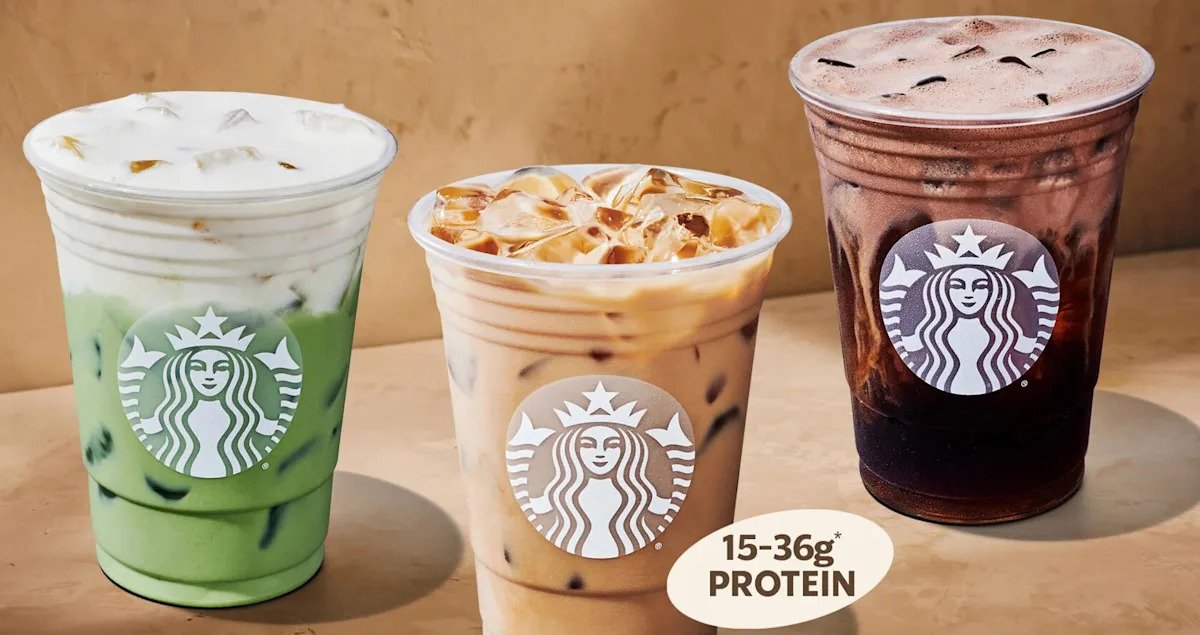
Protein is having a major moment, and now Starbucks is hopping aboard the trend. The coffee chain announced a slate of new protein-boosted beverage options on Tuesday in an effort to stay current.
Starting on Sept. 29, protein cold foams and protein lattes will arrive on Starbucks menus, the company said. The new cold foam can be added to coffee, tea or Starbucks Refreshers and provides roughly 15 grams of protein for a grande-sized drink. Meanwhile, lattes made with “protein-boosted milk” offer between 27 and 36 grams of protein, according to Starbucks.
Tressie Lieberman, Starbucks’ global chief brand officer, said in a press release that these new beverages “tap into the growing consumer demand for protein in an innovative, premium and delicious way that only Starbucks can deliver.” But Starbucks is hardly alone in ramping up the protein content of its offerings. Other protein-boosted foods include snacks like Khloé Kardashian’s protein popcorn and Legendary Foods’ protein-filled baked goods. And a new sauce company, called She’s the Sauce, is even adding protein to condiments like ranch and honey mustard dressing.
Why protein is trending
Protein is an important building block for our bodies. This macronutrient aids in muscle repair, supports immune function and helps keep you feeling full and energized throughout the day.
Though our individual protein needs vary based on our size, exercise levels, age and health issues, the 2020-2025 USDA Dietary Guidelines for Americans state that adult males need a minimum of about 56 grams of protein per day, while adult females need about 46 grams in order to not lose lean muscle mass. But that’s only if you’re sedentary — you’ll need more if you’re active, and especially if you’re strength training. And research from 2019 says that most adults have higher daily protein needs.
All this protein talk is especially popular right now given the rise of weight loss medications. That’s because people who use these medications to lose weight want to lose fat while maintaining muscle — and eating more protein is one way to accomplish that.
Is protein coffee a good idea?
Starbucks did not invent adding protein to coffee — in fact, the so-called proffee trend has been huge on social media. But is it even necessary to sneak in extra protein from your morning Pumpkin Spice Latte or other seasonal beverage?
“Proffee is a nutrient-dense upgrade from your daily coffee routine,” dietitian Carissa Galloway previously told Yahoo. “Your typical coffeehouse latte is packed with empty calories and sugar, providing little to no nutritional value. If you’re planning on drinking coffee either way, you might as well sneak in a few extra health benefits.”
Dietitian Valerie Agyeman told Women’s Health that it’s important to get protein from whole food sources, which also come with additional nutrients. “But, if breakfast has never been your thing anyways, protein coffee is a good way to keep you full and energized until your first meal,” she explained.
And if you like to hit the gym in the morning, but never feel hungry for a preworkout meal, Beth Linder-Moss, a sports nutritionist, told the magazine that a protein coffee can be a good option. “A lot of my clients use proffee as a pre-workout,” she said. “It’s perfect because it has caffeine, which adds that boost of energy, and protein to help maintain muscle mass and build your tissues and bones.”
Speaking of caffeine: Make sure you’re not overdoing the coffee in search of more protein. The Food and Drug Administration says about 400 mg of caffeine per day is safe for most adults, which is the equivalent of roughly two to three 12-ounce cups of brewed coffee. If you feel jittery, have gastrointestinal issues or are struggling to sleep, you may want to cut back or switch to decaf.
The bottom line
Protein coffee from Starbucks can be a good way to sneak in some nutrition to a beverage, especially if you regularly enjoy drinks from the coffee shop. However, you should be mindful of the amount of sugar, calories and fat that you’re imbibing — while protein may boost your drink nutritionally, it won’t counteract any of the not-so-great-for-you ingredients. And you’re always better off getting your protein from whole sources — such as meat, eggs, tofu or beans — which can come with additional vitamins, minerals and even other important macronutrients such as fiber.
