

Close Menu
  • Home
  • AI
  • Education
  • Entertainment
  • Food Health
  • Health
  • Sports
  • Tech
  • Well Being

Subscribe to Updates

Subscribe to our newsletter and never miss our latest news

Subscribe my Newsletter for New Posts & tips Let's stay updated!

What's Hot

The ‘Claude-Gap’ Relationship: One Partner Sleeps, Another Vibe Codes

March 28, 2026

How One Business Owner Is Using AI During Tax Season

March 28, 2026

‘Informed’ Polymarket Traders Have Netted $143 Million Since 2024

March 28, 2026
Facebook X (Twitter) Instagram
  • Home
  • About Us
  • Advertise With Us
  • Contact us
  • DMCA
  • Privacy Policy
  • Terms & Conditions
Facebook X (Twitter) Instagram
IQ Times Media – Smart News for a Smarter YouIQ Times Media – Smart News for a Smarter You
  • Home
  • AI
  • Education
  • Entertainment
  • Food Health
  • Health
  • Sports
  • Tech
  • Well Being
IQ Times Media – Smart News for a Smarter YouIQ Times Media – Smart News for a Smarter You
Home » Social Security recipients can expect a 2.8% increase in benefit payments for 2026
Health

Social Security recipients can expect a 2.8% increase in benefit payments for 2026

IQ TIMES MEDIABy IQ TIMES MEDIAJuly 1, 2007No Comments4 Mins Read
Facebook Twitter Pinterest LinkedIn Tumblr Email
Share
Facebook Twitter LinkedIn Pinterest Email


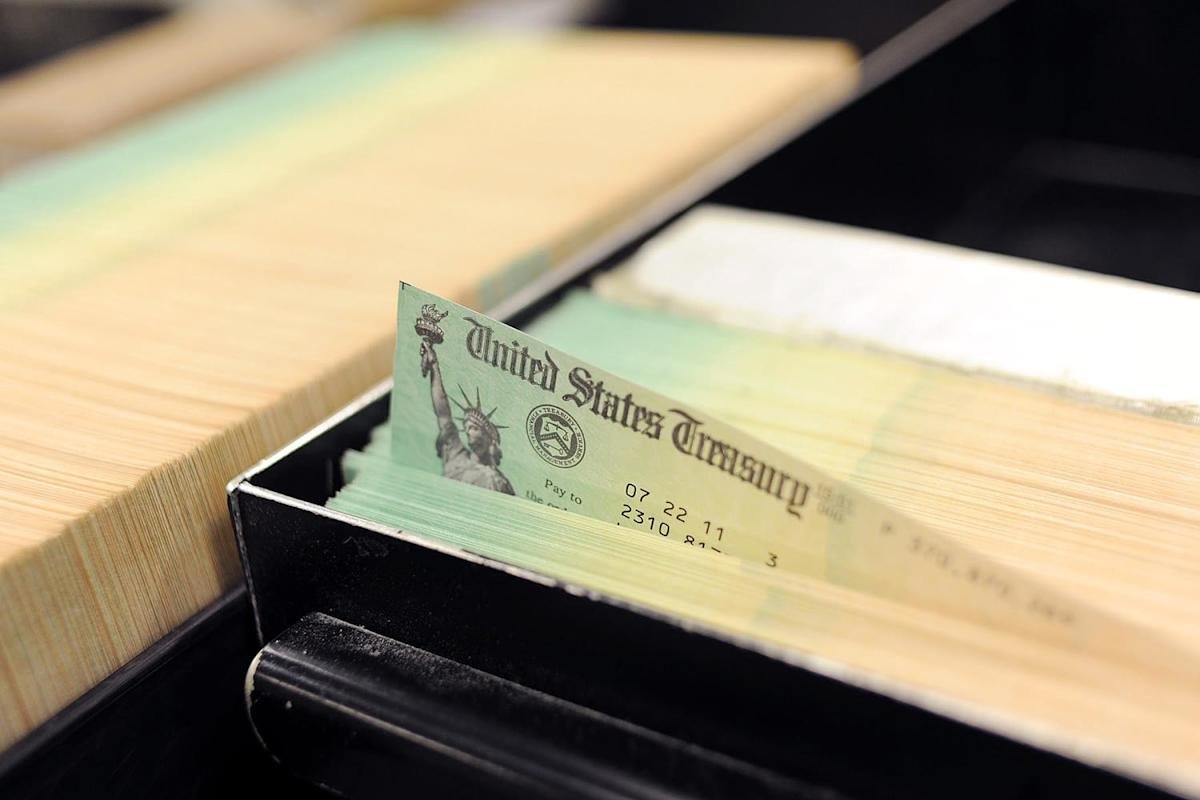
Social Security checks at the U.S. Treasury printing facility in Philadelphia. (William Thomas Cain / Getty Images file)

The Social Security Administration announced Friday that benefit payments will increase 2.8% next year to account for the higher cost of living.

The 2026 cost-of-living adjustment, knowns as the COLA, represents an increase over last year’s 2.5% figure, but it is lower than the historical average of about 3.7%.

Individual retirement benefits will climb an average of about $56 per month, the agency said in a statement.

The COLA is typically calculated using benchmark inflation data from July, August, and September.

While pandemic-era inflation has ebbed since hitting a high of nearly 10% in 2022, households across the U.S. continue to report feeling price pressures.

Many senior citizens’ advocates say that that demographic has been hit particularly hard — and that the way the annual Social Security adjustment is made has become part of the problem.

Since it was first instituted in 1975, the annual adjustment has been calculated using a somewhat obscure inflation index that the advocates say gives inadequate weight to items that seniors tend to spend a greater share of their earnings on, like medical care, prescription drugs, rent, and home energy costs.

“The index doesn’t necessarily reflect the spending habits of older adults,” said Jessica Johnston, senior director of the Center for Economic Well-Being at the National Council on Aging (NCOA). By her estimates, she said, a 4% adjustment would more accurately reflect these costs.

More than one-in-five Americans currently receive some form of social security assistance, including approximately 58 million Americans aged 65 and over. Seniors have historically been more likely to report worsening consumer sentiment, according to the University of Michigan’s closely watched monthly survey. The gap in sentiment has narrowed in recent years — but other data suggest that hard times are getting harder for the most vulnerable seniors.

Between 2018 and 2023, older Americans were the only demographic age group that saw an increase in its poverty rates — though their overall rate remains the lowest.

An NCOA report published earlier this month found that mortality rates among older adults in the bottom 60% of wealth were nearly double those of older adults in the top 20%. And individuals in the bottom-20% of wealth died nine years earlier on average than those in the top 20%.

The NCOA also estimates that 45% of older-adult households — more than 19 million — do not have the income needed to cover basic living costs based on cost-of-living data from its proprietary Elder Index. And a full 80%, or about 34 million senior households, would be unable to weather a major shock such as widowhood, serious illness, or the need for long-term care.

Economic insecurity has shown to be particularly acute for aging minorities. Some 43% of Black and 44% of Hispanic adults aged 65 and up have incomes that are below 200% of the federal poverty line, according to 2022 U.S. Census data cited by the National Council on Aging.

Johnston said there is a commonly held belief that older Americans have vast wealth holdings — especially those from the post-World War II Baby Boom generation — and are more likely to be financially secure than other groups.

But that’s not the whole story, he story.

Many members of the generation that immediately preceded the Baby Boomers, known as the Silent Generation, are still around — and possess only a fraction of the same level of financial security as their immediate successors, according to Federal Reserve data. Silent Generation members own total assets worth approximately $20 trillion — compared with approximately $85 trillion for Baby Boomers.

Individuals are also living longer than ever before, Johnston said. Yet while some report overall steady levels of well-being as they age, others are “aging into poverty,” Johnston said.

This article was originally published on NBCNews.com


Source link

Share. Facebook Twitter Pinterest LinkedIn Tumblr Email
IQ TIMES MEDIA
  • Website

Related Posts

What an expert on the gut microbiome eats in a day

March 26, 2026

Wegovy maker Novo sharpens consumer focus with board role for Mars CEO

March 26, 2026

CDC report finds US smoking rate continues to plummet as vape use rises

March 26, 2026
Add A Comment
Leave A Reply Cancel Reply

Editors Picks

2 students dead and 7 injured in Tennessee school bus crash

March 27, 2026

Suburban Detroit school settles lawsuit over Pledge of Allegiance

March 27, 2026

Changes to Native American tuition waiver could expand access to higher education for thousands

March 27, 2026

Student loan borrowers in SAVE plan directed to prepare for repayment

March 27, 2026
Education

2 students dead and 7 injured in Tennessee school bus crash

By IQ TIMES MEDIAMarch 27, 20260

HUNTINGDON, Tenn. (AP) — A school bus crash in west Tennessee on Friday killed two…

Suburban Detroit school settles lawsuit over Pledge of Allegiance

March 27, 2026

Changes to Native American tuition waiver could expand access to higher education for thousands

March 27, 2026

Student loan borrowers in SAVE plan directed to prepare for repayment

March 27, 2026
IQ Times Media – Smart News for a Smarter You
Facebook X (Twitter) Instagram Pinterest Vimeo YouTube
  • Home
  • About Us
  • Advertise With Us
  • Contact us
  • DMCA
  • Privacy Policy
  • Terms & Conditions
© 2026 iqtimes. Designed by iqtimes.

Type above and press Enter to search. Press Esc to cancel.