


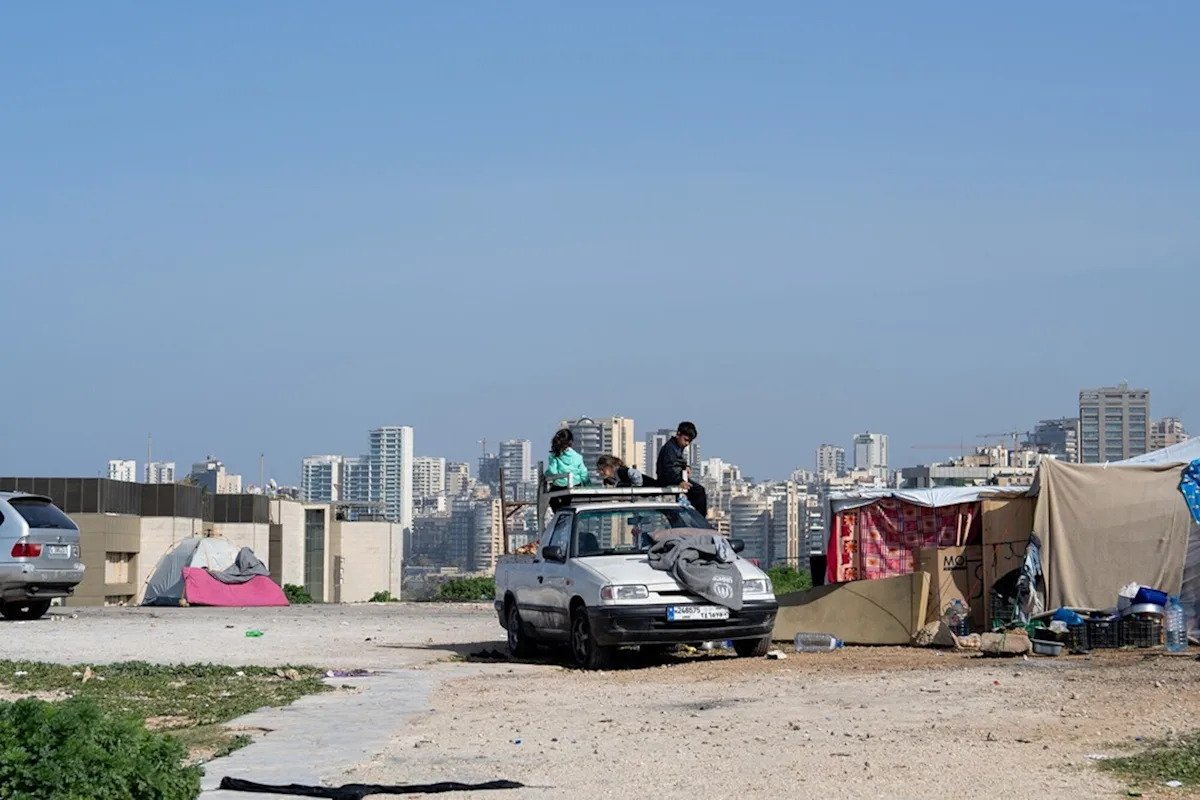
As the U.S.-Israeli conflict with Iran continues, aid organizations are warning that several health crises could become severe n the already taxed region that has experienced years of war, displacement and a crumbling health care infrastructure.
Last week, the World Health Organization warned the latest escalation in the Middle East could lead to public health risks across the wider region.
‘Catastrophic times’: Humanitarian, aid workers reveal grim details as Lebanon crisis worsens
“Health systems across the region are coming under strain as injuries and displacement rise, attacks on health care continue and public health risks increase,” the WHO warned.
Humanitarian workers told ABC News that disease outbreaks, hazards from breathing in toxic pollutants and worsening mental health could emerge as the fighting intensifies.
“We are really seeing and feeling the immediate impact in terms of displacement, in terms of the mental health impact, the loss of the weakening of the ability to deliver health care,” Joe Belliveau, executive director of the humanitarian NGO MedGlobal, told ABC News. “All of these things are happening right now in real time, and this looks to be a protracted, ongoing thing.”

CARE/Arete/Elisa Oddone – PHOTO: Care International responds in Lebanon, providing food, water, mattresses, hygiene items and psychosocial support.
Infectious diseases
Aid workers said that when hundreds of thousands of people are displaced, refugee camps or displacement shelters can become prime breeding grounds for infectious diseases.
Overcrowded tents and shelters, no sanitation and a lack of clean drinking water can create “a perfect storm for the spread of infectious diseases,” a 2024 report from researchers in Gaza and Morocco found.
During the first year of the Israel-Hamas war, the displaced population in Gaza saw the spread of scabies, lice, chickenpox, diarrheal diseases, lung infections and hepatitis A, according to the report’s authors.
Additionally, a 2019 report from the United Nations High Commissioner for Refugees and Johns Hopkins Bloomberg School of Public Health found that between 2009 and 2017, a total of 364 outbreaks in 21 countries affected 108 refugee camps. About 90% of camps experienced one or two types of diseases.
“I don’t think there are a lot of additional places for people to go when people are living in those conditions, really tightly packed without a lot of access to hygiene, clean water,” Kate Phillips-Barrasso, vice president of global policy and advocacy at the nonprofit organization Mercy Corps, told ABC News. “It’s really easy, especially for children, for respiratory infections to be passed around.”
As Iran war escalates, children may face physical, mental health impacts
Ricardo Peres, deputy spokesperson for UNICEF, said the risks are higher among the youngest children.
“The risk is extremely high because these are children who are still developing their defenses, their immune systems,” he told ABC News from Amman. “And once you start having less access to even the right nutrition, foods and clean water, you’re at risk of contracting infectious diseases or waterborne diseases.”
Peres said UNICEF has mobile health clinics that try to reach children who are on the move, such as those who have been displaced in Lebanon, but added that it will be hard to absorb an influx of children and families if conflict in the Middle East worsens — and leads to further disruptions of critical medical care for pregnant women, elderly people and non-war related necessary surgeries.
Environmental hazards
When airstrikes hit major Iranian oil storage facilities, it led to several days of “black rain,” which could have long-lasting impacts on human health, humanitarian aid experts told ABC News.
Fires caused by Israeli strikes on oil reservoirs on Saturday burned for multiple days, prompting Iranian officials to warn residents about acid and toxic rain.
The WHO has said the petroleum fires and smoke in Iran is exposing civilians to toxic pollutants that could lead to breathing problems and eye and skin irritation.

AFP via Getty Images – PHOTO: Smoke plumes rise following Israeli bombardment on the village of Khiam in southern Lebanon near the border with Israel, as seen from nearby Marjayoun, on March 16, 2026.
Phillips-Barrasso said her organization is getting “really concerning reports” about the impacts following strikes on oil refineries.
“In Tehran, there’s massive issues with the air quality and people breathing in toxic fumes,” she said. “And I imagine that may extend to some other places in the Gulf. We’re getting reports of sooty rain and these sorts of things that could have widespread implications down the road.”
Belliveau said MedGlobal is getting similar reports from Lebanon and Syria.
“We are, in fact, getting alert signals around the region of elevated irritation of skin and eyes and lungs linked to poor quality air, which could be linked to smoke or oil burn-off,” Belliveau said.
Top Trump counterterror adviser resigns over Iran war: ‘No imminent threat’
Peres said there are real and immediate impacts for children who may be breathing in toxic substances because of burning oil.
“Breathing through that smoke for a long period of time” affects the lungs, he said.
Mental health impacts
At least 20% of those who experience traumatic events during armed conflicts will have mental health issues, according to a 2019 report from the WHO estimating the prevalence of mental disorders in conflict settings.
Researchers found that 22.1% of the conflict-afflicted population suffered from depression, anxiety, post-traumatic stress disorder, bipolar disorder and schizophrenia at any point in time. About 9.1% had moderate to severe mental disorders and 5.1% had severe disorders.
Additionally, a 2023 letter from researchers at Wayne State University School of Medicine in Detroit found that many displaced people during times of conflict experience mental health conditions at higher rates than the general population.

AFP via Getty Images – PHOTO: Men inspect a site of overnight Israeli airstrikes in the southern suburbs of Beirut, March 16, 2026.
“Many [civilians] have been displaced, are already experiencing anxiety, post-traumatic stress, depression,” Belliveau said. “MedGlobal runs mental health care programs across the region, and we’re already seeing this on a daily basis just in the last few days. “
He added that humanitarian workers in the region are also experiencing mental health stressors from being caught in the middle of the conflict. In some cases, this can lead to burnout, according to Belliveau.
“What we see is a tremendous resilience and ability to dig deep amongst our own health worker staff. But that takes its toll,” he said.
