


(This is an excerpt of the Health Rounds newsletter, where we present latest medical studies on Tuesdays and Thursdays.)
By Nancy Lapid
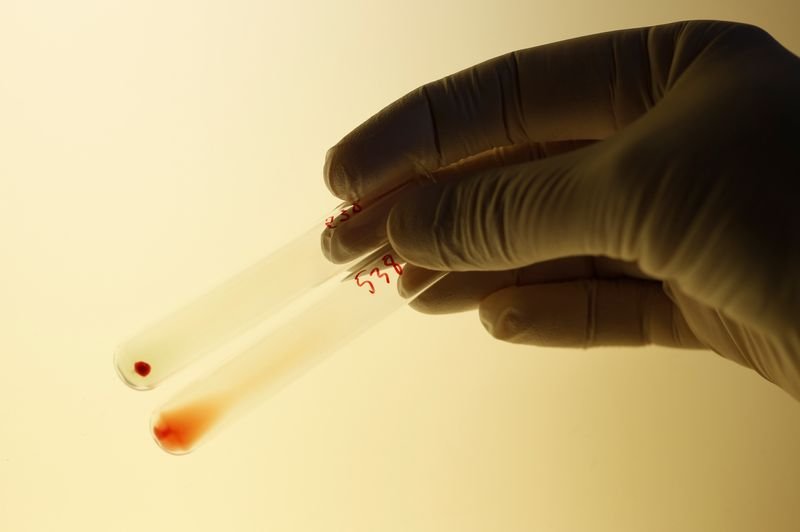
(Reuters) -Researchers have converted a blood type A kidney to a blood type O kidney and successfully transplanted it, they reported in Nature Biomedical Engineering, an advance that could reduce wait times for new organs and save lives.
Type O patients, who account for more than half of those on kidney waiting lists, can only receive organs from donors with type O blood, yet type O kidneys are often given to others because they are universally compatible. As a result, type O patients typically wait two to four years longer and many die waiting, the researchers said in a statement.
Traditional methods for overcoming blood-type incompatibility require days of intensive treatment to suppress the recipient’s immune system, while the new approach employs special enzymes to change the organ rather than the patient.
In a first-in-human experiment, an enzyme-converted kidney was transplanted into a brain-dead recipient. For two days, the kidney functioned without signs of the rapid immune reaction that can destroy an incompatible organ within minutes.
By the third day, the researchers saw a mild reaction, but the damage was far less severe than in a typical blood-type mismatch, and there were signs that the body was beginning to tolerate the organ, according to the report.
“This is the first time we’ve seen this play out in a human model,” said Dr. Stephen Withers of the University of British Columbia, who co-led the enzyme development. “It gives us invaluable insight into how to improve long-term outcomes.”
Regulatory approval for clinical trials is the next hurdle, the researchers said.
EXPERIMENTAL GENE THERAPY TACKLES DIABETIC KIDNEY DISEASE
An experimental gene therapy tested in mice may one day help protect against kidney disease caused by type 1 diabetes, researchers report.
“Kidney disease is a serious and life-altering complication of diabetes that can progress silently over many years,” Dr. Faye Riley, Research Communications Lead at Diabetes UK, which helped fund the research, said in a statement.
Previous studies have shown that a protein called VEGF-C helps maintain the health of blood vessels in the glomeruli, the kidney’s tiny filters that remove waste and toxins from the blood.
In lab experiments, researchers used a harmless virus to deliver the gene for human VEGF-C into human kidney cells in test tubes and into kidney cells of mice with type 1 diabetes.
The test-tube cells produced functional VEGF-C, researchers reported in Molecular Therapy.
And in the mice, not only did the kidneys work better after the treatment, but the glomeruli appeared to be protected from damage, researchers found.
“There is an urgent need for new treatments to prevent kidney damage in people with diabetes, and this novel approach tackles the root cause for the first time,” Riley said.
The treatment led to a 64% reduction in the presence of a protein called albumin in the urine, which is a common sign of kidney disease. The reduction is more than twice what’s recommended by the American Diabetes Association to slow the progression of chronic kidney disease.
“This promising research could lead to an entirely new way to protect the kidneys in people with diabetes and prevent devastating kidney failure,” Riley said.
FLUID RESTRICTION OFTEN EXCESSIVE IN CHILDREN BEFORE SURGERY
Most U.S. children having surgery go far longer than necessary without fluids beforehand, researchers reported at the American Society of Anesthesiologists meeting in San Antonio, Texas.
Healthy infants and children may safely drink clear liquids such as water and fruit juices without pulp until two hours before anesthesia, according to ASA guidelines.
Reviewing data on nearly 72,000 patients under age 18 who underwent non-emergency surgery in U.S. hospitals between 2016 and 2024, researchers found more than 80% were denied clear liquids for at least twice as long as necessary.
The median length of time all children fasted from clear liquids decreased overall between 2016 and 2024, from 11 hours to 9 hours. However, there was no significant improvement in infants who fasted a median of 6.7 hours in 2016 and 6.3 hours in 2024.
The guidelines recommend that children not drink anything within two hours before the procedure to reduce the risk of liquid entering the lungs, which could cause choking or pneumonia.
But fasting from clear liquids for longer periods can be uncomfortable and increase thirst, anxiety, pain, nausea and vomiting, study leader Dr. Alexander Nagrebetsky of Massachusetts General Hospital in Boston said in a statement.
“It can be harmful, too,” Nagrebetsky said. “Children and infants are especially vulnerable to dehydration and calorie loss, which may heighten stress and slow recovery from surgery.”
Surgical teams should encourage patients to drink water and liquids with sugar for up to two hours before the procedure when appropriate, he added.
(To receive the full newsletter in your inbox for free sign up here)
(Reporting by Nancy Lapid; Editing by Bill Berkrot)
