


Florida health officials reported that four people died and over a half dozen others were made sick this year by a rare “flesh-eating” bacteria.
Vibrio vulnificus, which is found in saltwater, brackish water and inside contaminated raw or undercooked seafood, led to four deaths in four counties across the state and made at least seven people ill, the state’s Department of Health announced on July 11.
Infection from the bacteria is rare, with an average of 150 to 200 cases reported each year to the Center for Disease Control and Prevention (CDC). Cases are most often reported in the Gulf Coast states, though research has shown it migrating north as climate change fuels warmer oceans.
Most healthy people exposed to the bacteria experience only mild symptoms. For some, however, the bacteria can be deadly – especially if it enters the bloodstream or kills flesh around an open wound. About one in five people die from the infection, according to the CDC, sometimes within one to two days of becoming ill. Others may require surgery or even amputation after their exposure.
Here’s what to know about Vibrio vulnificus:

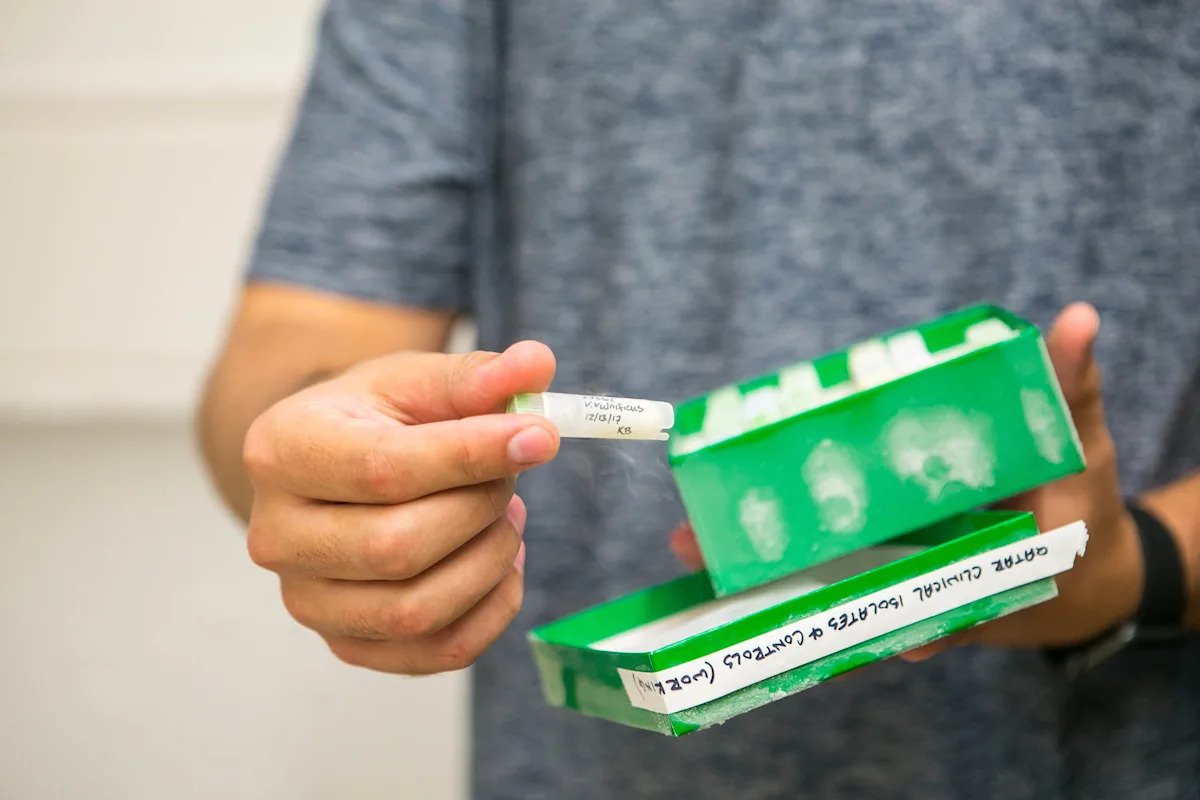
A University of Maryland graduate student shows frozen cultures of Vibrio vulnificus.
Where is Vibrio vulnificus located?
Vibrio are bacteria that naturally live in coastal waters year-round. Vibrio vulnificus requires saltwater to live and spread, though it can thrive in brackish water, where a stream or river meets seawater.
Most infections occur when people swallow contaminated water or get it in an open wound. Another source of infection is contaminated raw or undercooked seafood, especially shellfish such as oysters.
In Florida, which leads the nation in Vibrio vulnificus infections, spikes in cases and deaths coincide with major hurricanes, when seawater is carried on shore, triggering flooding and dumping seawater into freshwater sources.
Between 2016 to 2024, an average of 48 Vibrio vulnificus cases and about 11 deaths were reported annually in Florida. In 2022, when Hurricane Ian battered communities along the southwest coast, there were 74 reported cases and 17 deaths. Last year, the state recorded 82 cases and 19 deaths – a surge health officials tied to a pair of damaging hurricanes, Helene and Milton.
Why is it called a ‘flesh-eating bacteria’?
Vibrio vulnificus kills, but does not eat tissue. The bacteria cannot penetrate unharmed skin, but can enter through an existing break.
If the bacteria enters the body through a cut, scrape or wound, it can cause necrotizing fasciitis, and the flesh around the infection site could die.
Those infected through wounds may require major surgery or limb amputations, according to the CDC.
What are the symptoms of Vibrio vulnificus?
Common symptoms of Vibrio vulnificus infection include diarrhea, stomach cramps, nausea, vomiting and fever, according to the CDC.
When open wounds are exposed to contaminated salt or brackish water, Vibrio vulnificus can cause discoloration, swelling, skin breakdown and ulcers. The bacteria can also invade the bloodstream and threaten severe and life-threatening illnesses such as septic shock, especially for those with pre-existing conditions.
“Vibrio vulnificus bloodstream infections are fatal about 50 percent of the time,” according to the Florida Department of Health.
How to avoid Vibrio vulnificus
Below are some tips to avoid Vibrio vulnificus, according to the Florida Department of Health and the CDC.
Stay out of saltwater and brackish water if you have an open wound or cut. If you get a cut while you are in the water, leave the water immediately.
If your open wounds and cuts could come in contact with salt water, brackish water or raw or undercooked seafood, cover them with a waterproof bandage.
Cook shellfish (oysters, clams, mussels) thoroughly.
Avoid cross-contamination of cooked seafood and other foods with raw seafood and juices from raw seafood.
Always wash your hands with soap and water after handling raw shellfish.
Seek medical attention right away for infected wounds.
Contributing: Natalie Neysa Alund, Thao Nguyen, Gabe Hauari and Mike Snider, USA TODAY; C.A. Bridges, USA TODAY Network – Florida
This article originally appeared on USA TODAY: Rare ‘flesh-eating’ bacteria kills 4 people in Florida: What to know
