


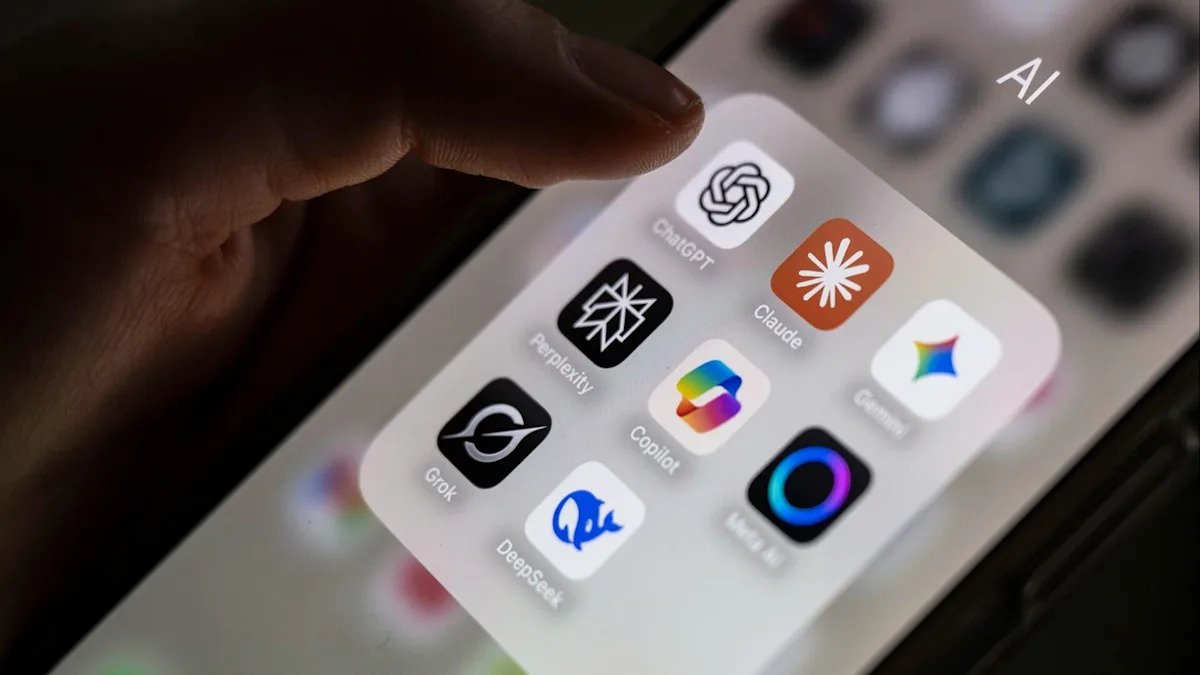
The promise of artificial intelligence has been simple: let the machines do the work. Instead, it may be creating a new headache from babysitting the machines. A new study published in Harvard Business Review suggests that instead of making work easier, AI may be giving some workers what researchers are calling “brain fry.”
Researchers surveyed about 1,500 workers and found that people constantly bouncing between multiple AI tools reported more decision fatigue and more errors. About one in seven workers said they had experienced mental fatigue from juggling AI tools at work.
“The AI can run out far ahead of us, but we’re still here with the same brain we had yesterday,” said Julie Bedard, managing director and partner at Boston Consulting Group and an author of the study. She told CBS News the findings are an “early warning sign” that expectations around AI productivity may need recalibrating.
“AI is really good in some ways for work. And in other ways, it gives us pause in how we do our work,” Bedard said. “Specifically, there are ways in which intensive oversight of AI causes a lot of sort of cognitive, just exhaustion.”
The productivity paradox
The study found a striking paradox: AI can both reduce burnout and create it.
When workers had to constantly supervise multiple AI systems or juggle several tools at once, mental strain increased sharply. By contrast, when workers used AI to actually offload repetitive tasks, their stress levels dropped.
Bedard explained that AI “allows us to really extend our capabilities, basically extending our workload and our sphere of accountability at work,” and that expansion of capability can quickly become overwhelming.
“AI brain fry causes a lot of mental fatigue so we feel like it’s beyond our brain’s capability to handle those tasks,” she said.
What it feels like
For people working deeply with AI tools, the concept of “brain fry” resonates.
“There’s a point that usually happens after a full day where I just kind of feel exhausted in a way that I didn’t feel in a normal work day before AI,” said Jack Downey, Head of Strategy, Operations and Product at Webster Pass Consulting. He uses AI daily to build automation systems and finds there is an additional mental strain that comes from AI workflows.
“You’re constantly waiting… and you’re changing gears,” he said. “It works so quickly, but not quite quickly enough that it happens instantaneously. And so it might take five seconds to do one task, 50 seconds to do another task, and five minutes to do another task.” Downey said he usually has several different windows open to work on multiple parts of a project at the same time.
While the technology expands what workers can do, it also expands what they’re expected to do, even if that expectation is internally driven.
“The capacity of AI is so endless that it can be really hard to just say no and stop whatever the next improvement is that you want,” Downey said. “As a perfectionist, that often can result in not knowing when to stop. The next best thing is possible, so, often, you end up spending more time writing the perfect workflow and telling AI what to do.”
Downey said he finds that setting deadlines for himself and his AI helps to limit the fry and produce a better product.
Why businesses should pay attention
For years, many predictions about artificial intelligence suggested the technology would allow fewer workers to do more work faster. But if AI is already pushing workers toward cognitive overload, organizations may need to rethink those assumptions, Bedard said.
“We need to redesign how we do our work… where we don’t just keep exactly what we did yesterday and put AI on the top of it,” she said.
The study found that leadership and training could play a critical role. Less brain fry was seen among employees whose managers were intentional with their AI use.
If businesses don’t figure that out, their bottom lines may suffer. Workers experiencing AI brain fry reported more mistakes, slower decision-making, and higher fatigue. Bedard is clear that the solution is not abandoning AI, but rethinking how human workers best interact with these tools as the AI revolution accelerates.
The promise of AI may be limitless. The question is how far the human brain can stretch to keep up.
“Framed”: Highlighting the art that surrounds art
Doctor adopts boy who came to surgery alone, then finds homes for his 5 siblings
Russia helping Iran identify U.S. targets, sources say
