


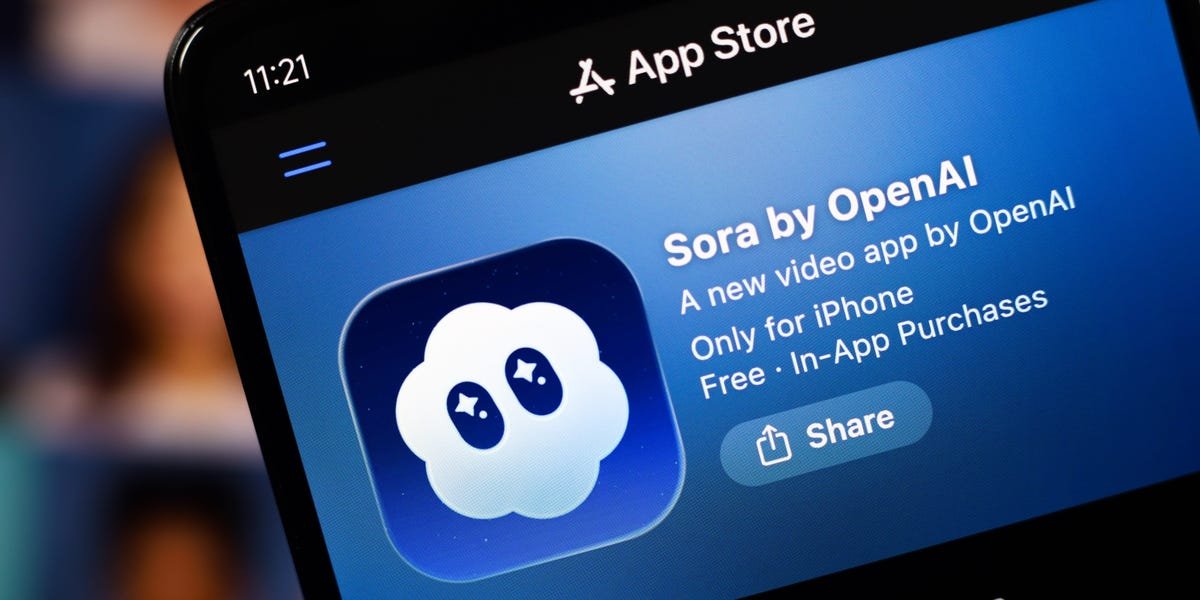
OpenAI is pulling the plug on the Sora app — at least in the current form.
The company confirmed it will discontinue Sora as a consumer app and API, marking a sharp pivot away from one of its splashiest generative video experiments.
“We’ve decided to discontinue Sora in the consumer app and API,” an OpenAI spokesperson said. “As we focus and compute demand grows, the Sora research team continues to focus on world simulation research to advance robotics that will help people solve real-world, physical tasks.”
The discontinuation is a notable turn for a product that once embodied OpenAI’s creative ambitions. When Sora launched in late September 2025, it quickly went viral for generating realistic, cinematic video clips from text prompts.
The TikTok-esque app hit No. 1 on Apple’s App Store and hit 1 million downloads in under five days, according to October posts from Sora lead Bill Peebles, who described “surging growth” as the team raced to keep up with demand.
Headaches began almost as quickly as the hypetrain took off. OpenAI had to introduce guardrails after users generated videos of protected intellectual property, such as Pokémon’s Pikachu in “Saving Private Ryan,” and of historical figures like Martin Luther King Jr.
Even Cameo, the short-form video app where users can pay for personalized messages, sued OpenAI for trademark infringement after OpenAI named one of the Sora app’s core features “cameo.” (OpenAI later changed the name of the feature.)
Altman doubled down, saying that IP rights holders wanted to work with OpenAI.
In December, Disney announced that it would become the first major content license holder on the platform as part of a three-year deal that included a $1 billion investment in OpenAI.
Disney acknowledged OpenAI’s move on Tuesday.
“As the nascent AI field advances rapidly, we respect OpenAI’s decision to exit the video generation business and to shift its priorities elsewhere,” a spokesperson from The Walt Disney Company said. “We appreciate the constructive collaboration between our teams and what we learned from it, and we will continue to engage with AI platforms to find new ways to meet fans where they are while responsibly embracing new technologies that respect IP and the rights of creators.”
OpenAI quickly made moves to try to monetize Sora’s growing user base and to limit free video generations. At the time, Peebles, in posts on X, framed the economics of the heavy demand for Sora as “completely unsustainable,” adding that “video models really are expensive!”
Behind the decision to discontinue the app is a familiar AI constraint: compute. OpenAI’s plans to reallocate resources are part of its broader push for more advanced, agentic systems and its road map toward artificial general intelligence — even if that means shelving high-profile products.
