

Close Menu
  • Home
  • AI
  • Education
  • Entertainment
  • Food Health
  • Health
  • Sports
  • Tech
  • Well Being

Subscribe to Updates

Subscribe to our newsletter and never miss our latest news

Subscribe my Newsletter for New Posts & tips Let's stay updated!

What's Hot

Gary Marcus Skewers Viral AI Essay As Alarmist ‘Hype’

February 13, 2026

‘Tom Cruise’, ‘Brad Pitt’ Fight in Viral Seedance AI Video

February 13, 2026

OpenAI removes access to sycophancy-prone GPT-4o model

February 13, 2026
Facebook X (Twitter) Instagram
  • Home
  • About Us
  • Advertise With Us
  • Contact us
  • DMCA
  • Privacy Policy
  • Terms & Conditions
Facebook X (Twitter) Instagram
IQ Times Media – Smart News for a Smarter YouIQ Times Media – Smart News for a Smarter You
  • Home
  • AI
  • Education
  • Entertainment
  • Food Health
  • Health
  • Sports
  • Tech
  • Well Being
IQ Times Media – Smart News for a Smarter YouIQ Times Media – Smart News for a Smarter You
Home » OpenAI CFO Sarah Friar Envisions New Licensing Models for AI Revenue
Tech

OpenAI CFO Sarah Friar Envisions New Licensing Models for AI Revenue

IQ TIMES MEDIABy IQ TIMES MEDIAJanuary 21, 2026No Comments3 Mins Read
Facebook Twitter Pinterest LinkedIn Tumblr Email
Share
Facebook Twitter LinkedIn Pinterest Email


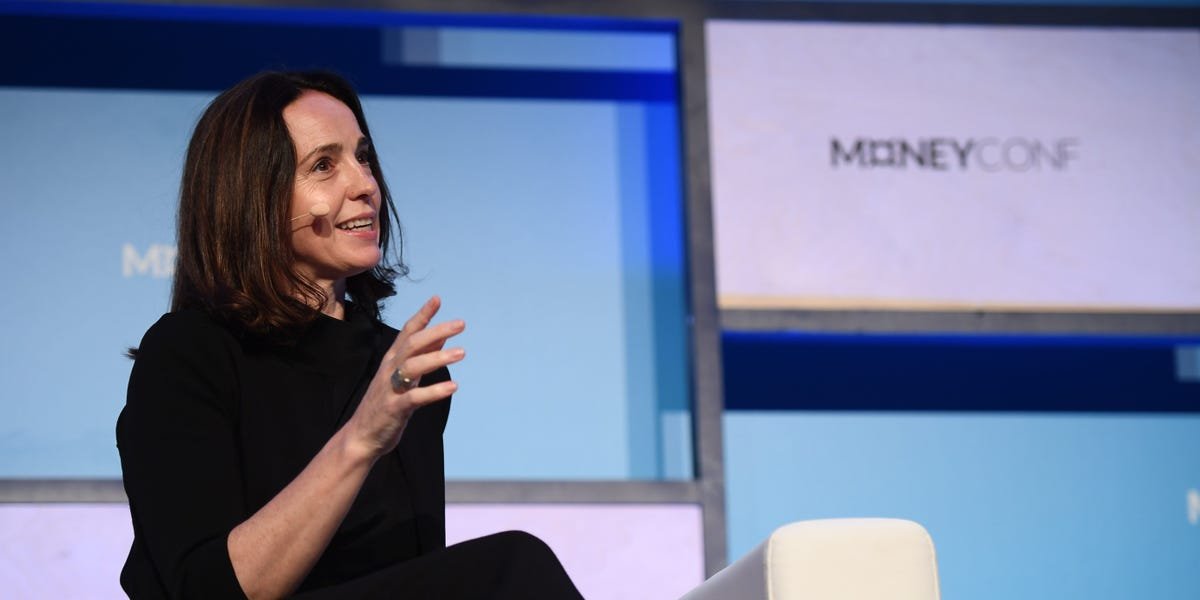
OpenAI CFO Sarah Friar sketched a future in which the company’s business models evolve beyond subscriptions and could include royalty streams tied to customer results.

Speaking on a recent podcast, Friar floated the possibility of “licensing models” in which OpenAI would get paid when a customer’s AI-enabled work produces measurable outcomes.

In one example, she pointed to drug discovery: if a pharma partner used OpenAI technology to help develop a breakthrough medicine, the startup could take a licensed portion of the drug’s sales. The pitch, she suggested, is alignment: OpenAI would make money when its customers do.

That idea sits inside what Friar described as a Rubik’s Cube of strategic options, a way to explain how OpenAI has evolved from a simpler early business into a fast-expanding matrix of infrastructure, products, and pricing.

“One of the things I love about a Rubik’s Cube, I’m probably not getting the number exactly right, but I think it has 43 quintillion different states it can be in,” Friar said. “It always blew my mind when I was in university. So now just think about that cube spinning.”

Alistair Barr, global tech editor of Business Insider, smiles at the camera while wearing a blue and white striped shirt.

Every time Alistair publishes a story, you’ll get an alert straight to your inbox!

Stay connected to Alistair and get more of their work as it publishes.

OpenAI started out as a “single block” in a Rubik’s Cube. It had one major cloud provider (Microsoft), one dominant chip partner (Nvidia), one flagship product (ChatGPT for consumers), and one basic subscription, she said.

Now, OpenAI works with multiple cloud providers and has partnerships with several chip providers, while expanding its product lineup beyond the consumer ChatGPT service to include Sora, business products, specialized industry offerings, and research platforms.

The business model has become similarly multi-layered. Friar said OpenAI started with a single consumer subscription for ChatGPT “because we needed a way to pay for the compute” and has since broadened to multiple price points, software-as-a-service pricing, and credit-based models for high-value use cases.

From there, she said, OpenAI is “beginning to think about things like commerce and ads” alongside longer-term licensing tied to outcomes.

In Friar’s telling, the Rubik’s Cube metaphor captures how OpenAI can mix and match technical choices with how it makes money. A low-latency chip could pair with a premium AI coding experience to justify a higher-end subscription, she said. Or the company could optimize for scale, attracting more free users and creating more inventory for an advertising business.

There’s a major constraint affecting all these strategies: compute. Friar said demand for OpenAI’s services is limited less by interest than by available computing capacity, a dynamic that, in her view, makes the company’s growing menu of revenue models not just optional, but necessary.

“You can start to see how the goal in the last 12 months has been creating more and more strategic options that allow me to keep paying for the compute we need to really achieve our mission,” Friar added.

Sign up for Business Insider’s Tech Memo newsletter here. Reach out to me via email at abarr@businessinsider.com.


Source link

Share. Facebook Twitter Pinterest LinkedIn Tumblr Email
IQ TIMES MEDIA
  • Website

Related Posts

Gary Marcus Skewers Viral AI Essay As Alarmist ‘Hype’

February 13, 2026

‘Tom Cruise’, ‘Brad Pitt’ Fight in Viral Seedance AI Video

February 13, 2026

5 Tech Bosses Took $26B Wealth Hit From Thursday’s AI Stock Slump

February 13, 2026
Add A Comment
Leave A Reply Cancel Reply

Editors Picks

Harvard sued by Justice Department over access to admissions data

February 13, 2026

San Francisco teachers reach deal with district to end strike

February 13, 2026

Teachers describe immigration enforcement’s impact on classrooms

February 13, 2026

Epstein files reveal deeper ties with scientists and other professors

February 13, 2026
Education

Harvard sued by Justice Department over access to admissions data

By IQ TIMES MEDIAFebruary 13, 20260

WASHINGTON (AP) — The Trump administration is suing Harvard University, saying it has refused to…

San Francisco teachers reach deal with district to end strike

February 13, 2026

Teachers describe immigration enforcement’s impact on classrooms

February 13, 2026

Epstein files reveal deeper ties with scientists and other professors

February 13, 2026
IQ Times Media – Smart News for a Smarter You
Facebook X (Twitter) Instagram Pinterest Vimeo YouTube
  • Home
  • About Us
  • Advertise With Us
  • Contact us
  • DMCA
  • Privacy Policy
  • Terms & Conditions
© 2026 iqtimes. Designed by iqtimes.

Type above and press Enter to search. Press Esc to cancel.