


Nebius is one of the more unusual players in the AI boom: a “startup” that didn’t exactly start from scratch.
The company emerged in 2024 from the breakup of Russian search giant Yandex. A complex transaction left the new Nebius with hundreds of employees and roughly $2.5 billion in capital, giving it a scale and war chest most new entrants can only dream of.
With decades of experience building massive data centers for a huge online search business, the Nebius team brought deep know-how to the AI infrastructure race. The company builds AI data centers from the ground up.
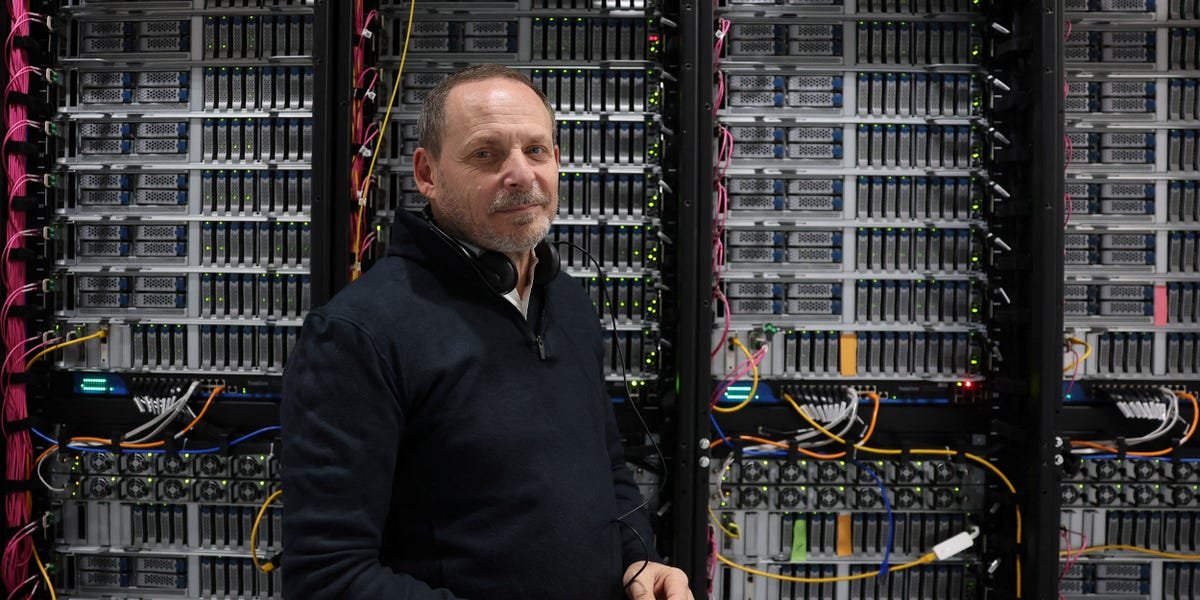
I met Nebius CEO Arkady Volozh when he was in Silicon Valley for Nvidia’s GTC conference earlier this month. Volozh made quite a splash that week by announcing a $27 billion AI compute deal with Meta. The news sent Nebius shares up 15%, valuing the company at about $30 billion.
Soon after, I pinged Volozh a bunch of questions about the unprecedented spending and building spree that’s underpinning the generative AI boom.
Volozh argued the scramble for AI compute has already moved beyond just GPUs. He outlined the “four Cs” of this wild moment in tech — capacity, capital, chips, and customers — and explained how each bottleneck has tightened over the past year as demand continues to outstrip supply.
He also made the case for building like a hyperscaler, not a GPU reseller, and discussed how big contracts, including with Meta, help finance a longer-term push by Nebius into higher-margin AI cloud services.
Here’s our chat, edited for length and clarity:
Q: Take me through the “four Cs” of Nebius’s focus. How have each of these “Cs” changed from 1-2 years ago?
A: There are four primary bottlenecks in the industry right now. We call them the four Cs: capacity, capital, chips, and customers. They look very different today than they did a year ago.
Start with capacity. The physical world simply cannot build data centers fast enough. The real issue is the broader supply chain. We see massive shortages in basic physical components, like transformers and gas generators. We are targeting more than 3 gigawatts of contracted power by the end of 2026.
Then there’s capital. The scale of funding has changed. Last year, companies raised billions. Today, capturing just 10% of the AI infrastructure market requires an estimated $400 billion in capital investment.
Regarding chips. A year ago, getting allocations of GPUs was the main challenge. Now, the constraints go deeper into the silicon. We see massive shortages in memory chips.
Finally, customers. This represents demand. Last year, the market questioned if AI would have real-world demand. Today, the demand is clear. It vastly outpaces the supply we can build.
Q: Nebius builds a lot of the new AI computing stack itself. Why do this when others are leasing and even doing things like “Bring Your Own Chips” strategies?
A: Think about Nebius as a fourth hyperscaler. You do not achieve that by acting as a hardware wholesaler. You have to own the whole stack.
We build it ourselves. We design our own servers and racks. This allows us to bypass middlemen and capture that margin ourselves.
It is not just about hardware savings. Owning the platform allows us to allocate capacity efficiently and build exactly what customers need. That is how we capture enterprise clients.
Look at the alternative in the market. Companies lease data center shells. They buy pre-assembled racks. They sacrifice margin at every step. That is not how you operate like a hyperscaler.
Q: Take me through the five layers of the AI cake as you see it, and how you are trying to squeeze more profit margin from each layer.
A: We control our cost structure from the concrete up to the software. That is how we deliver better economics.
Jensen [Nvidia’s CEO] recently described AI as a five-layer cake. Most companies operate at one or two layers and pay a premium to middlemen. We own the entire stack. It is not just about the economics. It is about delivering a more integrated ecosystem.
Layer one is the land, power, and physical shell. Layer two is the compute hardware. By building our own racks, we save 15% to 20% at this layer alone. This means we deliver 15% to 20% more compute per unit of power. Layer three is bare metal access for hyperscalers.
Layers four and five are where we capture enterprise value. Layer four is our multi-tenant cloud. This allows us to match supply with demand and sell to higher-margin customers. Layer five is services and inference, like our Token Factory platform.
Q: You launched Nebius in 2024 off the back of the Yandex divestment. How does being a new company affect how you build infrastructure at this scale, especially given the current opposition to data centers in many places in the US?
A: Nebius is a relatively new company. But our team has decades of experience building infrastructure at hyperscale. We have done this before. We know how to plan for the physical constraints of the real world.
This operational background gives us an advantage. We understand the everyday complexities of building data centers fast. We know how to buy the land, get the permits and contract the power. We do not outsource these hard problems.
With local communities, we build trust by working directly with them. We want our infrastructure to benefit local residents. We are building multiple gigawatt-scale AI factories and we want the cities where we are building to be proud of them. This approach keeps our projects on track.
Q: Explain the “dark GPUs” issue. With so much AI demand, it seems odd that there could be GPUs sitting around not being used?
A: Dark GPUs are idle compute capacity. Customers pay for them but cannot use them efficiently because competing platforms are not set up for maximum utilization.
We solve this by meeting AI builders where they are. We built our cloud for AI engineers. We manage the orchestration so our customers always know their exact net available capacity.
This is about more than just avoiding idle time. It is about partnership. Customers want confidence that we can service their needs as they scale.
Q: I was surprised to hear that the Meta deal is not part of Nebius’s core long-term business plan. Can you explain how this deal works, and how this is partly a smart way to finance Nebius’s path to your preferred future, and keep your cost of financing relatively low?
A: Our core product is our multi-tenant AI cloud. We provide the flexible infrastructure and software that startups and enterprises need.
Meta is a highly sophisticated and demanding customer. We love working with them and will continue to do so. When they choose to work with us, it is a great endorsement of Nebius as a company and our engineering capabilities.
But again, our core business is AI cloud for the whole market. Large contracts with Meta and Microsoft are fuel. They allow us to build this core business faster. They create a foundation for our infrastructure build-out, and give us more options to raise more funding to build gigawatts of capacity for our own multi-tenant cloud.
Sign up for BI’s Tech Memo newsletter here. Reach out to me via email at abarr@businessinsider.com.
