


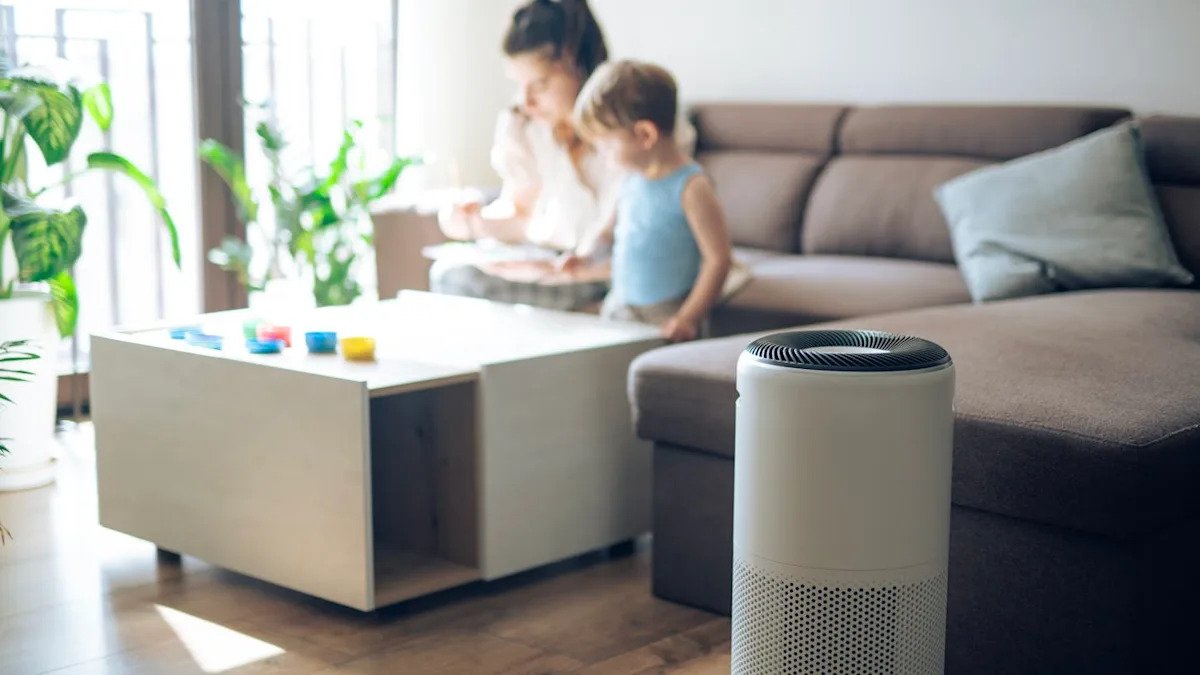
Portable air cleaners aimed at curbing indoor spread of infections are rarely tested for how well they protect people – and very few studies evaluate their potentially harmful effects. That’s the upshot of a detailed review of nearly 700 studies that we co-authored in the journal Annals of Internal Medicine.
Many respiratory viruses, such as COVID-19 and influenza, can spread through indoor air. Technologies such as HEPA filters, ultraviolet light and special ventilation designs – collectively known as engineering infection controls – are intended to clean indoor air and prevent viruses and other disease-causing pathogens from spreading.
Along with our colleagues across three academic institutions and two government science agencies, we identified and analyzed every research study evaluating the effectiveness of these technologies published from the 1920s through 2023 – 672 of them in total.
These studies assessed performance in three main ways: Some measured whether the interventions reduced infections in people; others used animals such as guinea pigs or mice; and the rest took air samples to determine whether the devices reduced the number of small particles or microbes in the air. Only about 8% of the studies tested effectiveness on people, while over 90% tested the devices in unoccupied spaces.
We found substantial variation across different technologies. For example, 44 studies examined an air cleaning process called photocatalytic oxidation, which produces chemicals that kill microbes, but only one of those tested whether the technology prevented infections in people. Another 35 studies evaluated plasma-based technologies for killing microbes, and none involved human participants. We also found 43 studies on filters incorporating nanomaterials designed to both capture and kill microbes – again, none included human testing.
Why it matters
The COVID-19 pandemic showed just how disruptive airborne infections can be – costing millions of lives worldwide, straining health systems and shutting down schools and workplaces. Early studies showed that the COVID-19 virus was spreading through air. Logically, improving indoor air quality to clear the virus from air became a major focus as a way to keep people safe.
Finding effective ways to remove microbes from indoor air could have profound public health benefits and might help limit economic damage in future pandemics. Engineering infection controls could protect people from infection by working in the background of daily life, without any effort from people.

Companies producing portable air cleaners that incorporate microbe-killing technologies have made ambitious claims about how effectively they purify air and prevent infections. These products are already marketed to consumers for use in day care centers, schools, health care clinics and workplaces. We found that most of them have not been properly tested for efficacy. Without solid evidence from studies on people, it’s impossible to know whether these promises match reality. Our findings suggest that consumers should proceed with caution when investing in air cleaning devices.
The gap between marketing claims and evidence of effectiveness might not be surprising, but there is more at stake here. Some of these technologies generate chemicals such as ozone, formaldehyde and hydroxyl radicals to kill microbes – substances that can potentially harm people if inhaled. The safety of these products should be the baseline requirement before they are widely deployed. Yet, of the 112 studies assessing many of these pathogen-killing technologies, only 14 tested for harmful byproducts. This is a stark contrast to pharmaceutical research, where safety testing is standard practice.
What still isn’t known
Over 90% of all studies tested these technologies by looking at the air itself – for example, measuring how well experimental gases, dust particles or microbes were cleared from the air. The idea is that cleaner air should mean lower chances of infection. But when it comes to air cleaning, researchers don’t yet know how strongly these air measurements reflect actual reduction in infections for people.
Identifying the safest and most effective options will require assessing these technologies for toxic byproducts and evaluating them in real-world settings that include people. Also, standardizing how effectiveness and potential harms are measured will help inform evidence-based decisions about improving air quality in homes, schools, health care facilities and other indoor spaces.
The Research Brief is a short take on interesting academic work.
This article is republished from The Conversation, a nonprofit, independent news organization bringing you facts and trustworthy analysis to help you make sense of our complex world. It was written by: Amiran Baduashvili, University of Colorado Anschutz Medical Campus and Lisa Bero, University of Colorado Anschutz Medical Campus
Read more:
Amiran Baduashvili, MD, through the University of Colorado, received funding from the National Institute of Occupational Safety and Health for the study discussed in this article.
Lisa Bero, through the University of Colorado, received funding from the National Institute of Occupational Safety and Health for the study discussed in this article.
