


What if a simple test could save thousands of lives every year, and yet millions don’t take it?
That’s the case with screenings for cervical cancer, one of the most preventable types of cancer there is. Women have some powerful tools at their disposal to beat it, thanks to HPV tests, which screen for high-risk strains of the human papillomavirus (the virus that causes cervical cancer), and Pap smears, which detect abnormal cell changes before they turn cancerous. There’s even a highly effective shot — the HPV vaccine — that prevents cervical cancer, along with five other types of cancer.
The problem? Not everyone gets screened (and vaccination rates have stalled). “The Pap smear has been around for more than 80 years,” Dr. Gil Weiss, an ob-gyn at the Association for Women’s Health Care and assistant professor of clinical medicine at Northwestern Memorial Hospital, tells Yahoo. “But sadly, Pap screening rates have begun to drop over the last 10 years.”
According to Weiss, there are several reasons for this. “The most common challenges for cervical cancer screening include: financial barriers, language difficulties, cultural stigma and lack of knowledge about the health care system,” he says.
Access is also an issue. “We know there aren’t enough medical providers in this country, so just being able to get in for an appointment is sometimes a challenge for patients,” Dr. Michelle Khan, an ob-gyn with training in reproductive infectious diseases at Stanford Medicine Children’s Health, tells Yahoo.
And then there’s the fear and anxiety over getting a pelvic exam during the screening. “There could be discomfort with the exam because, traditionally, we use the speculum, which is not the most comfortable type of exam, and so that could be a barrier for patients to come in,” says Khan.
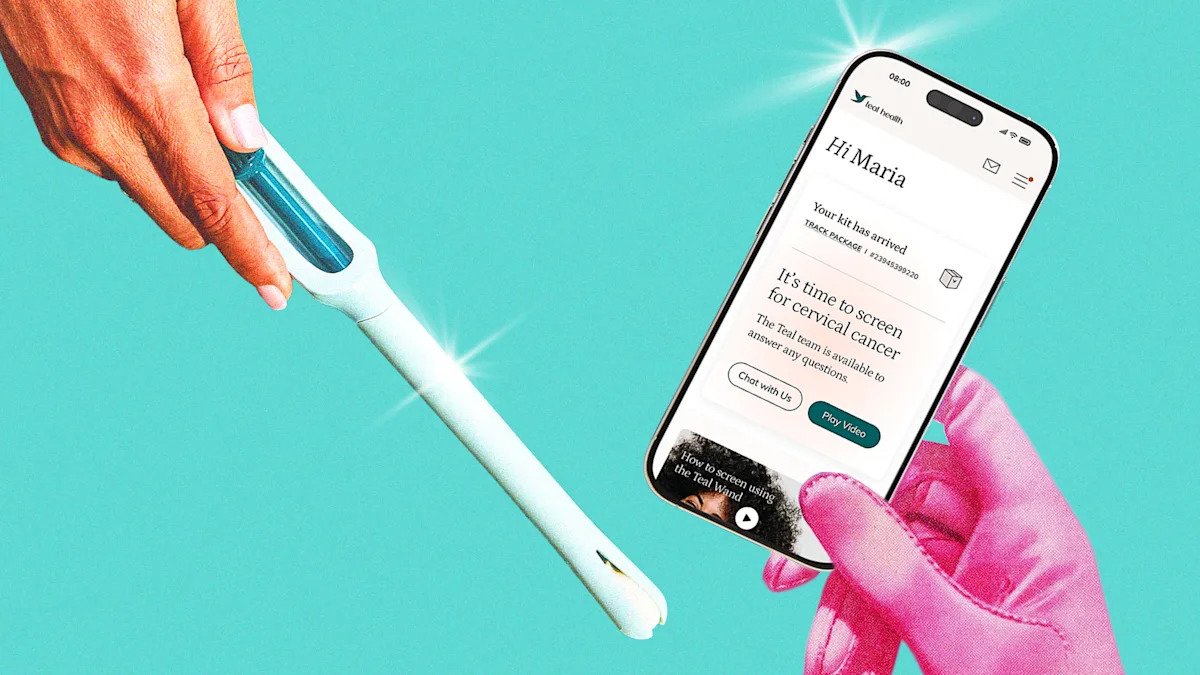
A newly FDA-approved, at-home test kit from Teal Health called the Teal Wand aims to break down some of those barriers and help close the cervical cancer screening gap by making it easier for women to get tested.
The problem: Cervical cancer screenings can be uncomfortable, which can lead to people avoiding making the appointment. Others don’t get screened regularly because they don’t have the time, money or access to a doctor.
By the numbers: Almost 30% of eligible Americans aren’t getting screened for cervical cancer as often as recommended, according to the National Cancer Institute, and 20% to 50% of women with cervical cancer had not undergone screening in the five years before being diagnosed, per the American Cancer Society (ACS). Regular screening can reduce cervical cancer cases by 50% to 80%, according to the National Institutes of Health. These screenings also save lives, reducing the risk of death by 80% or more, according to the World Health Organization. (The HPV vaccine, meanwhile, is nearly 90% effective at preventing cervical cancer.)
The solution: Teal Health’s Teal Wand is a cervical cancer screening tool that can be done at home in people ages 25-65 years old — no speculum or stirrups required. Here’s how it works: Once you order the kit, you’ll have a virtual visit with a Teal medical provider to go over your cervical cancer screening history and explain how the at-home test works before they prescribe it. After you collect a sample, it’s mailed off to a lab for analysis. The sample is then tested on a primary HPV test, which is recommended by the ACS and the U.S. Preventive Services Task Force. Test results are posted on the patient portal online; if follow-up care is necessary, such as if the test results come back abnormal or positive for HPV, you can do a virtual visit with a Teal provider to talk about next steps and get a referral if needed.
“Screening is critically important — cervical cancer is 100% preventable if caught early,” Kara Egan, chief executive officer and cofounder (with Dr. Avnesh Thakor) of Teal Health, tells Yahoo. “When you look at the reasons why people aren’t doing it, it’s time and convenience — do you have time in your own day or is there [doctor] availability, which really there isn’t anymore for these appointments. And then the other is fear and discomfort with the exam. So we’re able to really kind of address those major barriers, which are felt by everybody.”
Being able to take this important test at home means it’s “one less thing you have to worry about,” says Egan.
Experts are excited and optimistic about the new device, including Weiss, who says the wand is 96% accurate at detecting HPV when precancer is present. “I see this as an excellent tool for people who cannot access health care for various reasons,” he says. “The Teal Wand offers a convenient and comfortable option for cervical cancer screening, reducing barriers to care and increasing engagement with preventative health care. It also allows women to take control of their own health care on their own terms.”
Khan agrees: “I think this is a really exciting tool that we now have. I’m hoping it will revolutionize cervical cancer screening.”
While it’s hard to beat the convenience of testing at home, Dr. Karen Tang, a gynecologist and author of It’s Not Hysteria: Everything You Need to Know About Your Reproductive Health (But Were Never Told), tells Yahoo that it doesn’t replace an in-person checkup with your doctor. “Any cervical cancer screening is better than no screening, though I have concerns that patients would consider home testing a reason to avoid seeing a gynecologist in person altogether when there are many other things that we discuss and examine in a routine gynecologic exam besides cervical cancer screening.”
Tang also points out that for those who find speculums uncomfortable during the pelvic exam, there are other options. For example, self-collected cervical cancer screening kits — like Onclarity HPV and cobas HPV — use a small swab or brush and are a good option for people who prefer not to do standard screenings; however, they need to be done in a health care provider’s office, not at home. Doctors can also use a smaller pediatric speculum when needed.
And there are some promising advancements in speculum design — something that hasn’t changed much in 170 years. Yona, for example, is a new speculum under development that uses three silicone-coated metal “leaves” to separate the vaginal walls, instead of two bills, so doctors can get a better view of the cervix and interior vagina without creating more pressure. It also allows space between the doctor’s hand and the exam table, so patients don’t need to scooch so far down.
The bottom line, says Tang, is this: “It’s so important to get this screening, and whatever we can do to increase access to screening for those who may be avoiding it is a good thing.”
Teal Health is currently working on in-network coverage with major insurance plans in California and will eventually expand. They will also have an out-of-pocket cash option (the price isn’t available yet), and the kit can be purchased from a health savings account or flexible spending account.
