


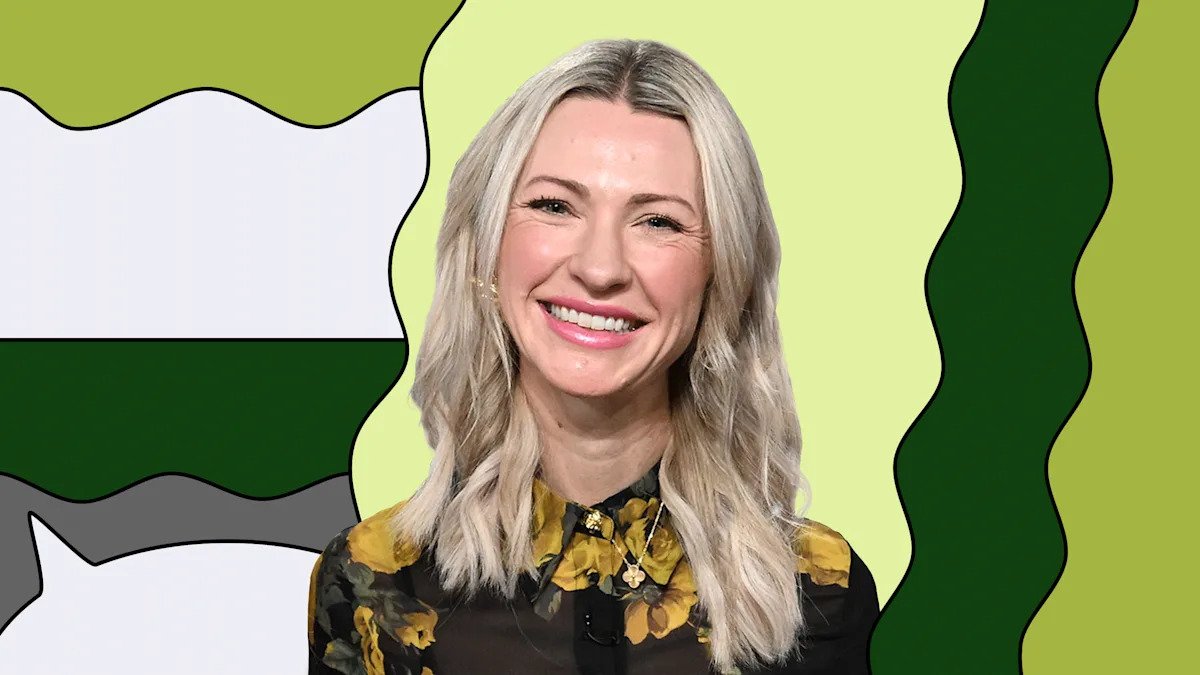
In the early 2000s, the reality TV show The Biggest Loser was a cable TV hit. But it has since come under scrutiny for its grueling challenges and treatment of its contestants. Participants have spoken out about alleged mistreatment on the show, and it has been the subject of a documentary exposé. In the 20 years since The Biggest Loser debuted, the body positivity movement — which advocates for acceptance of all body types and challenges weight stigma and discrimination — has gained traction, and lost it again, especially amid the rise of GLP-1 weight loss drugs.
Now there’s a debate brewing: Is body positivity healthy? Are weight loss drugs? Does being “healthy” require a certain lifestyle? Former Biggest Loser trainer Jillian Michaels recently debated members of the body positivity movement on the YouTube channel Jubilee. She alleged that those who believe bodies should be celebrated at every size do not acknowledge the health ramifications of obesity and that the food industry benefited from the existence of the movement to sell more products. And she name-checked one person, in particular: registered dietitian and intuitive eating specialist Abbey Sharp.
Sharp has long spoken about the negative impacts of The Biggest Loser and, in September 2025, featured a producer of the documentary The Reality of the Biggest Loser on her podcast, Bite Back. In this interview with Yahoo’s Kaitlin Reilly, Sharp says she was “surprised” to be called out as the only dietitian named by Michaels. Perhaps most surprising of all — Sharp doesn’t disagree with everything Michaels says about obesity.
Yahoo spoke to the dietitian to find out her side of the story — and what both the body positive movement and those who oppose it might be getting wrong about obesity.
Where Jillian Michaels and I agree on obesity
When I started watching Michaels’s Jubilee debate, my initial reaction to her first claim — that “obesity is not healthy, and pretending it is puts lives at risk” — was actually agreement. I was nodding along. Michaels may see me as aligned with body positivity, but I’ve very much distanced myself from that term in my work as a registered dietitian.
And while I wouldn’t use that exact language, one reason I’ve stepped back from that community is that it can sometimes downplay the real biological risks of obesity. Excess visceral fat — the fat around the midsection — is associated with type 2 diabetes, coronary artery disease and liver issues. That’s well established.
At the same time, this isn’t an either-or situation. The people debating Michaels in the Jubilee video brought up things like weight stigma, poor treatment in health care settings and stress, and those absolutely contribute to worse health outcomes. Two things can be true. To really support people in larger bodies, we need to acknowledge both the biological risks and the environmental and social factors that increase disease risk.
I also think that what it means to be “body positive” has been misunderstood and co-opted. The original intent gets lost, and people online take it in different directions. Some people interpret the movement as denying science or even glorifying obesity, even though that wasn’t the intention.
To really support people in larger bodies, we need to acknowledge both the biological risks and the environmental and social factors that increase disease risk.
There are fringe examples online where people take these ideas into dangerous territory, but I don’t think that represents the movement as a whole. A lot of this comes down to our societal discomfort with fatness. People assume that if someone in a larger body isn’t actively trying to change it, they must not care about their health.
Eating disorders are complicated
Michaels also claimed that body positivity oversimplifies eating disorders and trauma. I don’t think oversimplifies is the right word, but I think what she was getting at is that sometimes the movement’s messaging reduces complex issues to “just love your body” or “just eat intuitively,” without addressing deeper psychological or medical roots.
I strongly disagree with Michaels’s suggestion that all disordered eating or obesity stems from what she called “primary wounds,” like childhood trauma or abuse. Eating disorders are rarely caused by a single factor. They’re a perfect storm — biological vulnerability, psychological traits, social pressures, life experiences and media all interact to put someone at risk for disordered eating. Not everyone who struggles with their relationship to food has experienced trauma.
That framing also dismisses the role that media plays. When I was a teenager in the “toxic 2000s,” we were getting body dysmorphia from celebrity tabloids. That era was vicious when it came to diet culture. But now with social media, it’s completely inescapable.
The lines between celebrities and everyday people have blurred. It used to be that you could look at a celebrity and think, “That’s not me — they have trainers and chefs.” Now everybody online looks like a “regular” person, so if they can achieve a certain body, it feels like we should be able to as well.
When I was a teenager in the ‘toxic 2000s,’ we were getting body dysmorphia from celebrity tabloids … But now with social media, it’s completely inescapable.
At the same time, everything is filtered and edited. We don’t even know what’s real anymore — we’re seeing AI influencers that people think are real. Young people are growing up seeing hyper-filtered images all the time. So when they look in the mirror, of course they feel like something is wrong with them.
To deny that social media plays a role in people’s body images is incredibly irresponsible. There’s research showing that social media use increases body dissatisfaction and risk of disordered eating, especially among young girls. This is where people are getting most of their nutrition and wellness information, and a lot of it is problematic.
What the food industry has to do with body image
I don’t agree with Michaels’s argument that large food companies are the primary beneficiaries of people loving and accepting their bodies at larger sizes. In my view, Big Food is opportunistic, not ideological. These companies profit from both sides — from restriction and from indulgence. They sell diet products and regular products. They’re not responding to body positivity specifically; they’re responding to consumer demand across the board.
Michaels also frames obesity as a choice. In my view — and that of many experts — this isn’t true. Body weight is influenced by genetics, metabolism, hormones, mental health, access to food and social factors. Yes, people have agency, but choices don’t exist in a vacuum. They’re often shaped and constrained by factors that people do not choose. I think it’s a very privileged position to just say you’ve chosen to be in this body without any kind of consideration of or empathy for the factors that have influenced that.
Michaels argued that body positivity is disempowering, but I don’t think that’s inherently true. There were people in that Jubilee debate who said loving their bodies, no matter what the size, helped them exercise more, recover from eating disorders or feel better about aspects of their bodies they couldn’t change. It’s not inherently anti-agency.
In my view, Big Food is opportunistic, not ideological. These companies profit from both sides — from restriction and from indulgence.
Accountability is important, but it should come from a place of curiosity and self-care, not shame. Shame is consistently linked to worse outcomes — more disordered eating, more avoidance of health care and less engagement in healthy behaviors. There’s even research showing that shame is not an effective motivator for weight loss.
More broadly, we’re seeing a pendulum swing. We went from increased body diversity to a return to extreme thinness as the ideal, and that’s concerning. The standard for what’s considered a “good” body has shifted to something that isn’t realistic for most people to achieve in a healthy way.
With the rise of GLP-1 medications, I worry about misuse and the pressure people feel to meet that standard. It’s a really challenging time, especially for young people, and I think it’s important to be honest about all of these factors — not reduce them to a single cause.
This interview has been edited for length and clarity.
