


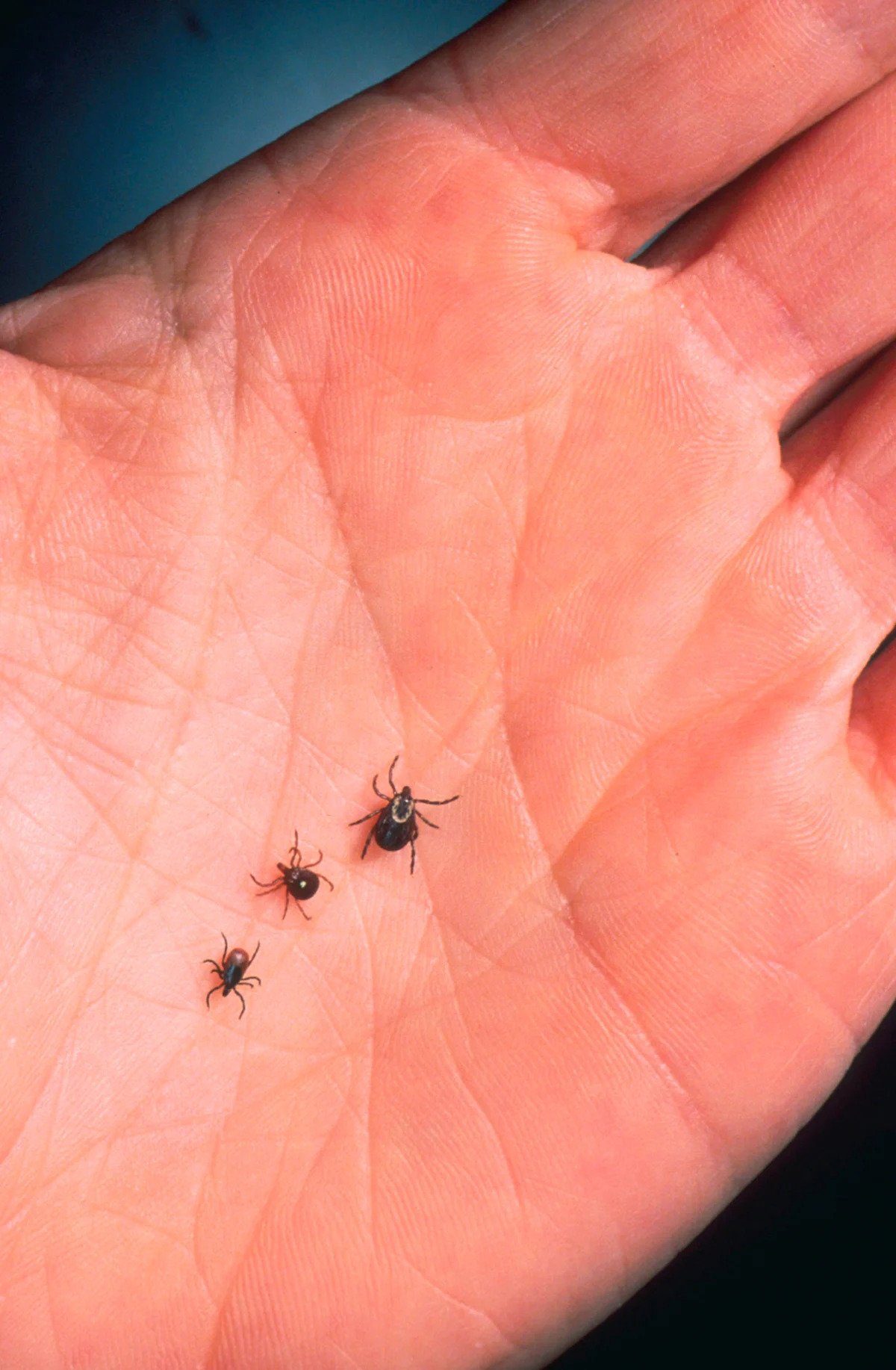
A poppy-seed-sized pest is turning meat-lovers on Martha’s Vineyard into herbivores.
A spike over the last decade in the island’s Lone Star tick population has led to a rapid increase in alpha-gal syndrome, a severe allergy to red meat and other animal products. The ticks, which are also on the rise elsewhere in the United States, can transmit the sometimes-life-threatening allergy with a single bite.
And the condition is changing the way people eat at the popular Massachusetts tourist destination, among many other places.
The chef and owner of the Vineyard food truck You Enjoy My Vegan, who goes by Mufyn Love, said they’ve seen more people on the Vineyard seeking out plant-based food options because of alpha-gal. At the Martha’s Vineyard fair in mid-August, they said people they’d never seen before came up to the truck asking for no cheese or mayo, not realizing it was vegan.
More: Tick bites sending more people to ER than years past, CDC data shows
“They tell us, ‘I have alpha-gal,’” Love said. “A lot of them are like, ‘We never go out to eat’ because they struggle to find restaurants they can truly trust.”
What is Alpha-gal syndrome?
Alpha-gal is a sugar molecule found in most mammals, including cows, pigs and sheep, but not in humans. Lone Star ticks get alpha-gal when they feed on animals, and they can transfer it to humans through their saliva when they bite.
People with alpha-gal syndrome become allergic to red meat, including beef, pork and lamb. Some also have allergies to dairy and other animal-derived products, like gelatin.
Symptoms of the condition appear two to six hours after eating meat with the alpha-gal molecule and they can range from mild to life-threatening, according to the Mayo Clinic.
Some of the most common symptoms include:
Swelling of the face and throat
How common is Alpha-gal?
More than 110,000 suspected cases of alpha-gal were identified between 2010 and 2022, according to the Center for Disease Control and Prevention. But the agency said the actual number of cases could be up to four times higher.

Lone Star ticks live in the Northeast, South, and Midwest. This Center for Disease Control and Prevention map shows the estimated distribution of the lone star tick in the country.
Historically, cases most commonly appeared in the south, east, and central United States, where Lone Star ticks live. Stephen Rich, head of The New England Center of Excellence of Vector-borne Diseases, said cases have become increasingly common in New England in the last decade as the arachnid parasite’s population has grown.
In 2020, two people tested positive for alpha-gal at Martha’s University Hospital, spokesperson Gregory Mathis said. In 2024, that number rose to 523. Results for this year aren’t available yet.
Dr. Karen Casper, Emergency Medical Department Director at Martha’s Vineyard Hospital, said more people have visited the emergency room for tick bites and tick removal since the start of summer.
Cases have been reported in coastal areas on Cape Cod, Maine and Long Island, New York, too.
“There’s clearly a northward movement and an inland movement away from the coast,” Rich said.
Why have we seen an uptick in Lone Star ticks?
Scientists say Lone Star tick populations are flourishing in the Northeast, as white-tailed deer populations have rebounded. The ticks live and feed on the deer, particularly during the insect’s nymph and adult years, which can last up to three years. On Martha’s Vineyard’s nearly 100 square miles, there are an estimated 55 deer per square mile, according to Massachusetts deer harvest data.
“The breeding ground is just more abundant than it has ever been before,” Rich said.
Lone Star ticks can be especially aggressive and will actively hunt human prey, Rich said. More so than other types of ticks, they can also be found in manicured lawns.
Is there a treatment for Alpha-Gal?
There are currently no treatments available for alpha-gal syndrome. Abstinence from red meat and dairy products is the most effective method of preventing illness for those with the condition, according to the Mayo Clinic.
People who experience severe allergic reactions may carry epinephrine autoinjectors, such as EpiPens, to stop anaphylaxis.

A close up of an adult female deer tick, dog tick, and a lone star tick.
How to prevent Lone Star tick bites
Lone Star ticks can be impossible to spot. Adult females grow to the size of an apple seed and have a tiny white dot on their back. Tick larvae, which are translucent and the size of a pinhead, can also bite.
Rich, who also teaches microbiology at the University of Massachusetts Amherst, said people living in areas where ticks are common should always have a “general sense of caution.”
He recommended:
Wearing long pants tucked into socks when wading through grassy areas. While this isn’t ideal beach attire, he said it’s something people should consider when passing through dunes.
Spraying clothing with the pesticide Permethrin, which repels mosquitoes and ticks.
Appyling insect repellent with chemicals including deet and picaridin on your skin.
This article originally appeared on USA TODAY: A tick is making people vegan. Here’s why.
