


We may receive an affiliate commission from anything you buy from this article.
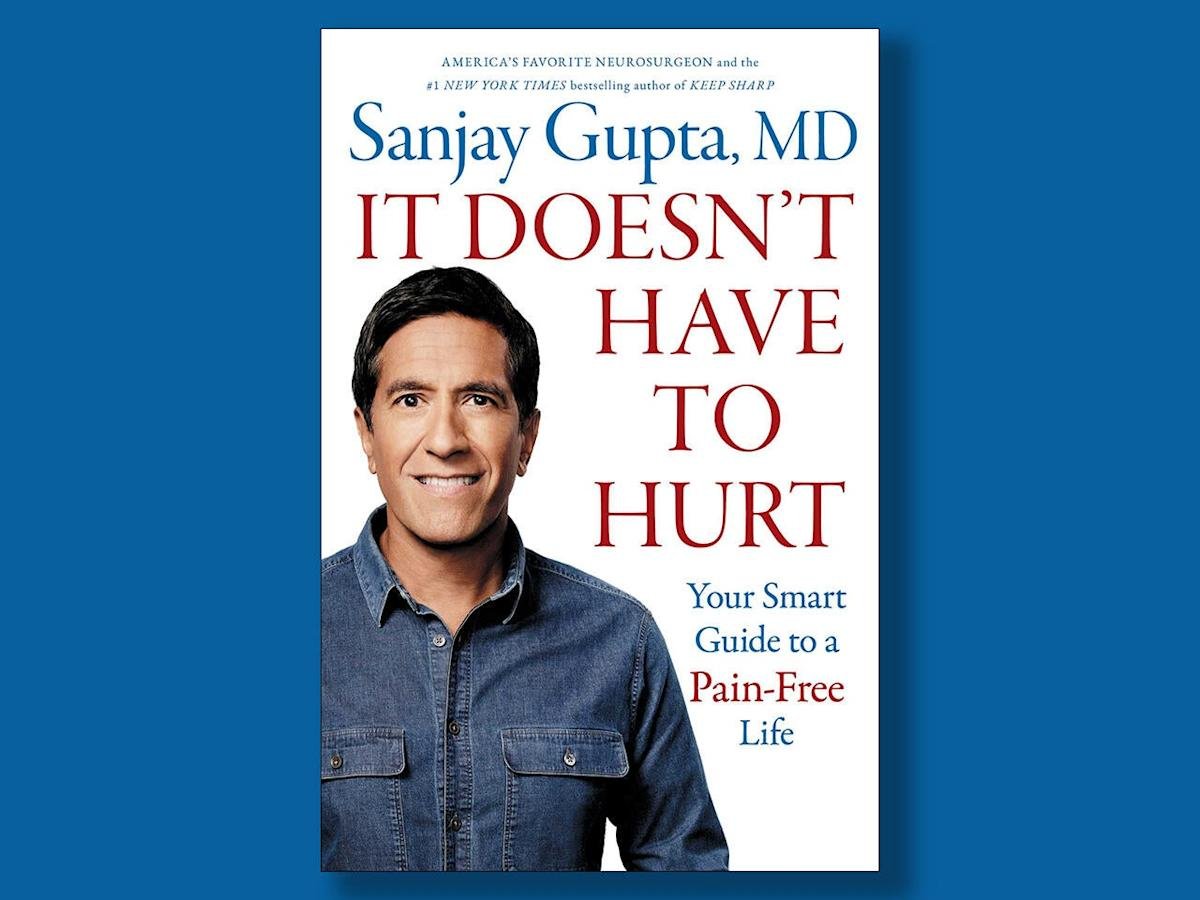
In his new book, “It Doesn’t Have to Hurt: Your Smart Guide to a Pain-Free Life” (published September 2 by Simon & Schuster), Dr. Sanjay Gupta, a neurosurgeon and chief medical correspondent for CNN, writes about chronic pain, and the innovative techniques now being used to study and treat it.
Read an excerpt below, and don’t miss Jane Pauley’s interview with Dr. Gupta on “CBS Sunday Morning” August 31!
“It Doesn’t Have to Hurt: Your Smart Guide to a Pain-Free Life” by Dr. Sanjay Gupta
Prefer to listen? Audible has a 30-day free trial available right now.
Over a hundred years ago, William Osler, the Canadian physician and founding influence on modern medicine and medical education, is said to have instructed his students to “listen to the patient. Quite often he is telling you the diagnosis.”
Today, the urgent search for meaningful insights into chronic pain has given that idea a new relevance, with impressive results. Health care providers now encourage patients to engage as partners in the treatment process. Research programs now routinely include people with lived experience—patients, family members, caregivers—as members of committees that advise and direct pain studies.
Pain scientists are calling for a dramatic change that puts greater emphasis on the studies that draw first from people’s real-life pain experience, then follows up with lab-based research to develop targeted solutions for effective pain management. This reverse translational research flips the classic bench-to-bedside process that starts in a laboratory and ends with a clinical trial.
Reverse translational research begins with the patient’s real-world experience and then tries to decipher the mechanisms through brain imaging and blood tests, correlated with the patient’s symptoms and self-reports. Instead of the bench to the bedside, which was taught when I was in medical school, this is bedside to the bench research. The bench scientists then work with the findings to learn more about the basic mechanisms.
Prasad Shirvalkar, a pain physician, neuroscientist, and the director of the Shirvalkar Lab at the University of California at San Francisco, used such a hybrid approach a couple of years ago to find the unicorn in pain science: objective biomarkers of a subjective experience. He started by implanting electrodes in the brains of patients, to measure brain signals. He then followed the trial participants home and, with the use of continuous surveys and digital monitoring, tracked their pain through everyday life and correlated those results with direct readings from the brain. The combination of lab-based and home-based monitoring led to a groundbreaking series of clinical trials that made headlines around the world. In 2023, his team was able to directly map signals of chronic pain for the first time in history. In more recent trials, the team used electrodes implanted in the brain to map the unique neural signature of each participant’s pain experience over thousands of hours. The result was the ability, for the first time, to create an objective measure of an individual patient’s subjective pain experiences.
In a more recent and ongoing trial, the maps and electrodes were used to predict a pain burst, which was followed by the delivery of a carefully calibrated electrical impulse—deep brain stimulation (DBS) to interrupt the pain, reducing or even eliminating it altogether. Predicting when pain might occur, objectively measuring its severity, and then quickly inhibiting it is in many ways the ultimate achievement.
Ed Mowery’s story is about someone using this remarkable treatment approach, but first a caveat. It’s not currently available, or even feasible, for general use, so it can’t deliver on the dream of a cure for chronic pain. But it does deliver evidence that pain circuitry in the brain is measurable and malleable. It can be targeted and treated, and we’ll likely see the emergence of a range of approaches that can do so without brain surgery.
Excerpted from “It Doesn’t Have to Hurt” by Sanjay Gupta, MD, published by Simon & Schuster in collaboration with AARP. Copyright © 2025 by Sanjay Gupta. Reprinted by permission of Simon & Schuster, Inc. All Rights Reserved.
Get the book here:
“It Doesn’t Have to Hurt: Your Smart Guide to a Pain-Free Life” by Dr. Sanjay Gupta
Buy locally from Bookshop.org
For more info:
“It Doesn’t Have to Hurt: Your Smart Guide to a Pain-Free Life” by Sanjay Gupta M.D. (Simon & Schuster), available September 2 in Hardcover, eBook and Audio formatsDr. Sanjay Gupta (Official Instagram page)
Everything we know about the Minneapolis Catholic school shooting so far
Should young children get ADHD medication immediately after diagnosis?
Al Gore on 20 years since Hurricane Katrina
