


Many women may not realize their greatest health threat isn’t cancer; it’s heart disease.
In 2023, heart disease led to one in five female deaths in the U.S., according to the Centers for Disease Control and Prevention. However, the CDC also found that only 56% of women were aware of the risks.
“It is the leading killer of women at all ages so, starting at the age of 18, more women will die of heart disease than breast cancer,” Dr. C. Noel Bairey-Merz, a professor of cardiology and director of the Barbra Streisand Women’s Heart Center at Cedars-Sinai, told ABC News.
‘Night owl’ lifestyle may bring higher risk of heart disease: Study
Although doctors have long described women’s chest pain as more likely to be “atypical,” Bairey-Merz said that’s not an accurate description.
“You’re not supposed to use that term anymore because it is misleading,” she said. “It suggests that women, who are 51% of the population, are atypical compared to 49% of men. That doesn’t make sense.”
Historically, cardiovascular disease research has focused largely on men, Bairey-Merz explained.
For example, what people often think of as classic symptoms of a heart attack — clutching chest pain, sweating and pain radiating down the left arm — may be typical for men, but not always for women.

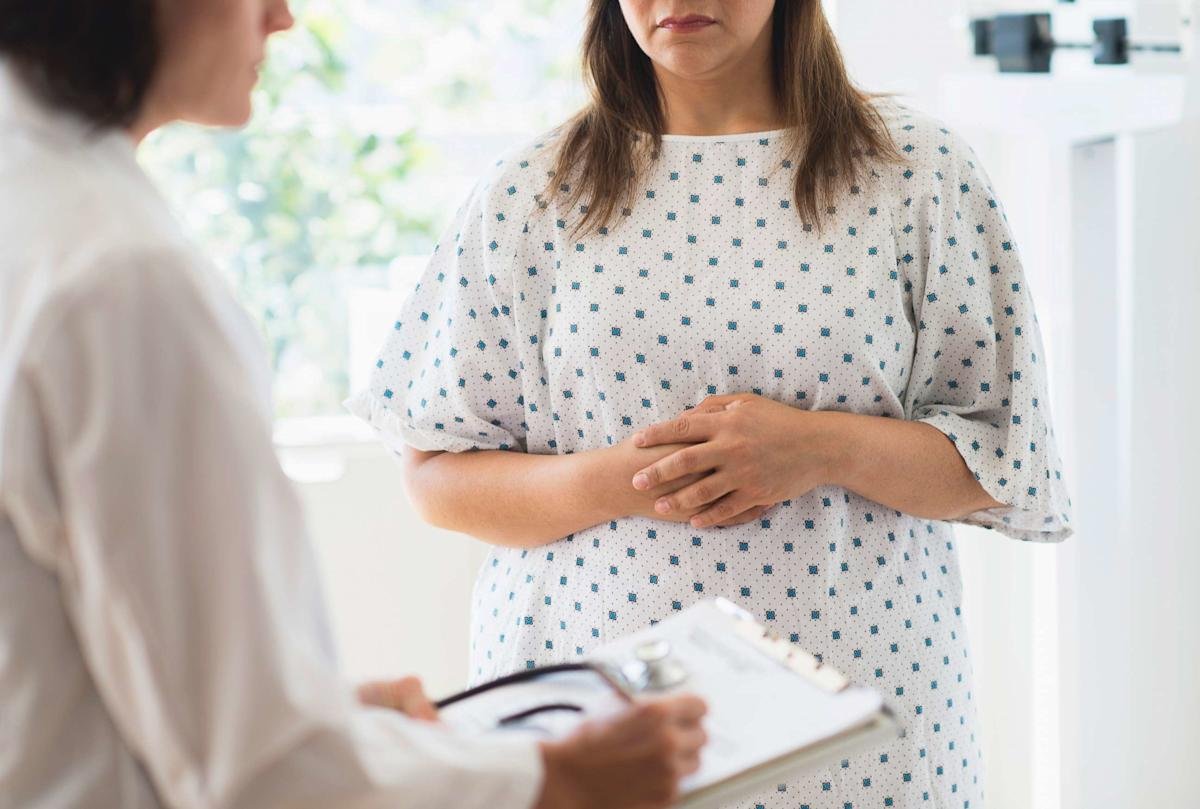
STOCK PHOTO/Getty Images – PHOTO: A patient speaks with a doctor in this stock photo.
When a woman has a heart attack, she is more likely to feel pain in the upper back, arm, neck and jaw, according to the American Heart Association (AHA).
In a multiple-study analysis published in the Journal of the American Heart Association in May 2020, women had higher odds of pain between the shoulder blades, nausea and vomiting and shortness of breath, and lower odds of chest pain and sweating associated with a heart attack.
“In fact, both women and men can present without a ‘typical pain’ feeling,” Dr. Harmony Reynolds, director of the center for women’s cardiovascular health and associate director of the cardiovascular clinical research center at NYU Langone Health, told ABC News.
“You know the classic thing is that people say, ‘Oh it felt like an elephant was standing on my chest,’ or that the pain was so bad that they couldn’t stand it, and that’s not always the case with heart attacks, particularly for women,” she added.
Women are 30% less likely than men to report chest pain when having a heart attack, according to the AHA. Women may perceive more of a discomfort rather than outright pain, Reynolds said. They are also more likely to report multiple symptoms compared to men.
Even while in the midst of having an active heart attack, many women wait longer to seek medical attention compared to men, and more women are incorrectly told that their symptoms are unrelated to their heart, according to a study published in The Lancet in May 2022.
Women reach heart health goals with less exercise than men, new study suggests
Women sometimes downplay their symptoms and experiences because they fear of being viewed as overreacting or a “hypochondriac,” the AHA pointed out.
Improving and personalizing the medical evaluation process would probably save a lot of women, Reynolds suggested.
She recommended that women bring a list of questions to their checkups and if heart disease is on the list of concerns, speak up. She said women should make sure to discuss every symptom and ask about any available tests that will offer a thorough evaluation.
Both men and women can take steps to protect their heart health, Bairey-Merz said.
She recommended that all people, regardless of sex, follow the Life’s Essential 8 checklist provided by AHA, which includes healthy eating, exercise, quitting tobacco, good sleep, and managing weight, cholesterol, blood sugar and other important health numbers.
Women’s heart health education is crucial, Reynolds said. “There is this sense that heart disease is a man’s disease and it’s just wrong. If you don’t look for it, you’re not gonna find it.”
Karizma Chhabra, MD, is an emergency medicine resident physician at Northwell South Shore University Hospital and a member of the ABC News Medical Unit.
