


“I’m either going to get sober or die.” This was the startling realization Parker Schley came to after his battle with alcoholism reached what he describes as the point of no return. “I couldn’t continue like that,” Schley, 26, tells Yahoo. “I was asking to die, basically.”
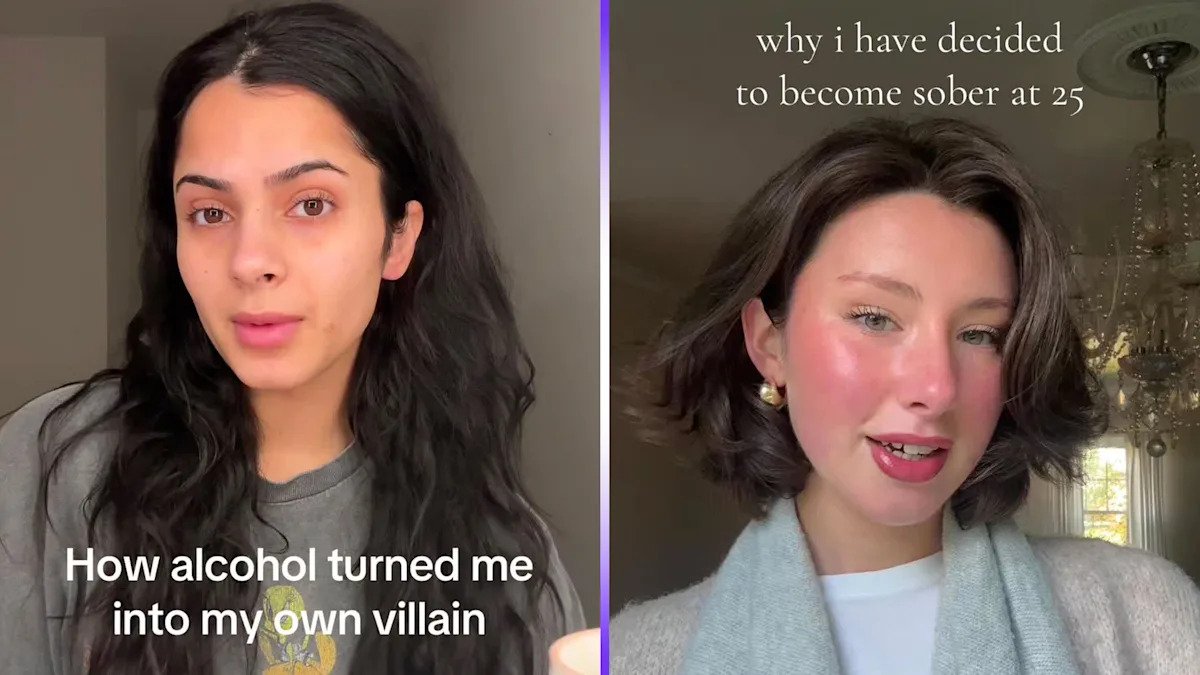
Schley, who works as an assistant property manager in Virginia, represents a growing number of Gen Z-ers (born between 1997 and 2012) who are openly discussing their relationship with alcohol and their journeys to sobriety online. A quick search of “sobriety in your 20s” on TikTok yields thousands upon thousands of videos of people talking candidly about giving up drinking alcohol at a young age. The public-facing nature of this phenomenon stands in stark contrast to the narratives portraying Gen Z as teetotaler totalitarians.
Sure, Gen Z is drinking less than previous generations, but they are still susceptible to the perils of addiction, notes Daniel Siconolfi, a behavioral and social scientist at RAND whose research includes the sober-curious movement and social challenges like Dry January.
“Gen Z is drinking less in young adulthood than millennials (born between 1981and 1996) or Gen X ( born between 1965 and 1980) did. In fact, 20% to 30% of Gen Z adults don’t drink at all,” Siconolfi says. “That said, young adults in their 20s still have the highest rates of risky drinking and are the least likely to receive treatment compared to other age groups.”
This reluctance to seek help is largely due to the shame and judgment surrounding sobriety and rehab. But with the help of social media, many Gen Z-ers are pushing back against these stigmas. From recurring ER visits to frat party crashouts, these young creators are coming clean about their rocky relationships with alcohol, for all the world to see.
“I was waking up at the hospital with complete alcohol poisoning — unconscious, shallow breathing and my lips turning blue,” Schley says of one particularly pivotal night out during his senior year of college at the University of New Hampshire. But he brushed off his hospital stay as a one-off — not a warning sign.
On his page, Schley details experiences like this and traces back to the start of his drinking issues. He says he was always aware of the dangers of alcohol but was naive to how it could, and would, affect him. “I thought that was for other people to worry about. That wasn’t going to happen to me,” he says.
But as soon as those first few sips of chilled raspberry Smirnoff passed his lips at a high school homecoming party during his freshman year, Schley was hooked.
“I fell in love with alcohol the very first time,” says Schley, adding that drinking helped him silence the noise that plagued him as a closeted gay man. “Alcohol took away the stress from that. When I was drinking it was easier to be me.”
Like many of his Gen Z peers, Schley, who got sober in February, was blessed with the gift of digital gab and has no qualms about sharing the raw, vulnerable realities of his sobriety journey with his 87K TikTok followers. The decision to share online might seem scary at first, but Schley says that being able to use his platform to help others has been life-changing.
“I got a message from someone’s dad that was like, ‘I used to blame myself so much for not being there for my son, and you helped me realize that he wasn’t ready to accept that he had an issue, and there wasn’t much that I could have done to save him from his struggles with alcohol,'” Schley says. “That was a really cool message to get, because my relationship with my dad was about to be done before I went to rehab, so to be able to have helped not only the kid that’s going through it but someone in his family as well is the biggest gift I could ever ask for.”
Siconolfi agrees that there are real benefits to sharing these stories online. “Social media can be a powerful space for information, connection and social support, whether someone is just reassessing their relationship with alcohol or seeking treatment for alcohol-use disorder,” he says.
Alkhuzama Zaini, a 24-year-old college student living in Virginia, says posting about going sober helps keep her accountable. Like Schley, Zaini’s relationship with alcohol started pretty early. “My junior year of high school, I was 15, and there was a big football game and my friends and I pregamed,” she tells Yahoo. “I ended up getting alcohol poisoning at the game, and the ambulance had to come.” The consequences of this infraction were swift: Zaini was suspended from school for five days, which also caused a rift between her and her family.
“My family is from Saudi Arabia, and I come from a Muslim family, so it was a big deal within my culture and my religion,” she says. Still, she continued to drink, and her relationship with alcohol only soured further when she went to college.
One night, Zaini got so drunk that she blacked out and had to be told what had happened by her friends.
“Apparently, I got so drunk I threw up on this frat guy’s lap, and he had to drive me home and the dorm RA had to call 911,” says Zaini. This hazy night landed her in the hospital, where she recalls having significant trouble breathing and throwing up acid.
But she still wasn’t ready to give up booze. “The next day after I got out of the hospital, I was drinking at a football tailgate. I guess I took it as a joke. But it wasn’t,” says Zaini. It wasn’t until her personal relationships with friends and family members started to fracture that she decided to go to rehab this past summer.
“I knew I wanted to go to rehab because it was either get sober or death for me,” says Zaini, adding that she was flunking out of school and hiding the extent of her drinking from those closest to her. “I was drinking full handles [half-gallons] a day, hiding the bottles and lying about it. Now I’m just so grateful that we’re all still good friends now.” She’s back on track at school too and will be graduating in 2026.
For many people, sobriety is a lifetime commitment. But in some cases, it can be a temporary change to help reevaluate existing behaviors with alcohol. This approach is a less-intimidating avenue for some Gen Z-ers who have more apprehensions regarding full-on sobriety.
Emily Gleason, 27, is one of them. She grew up seeing unhealthy relationships with alcohol throughout her entire childhood and early adolescence, which made her hesitant to drink at all. Even when she started drinking occasionally, she was always hyper-aware of the negative ways in which it impacted her.
“Most weekends I would go out with my friends, party, all the things that most college people do. But even then, I knew I really didn’t like the way I’d feel when I was hungover or the things I’d do or say when I was drunk,” Gleason tells Yahoo.
It wasn’t until 2020, when the pandemic forced her to move back in with her parents, that she had to reconcile with the behaviors that shaped her relationship with drinking.
“That was the household in which the alcoholism was prevalent in my childhood, and it still is prevalent,” Gleason says. “Seeing it as an adult, it was like I had to confront that, and that’s when I started to look at drinking as a question in my life.” This questioning is something Gleason is still playing around with. She currently still drinks occasionally, but she did have a period of sobriety for about a year.
“Now I’ve matured to a point where I have a very healthy boundary and relationship with alcohol, where I don’t need to be 100% sober,” she says. “But alcohol is definitely not a big part of my life at all.”
