


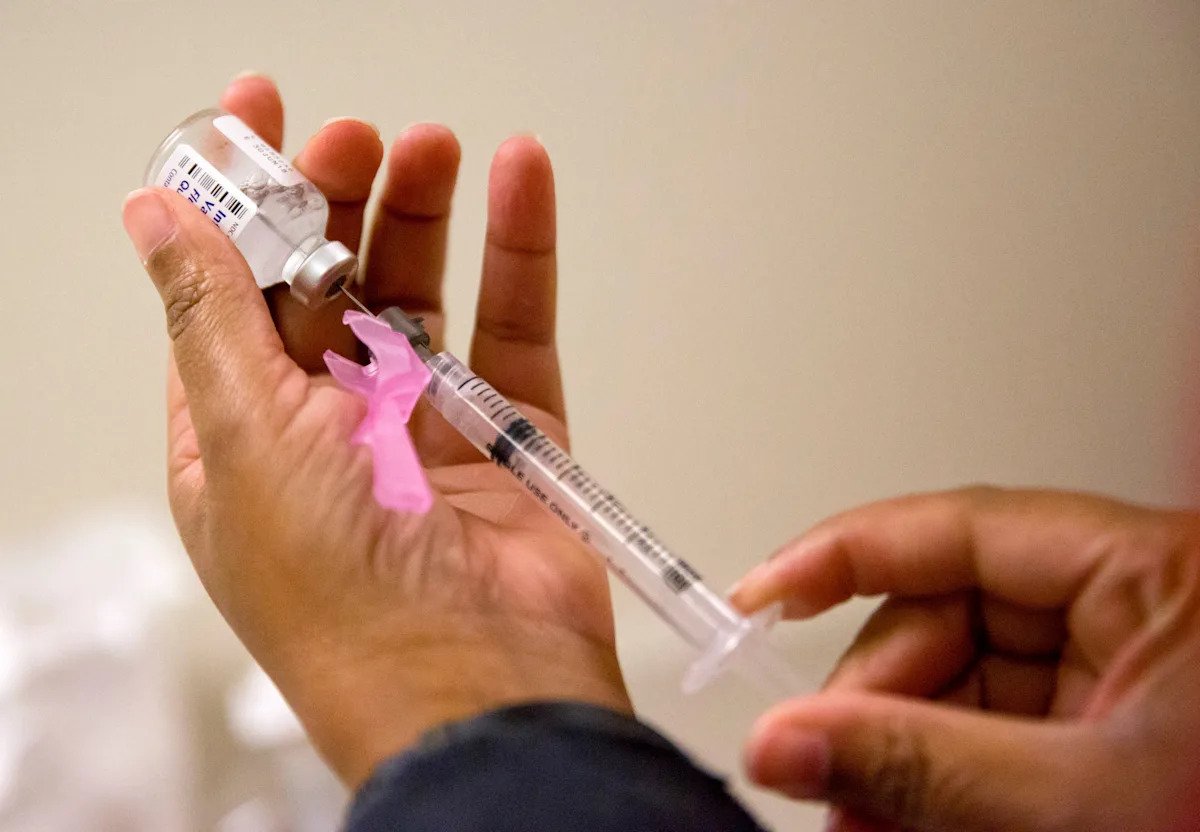
NEW YORK (AP) — U.S. flu infections surged over the holidays, and health officials are calling it a severe season that is likely to get worse.
New government data posted Monday — for flu activity through the week of Christmas — showed that by some measures this season is already surpassing the flu epidemic of last winter, one of the harshest in recent history.
The data was released the same day that the Trump administration said it will no longer recommend flu shots and some other types of vaccines for all children.
Forty-five states were reporting high or very high flu activity during the week of Christmas, up from 30 states the week before.
The higher numbers appear to be driven by the type of flu that’s been spreading, public health experts say.
One type of flu virus, called A H3N2, historically has caused the most hospitalizations and deaths in older people. So far this season, that’s the type most frequently reported. Even more concerning, more than 90% of the H3N2 infections analyzed were a new version — known as the subclade K variant — that differs from the strain in this year’s flu shots.
Flu seasons often don’t peak until January or February, so it’s too early to know how big a problem that mismatch will be.
“The fact that we’ve seen steady increases over the last several weeks without much of a decline or even a flattening would suggest to me that we’ve got the peak ahead of us,” said Dr. Robert Hopkins, medical director of the National Foundation for Infectious Diseases.
The second bad flu season in a row
Last flu season was bad, with the overall flu hospitalization rate the highest since the H1N1 flu pandemic 15 years ago. Child flu deaths reached 288, the worst recorded for regular U.S. flu season.
Nine pediatric flu deaths have been reported so far this season. For children, the percentage of emergency department visits due to flu has already surpassed the highest mark seen during the 2024-2025 season.
Hopkins said H3N2 typically hits older adults hardest, and rising rates among children and young adults suggest a severe flu season across all age groups.
Another ominous sign: The percentage of doctor’s office and medical clinic visits that were due to flu-like illness also was higher late last month than at any point during the previous flu season.
Deaths and hospitalizations have not reached last year’s levels, but those are lagging indicators, Hopkins noted.
The U.S. Centers for Disease Control and Prevention estimates at least 11 million illnesses, 120,000 hospitalizations and 5,000 deaths from flu have already occurred this season.
US government dials back vaccine recommendations
Public health experts recommend that everyone 6 months and older get an annual influenza vaccine.
But federal health officials on Monday announced they will no longer recommend flu vaccinations for U.S. children, saying it’s a decision parents and patients should make in consultation with their doctors.
However, flu vaccine will continue to be fully covered by private insurers and federal programs, including Medicaid, the Children’s Health Insurance Program and the Vaccines for Children program, a U.S. Department of Health and Human Services spokesperson said.
COVID-19 infections also have been rising, other federal data show, though so far this winter they remain less common than flu. The Trump administration stopped recommending COVID-19 shots for healthy children last year.
US will stop collecting Medicaid data
Hopkins voiced concern about a federal notice posted last week that said government Medicaid programs, which pay for medical services for low-income families, will no longer have to report on immunization rates.
CDC survey data suggests that U.S. flu vaccination rates are about the same as last year. But the Medicaid data — for flu as well as measles and other bugs — is a more comprehensive look at children who are at higher risk for many diseases, he said.
Federal health officials framed the move as part of an effort to distance how Medicaid doctors are rated and paid from how often they provided childhood vaccinations.
“Government bureaucracies should never coerce doctors or families into accepting vaccines or penalize physicians for respecting patient choice,” wrote Health Secretary Robert F. Kennedy Jr., who was a leading voice in the anti-vaccine community before President Donald Trump put him in charge of federal health agencies.
“That practice ends now,” Kennedy wrote on social media last week.
But Hopkins said the move will “eliminate a major source of data” that allows communities to assess efforts to protect children from vaccine-preventable diseases.
“This is a disastrous plan,” he added.
___
The Associated Press Health and Science Department receives support from the Howard Hughes Medical Institute’s Department of Science Education and the Robert Wood Johnson Foundation. The AP is solely responsible for all content.
