


The excitement ahead of SpaceX’s colossal IPO this week is palpable, with investors gearing up for a historic debut.
But with hype reaching a fever pitch, some may be wondering: “What if the IPO goes badly?”
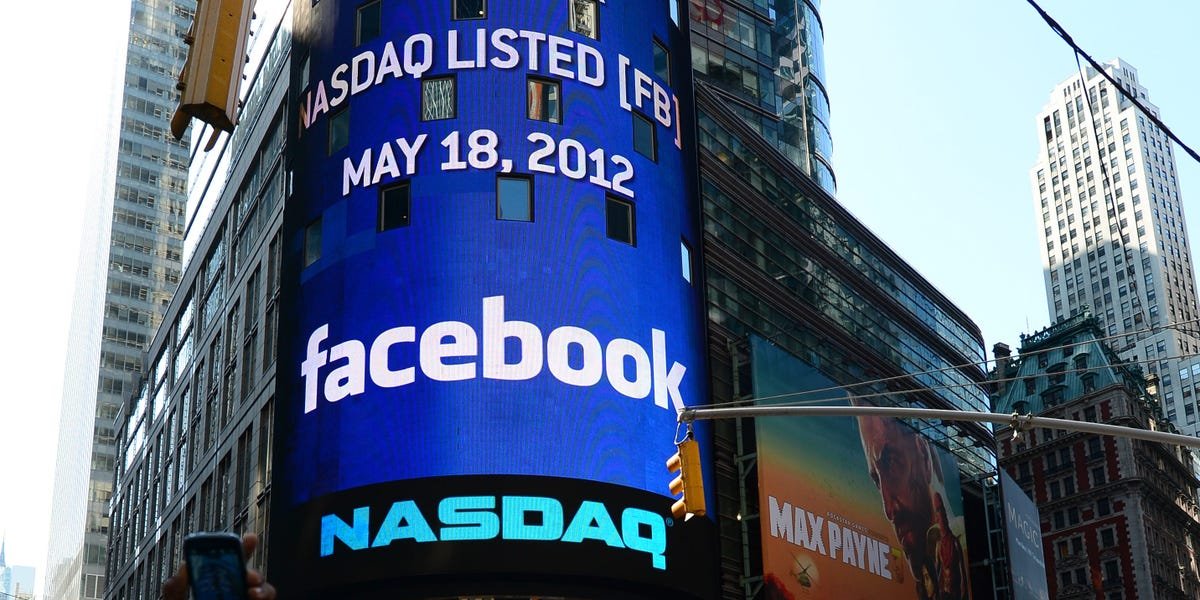
For anyone looking for a rough analog of a much-hyped tech debut gone awry, we can reach back to 2012, when Facebook went public in May of that year.
The company went public at $38 a share. The stock plunged by 50% in the months after the IPO, with investors balking at an eye-watering valuation pegged to an untested business strategy. Sound familiar?
With SpaceX set to start trading this Friday after an historic IPO that’s expected to hand it a $1.75 trillion valuation, some of the concerns swirling around Elon Musk’ rocket company appear similar to those that dragged Facebook in its early days.
The main drivers of Facebook’s months-long decline included:
Facebook’s $100 billion valuation—making for the largest tech IPO ever—was seen as excessiveThe company raised the initial share price target from $28-$35 to $34-38 in anticipation of higher investor demandInvestors were unsure of Facebook’s mobile phone ad monetization planFacebook insiders sold in large amounts after the lockup period expired, denting confidence
Some of the concerns investors have about SpaceX appear similar.
1. Investor demand
Similar to Facebook, which allocated a higher-than-usual 15% of shares to retail traders, SpaceX is earmarking a lot of stock for the day trader crowd. The company will set aside 30% of its IPO shares for retail investors, reflecting expectations for heavy demand from the cohort.
While Elon Musk and his companies have catered to retail investors before, doubters say that the emphasis on retail is meant to supplement weaker institutional demand. Fund managers and professional investors told Business Insider recently why they’re skeptical about buying the stock at the IPO.
And yet, there seems to be a similar sentiment echoing in retail circles. Online forums have been awash in recent weeks with comments expressing concerns about being “bag holders” or “exit liquidity” for early investors, with those discussions ramping up as SpaceX and retail brokerages scrambled to open up the IPO to more everyday investors.
“They are really trying to dump this bag on retail aren’t they,” one Reddit user wrote recently in response to the historically high portion of retail shares the company is allocating.
2. Untested business
There are big questions around how Space will be able to execute on its plans, some of which—orbital data centers, asteroid mining, lunar mass drivers—sound like they were ripped from the pages of science fiction.
It estimates it can take a 21% market share of global compute demand, which Morningstar says has a 7% chance of happening. Morningstar says it’s more likely they can grab 4% of global market share by 2040.
“It’s a project that requires some unproven engineering to succeed, but we do see SpaceX as the best positioned to pursue it,” the firm said in a recent report.
3. Valuation
Ahead of its IPO, Facebook’s valuation crept up and up until it became clear that investors believed the fundamentals did not support the price tag. At 100x prior year revenue, Facebook was valued higher than other tech rivals that made a lot more money at the time, like Google and Apple.
SpaceX will go public with a valuation not far from $2 trillion, immediately joining the ranks of the largest companies in the world, despite the fact that it lost $5 billion last year.
On Monday, Morningstar backed up its recent view that the price is too high. The research firm said that it values the stock at $63 a share, 53% lower than its target price of $135.
“Even giving SpaceX the benefit of the doubt in several key forecasts, only the most optimistic ‘moonshot’ scenario approaches the IPO offering price,” Morningstar said.
4. Free float and insider selling
SpaceX’s free float—the amount of stock sold to the public—has been described as “puny,” at about 5% compared to close to 100% for other mega-cap tech firms.
Low float could drive higher volatility when trading begins, and big price swings can discourage longterm investors and fuel investments from more speculative traders. More stock will come to market once lock up periods for insiders expire in the coming months.
SpaceX shares could come under pressure as more insiders are able to sell their stock on the public markets, according to Benedikt Wick, a finance professor at Washington & Lee University.
“A parallel to Facebook is the supply overhang,” Wick said. “Facebook initially floated only a small portion of its shares, subjecting the remainder to lock-up periods of up to a year. It was only when this additional supply hit the market that the stock found its true price level.”
“The situation with SpaceX is similar but on a much larger scale. Initially, less than 5% of shares are being offered. Additional shares will only be released for trading gradually over the coming months. The real test will come only after the lock-up periods expire,” he added.
